Study sheet for before your test. Notes aren’t allowed in the DMV test room. Source: Georgia Drivers' Manual 2023-2024 (2023-2024), dds.georgia.gov · Checked September 22, 2026 · Printed Oct 11, 2026 · drivingtestpal.com/georgia/cheat-sheet/ |
Georgia · Study sheet Georgia permit test cheat sheetThe 38 Georgia rules, 12 numbers and 12 signs worth knowing cold. Page numbers point to the handbook. Test format40 questions Passing score30 of 40 correct (75%) Permit and test fees$10 total Minimum age for a permit15 years Supervised driving40 hours (6 at night) Hold your permit12 months minimum Numbers to know
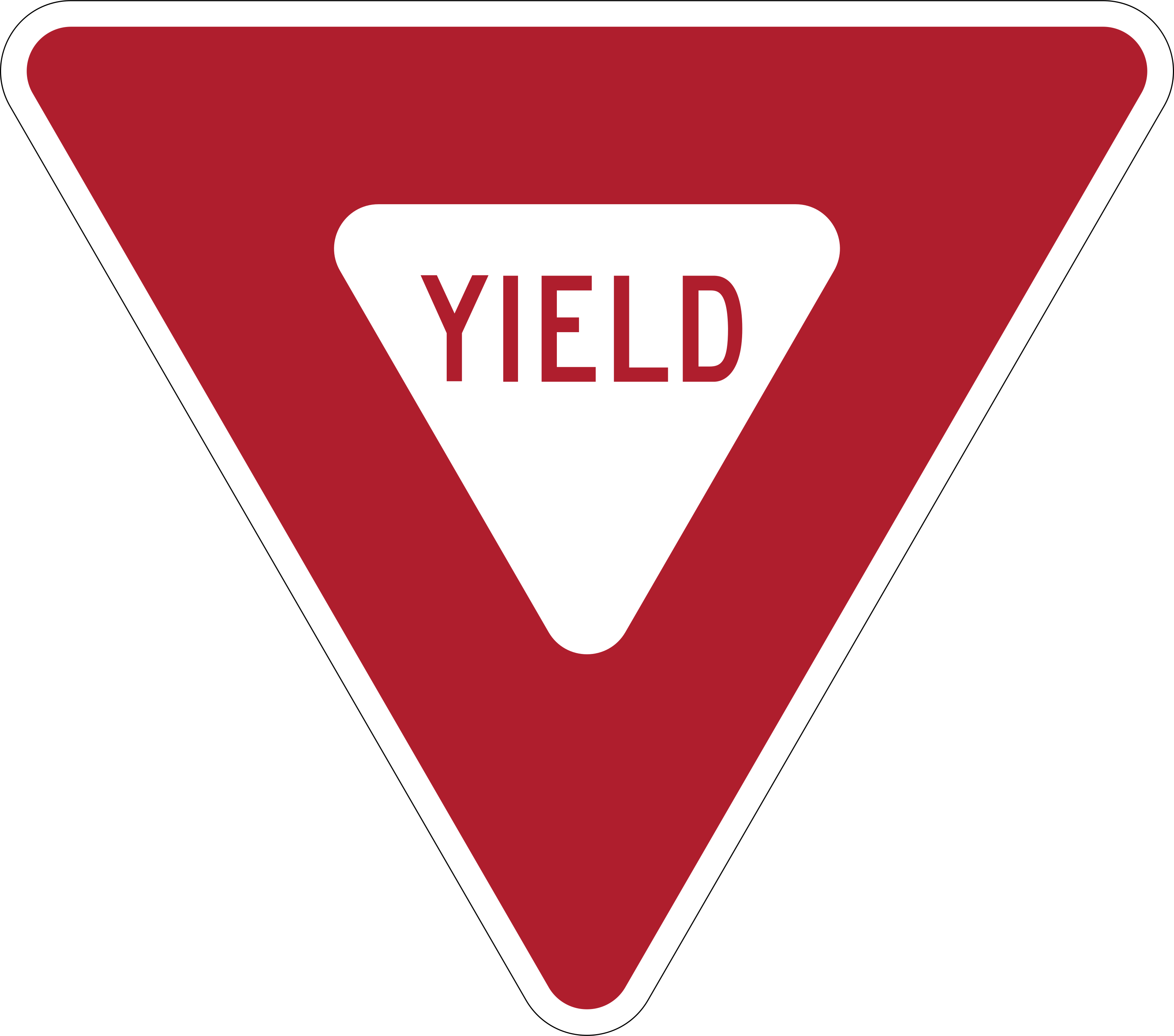
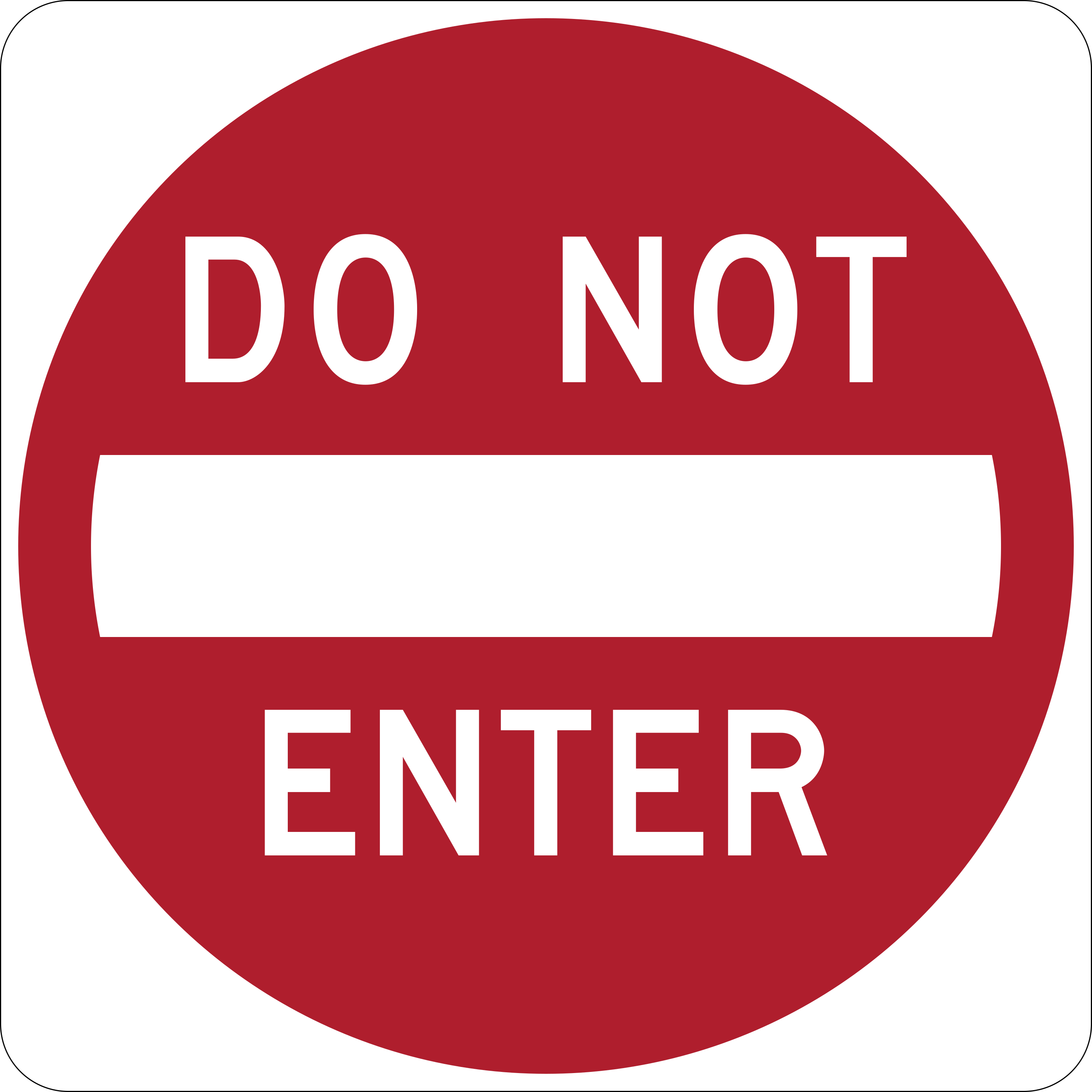
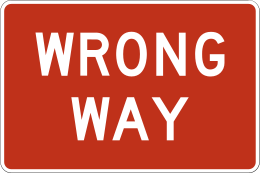
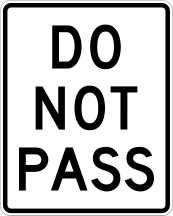
Signs to know
Permits & licensing
Laws, points & insurance
Speed limits & control
School buses & emergency vehicles
Alcohol & drugs
Parking & stopping
Distracted & drowsy driving
Highways & freeways
Turning & signaling
Sharing the road
Night, weather & hazards
Seat belts & equipment
Pavement markings
Work zones
Emergencies & crashes
Road signs
Traffic signals
Right of way & intersections
Lanes, passing & merging
Following distance & space
Railroad crossings
|
Georgia permit test cheat sheet
Georgia-specific rules from our question bank, condensed to one line each with the handbook page. Read it the night before; don’t use it instead of practicing.
Study sheet for before your test. Notes aren’t allowed in the DMV test room. See the study sheets to print.
- Test format
- 40 questions
- Passing score
- 30 of 40 correct (75%)
- Permit and test fees
- $10 total
- Minimum age for a permit
- 15 years
- Supervised driving
- 40 hours (6 at night)
- Hold your permit
- 12 months minimum
Permits & licensing
- In Georgia you can apply for a Class C instructional permit once you reach age 15. p. 27
- A Class CP holder may drive only when accompanied by someone at least 21 who is licensed to drive a Class C vehicle and is fit to take control. p. 27
- You can apply for a Class D license once you are 16 and have held a valid instructional permit for one year and one day. p. 28
- Teens applying for a Class D license must show at least 40 hours of supervised driving, 6 of them at night. p. 6
- A Class D driver may not drive between 12:00 a.m. and 5:00 a.m., and the manual says there are no exceptions. p. 28
- During the first six months of a Class D license, only immediate family members may ride with you. p. 28
- In the second six months, a Class D driver may carry only one passenger under 21 who is not immediate family. p. 28
- After the first two six-month periods, a Class D driver may carry up to three passengers under 21 who are not immediate family. p. 28
- Each part of Georgia's knowledge exam has 20 questions and you need at least 15 right on each part. source
- After a first failure you can retake the failed portion the next day, but after a second or later failure you must wait 7 days. p. 14
- The adult who signs a minor's application may, for any reason, revoke the permit or license until the minor turns 18. p. 27
Laws, points & insurance
- DDS must suspend the license of anyone who accumulates 15 or more points within 24 months. p. 49
- Drivers under 18 are suspended if they accumulate 4 points within 12 months. p. 49
- Georgia suspends the license of any driver under 21 who is convicted of any 4-point violation, such as reckless driving. p. 49
- A Super Speeder conviction adds a $200 state fee in addition to any local fine. p. 22
- If you were covered by liability insurance at the time of the crash, your insurance carrier can file Form SR-21 with DDS to prevent the suspension. p. 49
- Aggressive driving means operating a vehicle with the intent to annoy, harass, molest, intimidate, injure or obstruct another person, for example by tailgating or blocking someone from passing. p. 24
- For drivers under 21, a first conviction for offenses like reckless driving, aggressive driving or racing brings a six-month suspension; a second brings twelve months. p. 28
- Georgia requires liability insurance of at least $25,000 for injury to one person, $50,000 for all injuries in one incident and $25,000 for property damage, often written 25/50/25. source
Speed limits & control
- Georgia's points chart assigns 3 points for speeding 19-23 mph over the posted limit. p. 48
- Drivers convicted of going 75 mph or more on a two-lane road (or 85 mph or more anywhere) are labeled Super Speeders. p. 22
- Georgia's general maximum in any urban or residential district is 30 mph unless posted otherwise. p. 22
- Unless posted otherwise, the maximum speed on an unpaved county road in Georgia is 35 mph. p. 22
- Georgia's general maximum on a rural interstate is 70 mph. p. 22
- Unless posted otherwise, the limit is 65 mph on an urban interstate or multi-lane divided highway. p. 22
- A school speed limit sign with yellow lights means the reduced limit is in effect when the lights are flashing. p. 30
School buses & emergency vehicles
- A school bus driver turns on flashing yellow lights when preparing to stop to load or unload children. p. 19
- Once the bus's lights turn red and the stop signs extend, it is unlawful for any vehicle to pass while it is loading or unloading. p. 19
- On a highway divided by a median, drivers on the opposite side from a stopped school bus are not required to stop. p. 19
- After stopping for a school bus, remain stopped until the bus resumes motion or turns off its warning signals, and all loading or unloading passengers have cleared the roadway. p. 45
- Georgia's Move Over law requires you to move to the next lane if you safely can. p. 19
- A first violation of the Move Over law can bring a fine of up to $500. p. 19
- Unless you are on official business, you must not follow any fire apparatus responding to an alarm, or other emergency vehicles, closer than 200 feet. p. 25
Alcohol & drugs
- A driver 21 or older is considered under the influence of alcohol at a BAC of .08 or more. p. 24
- Drivers under 21 are considered under the influence at a BAC of .02 or more, which can be reached with very little alcohol. p. 24
- Georgia law requires you to submit to state-administered tests of blood, breath, urine or other substances. p. 48
- It is unlawful to drive under the influence of any drug, prescription or illegal, that impairs your ability to drive safely. p. 24
- For a driver under 21, a first DUI with a BAC of .02 or more but under .08 brings a minimum 6-month suspension (12 months if the driver already has a conviction for certain serious offenses such as reckless driving). p. 28
- A first DUI conviction within 5 years brings a 12-month suspension, with eligibility for early reinstatement after 120 days and a limited permit available. p. 24
- Possessing an open container of an alcoholic beverage while driving adds 2 points to your record. p. 48
Parking & stopping
- Georgia does not allow standing or parking within 15 feet of a fire hydrant, except momentarily to pick up or drop off passengers. p. 21
- You may not park within 20 feet of a crosswalk at an intersection, except momentarily to pick up or drop off passengers. p. 21
- Parking is not allowed within 30 feet of a stop sign, yield sign or traffic control signal, except momentarily for passengers. p. 21
- Georgia bars parking within 20 feet of a fire station driveway on the same side, and within 75 feet of the spot across the street. p. 21
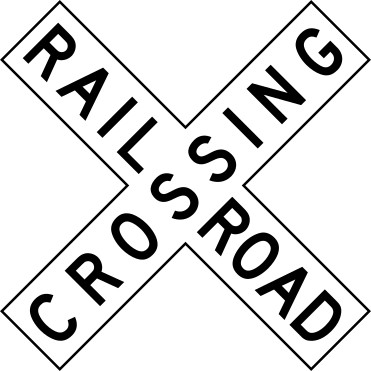
- You may not stop, stand or park within 50 feet of a railroad crossing. p. 21
- You may not park within 500 feet of any fire apparatus stopped in answer to a fire alarm. p. 25
Distracted & drowsy driving
- Georgia's Hands-Free law says drivers may not hold or support a phone for any reason. p. 26
- Georgia's Hands-Free law bans writing, sending or reading any text-based communication, including texts, instant messages, email and internet data, while driving. p. 26
- The Hands-Free law prohibits watching, recording or broadcasting video while driving, along with writing, sending or reading texts, emails or internet data. p. 26
- A first Hands-Free conviction brings 1 point and a fine of not more than $50. p. 26
- It is unlawful to drive while wearing a headphone, headset or any other device that would impair your ability to hear. p. 24
Highways & freeways
- The gore is the area bounded by solid white lines between the acceleration lane and the travel lane. p. 41
- Driving in reverse on an expressway is prohibited under any circumstances, and stopping is allowed only in emergencies. p. 42
- HOV violations carry fines up to $75 for a first offense, $100 for a second and $150 for a third, plus a point on the fourth. p. 41
- Tolled lanes in Georgia require a registered Peach Pass transponder mounted in your vehicle. p. 24
Turning & signaling
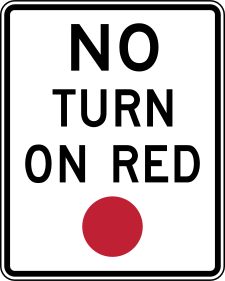
- Georgia allows right turns on red unless a sign says otherwise, but only after a complete stop, yielding to all traffic and pedestrians, and deciding the turn is safe. p. 19
- Unless a sign prohibits it, you may turn left on red from the left lane of a one-way street onto a one-way street whose traffic moves to your left. p. 19
- It is against Georgia law to flash turn signals as a courtesy or 'do pass' signal to drivers behind you. p. 20
Lanes, passing & merging
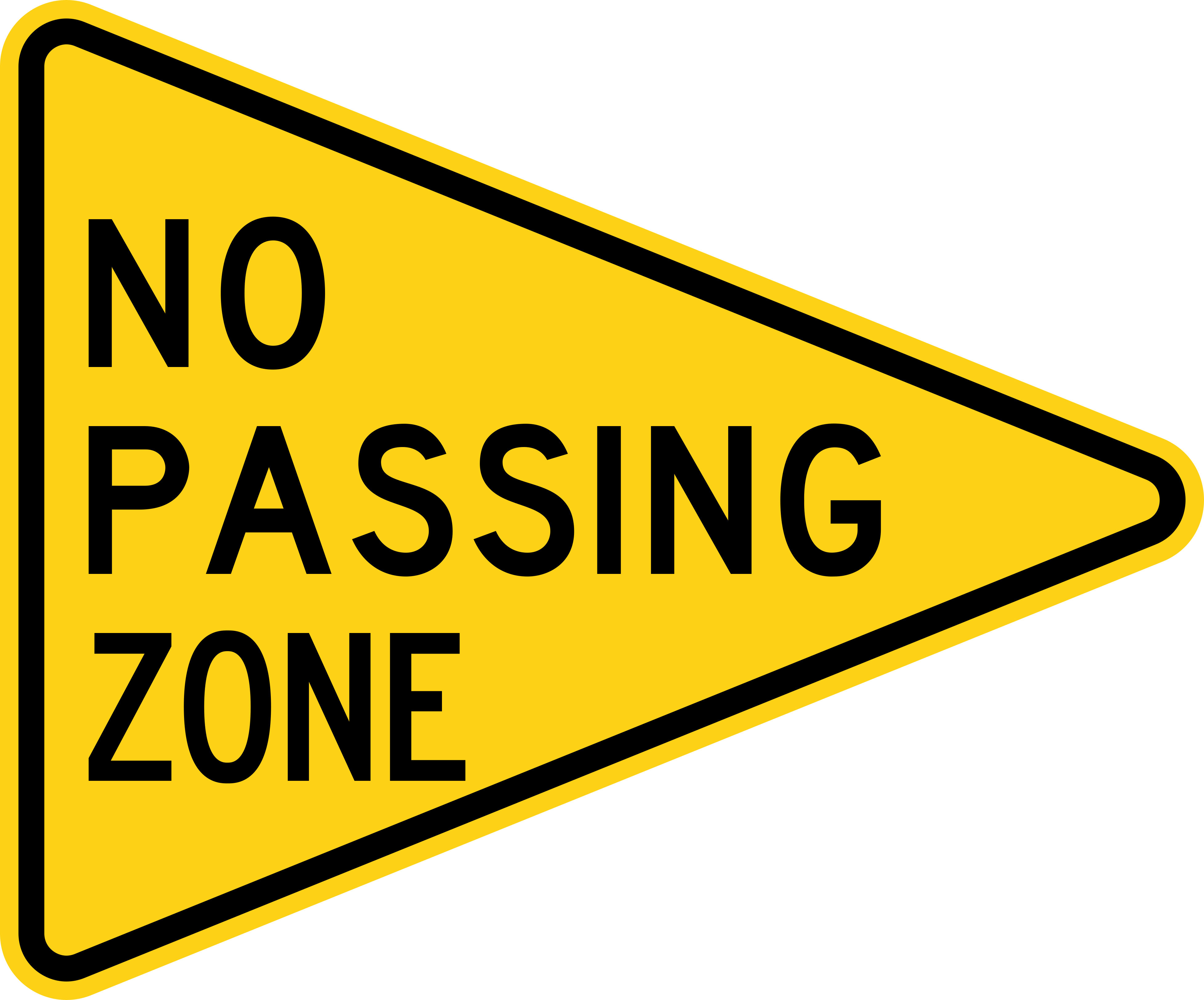
- You must have enough time and space to finish passing and return completely to the right lane before the passing zone ends, before an intersection and before oncoming traffic is within 200 feet. p. 19
- Passing is prohibited on two-lane roads within 100 feet of a bridge, viaduct or tunnel, and within 100 feet of a railroad crossing. p. 19
- Georgia's Slow Poke law requires slower drivers to leave the passing lane and move right when faster traffic approaches, no matter how fast they are going. p. 21
Sharing the road
- Georgia drivers must stop and stay stopped for a pedestrian in a crosswalk who is on their half of the road, or approaching and within one lane of it. 'Half of the roadway' means all lanes carrying traffic in one direction. p. 43
- When passing a bicycle, keep at least three feet between your vehicle and the bicycle at all times. p. 44
- Georgia law allows bicyclists to use the full lane, and they are not required to use a bike lane even when one is present. p. 43
Night, weather & hazards
- You must use headlights from one-half hour after sunset to one-half hour before sunrise, any time it is raining, and whenever visibility is limited. p. 25
- Dim your headlights when you are within 500 feet of an approaching vehicle so you do not blind the driver. p. 25
- Dim your headlights when following closely, within 200 feet, behind another vehicle. p. 25
Seat belts & equipment
- Every front-seat occupant must wear a lap and shoulder belt, and all occupants under 18 must wear one wherever they sit. p. 25
- Under Georgia's primary safety belt law, officers may stop and cite violators without seeing any other violation. p. 25
- Drivers transporting a child under eight must properly restrain the child in a restraint system suited to the child's height and weight, except in a taxi or public transit vehicle. p. 25
Pavement markings
Work zones
Emergencies & crashes
- Stop in a safe place and notify the nearest law enforcement agency immediately if anyone is injured or killed, or if property damage exceeds $500. p. 51
- If you damage an unattended vehicle, you must locate the owner or leave your name, address and the vehicle owner's name in a conspicuous place where the owner will find it. p. 51
Road signs
- Pentagon signs warn of a school zone or crossing and are placed not less than 150 feet nor more than 700 feet before the school grounds or crossing. p. 29
Traffic signals
- If a traffic signal is not working at all, Georgia drivers must treat the intersection as if a stop sign is posted for all directions. p. 35
Right of way & intersections
- One of Georgia's three most basic traffic laws is to obey the directions of a law enforcement officer or firefighter, even when they conflict with signs or signals. p. 18
Following distance & space
- Georgia's TACT (Targeting Aggressive Cars and Trucks) guidance recommends one car length for every 10 mph of speed around commercial vehicles. p. 46
Railroad crossings
- When a signal is flashing, gates are down, a flagman signals or a train is near, stop within 50 feet but not less than 15 feet from the nearest rail. p. 22