Study sheet for before your test. Notes aren’t allowed in the DMV test room. Source: Official Hawaii Driver's Manual (2023 edition, r3 digital), hidot.hawaii.gov · Checked October 7, 2026 · Printed Oct 11, 2026 · drivingtestpal.com/hawaii/cheat-sheet/ |
Hawaii · Study sheet Hawaii permit test cheat sheetThe 37 Hawaii rules, 12 numbers and 12 signs worth knowing cold. Page numbers point to the handbook. Test format30 questions Passing score24 of 30 correct (80%) Permit and test feesVaries / not published Minimum age for a permit15 years, 6 months Supervised driving50 hours (10 at night) Hold your permit6 months minimum Numbers to know
Signs to know
Permits & licensing
Laws, points & insurance
Alcohol & drugs
Sharing the road
School buses & emergency vehicles
Night, weather & hazards
Seat belts & equipment
Lanes, passing & merging
Parking & stopping
Following distance & space
Railroad crossings
Distracted & drowsy driving
Right of way & intersections
Turning & signaling
Speed limits & control
Emergencies & crashes
|
Hawaii permit test cheat sheet
Hawaii-specific rules from our question bank, condensed to one line each with the handbook page. Read it the night before; don’t use it instead of practicing.
Study sheet for before your test. Notes aren’t allowed in the DMV test room. See the study sheets to print.
- Test format
- 30 questions
- Passing score
- 24 of 30 correct (80%)
- Permit and test fees
- Varies / not published
- Minimum age for a permit
- 15 years, 6 months
- Supervised driving
- 50 hours (10 at night)
- Hold your permit
- 6 months minimum
Permits & licensing
- Hawaii issues an instruction permit at 15 1/2 at the earliest. p. 13
- A permit holder may drive only with a licensed driver who is at least 21 years old. p. 13
- Between 11:00 p.m. and 5:00 a.m., a permit holder must be accompanied by a parent or guardian. p. 13
- You must hold a valid instruction permit for 180 days before applying for a provisional license. p. 13
- Hawaii requires a State certified driver's education course, and you must have both the classroom and behind-the-wheel certificates. p. 13
- The minimum age for a provisional license is 16. p. 13
- A provisional license lets you carry only one person under 18 who is not a household member. p. 13
- From 11:00 p.m. to 5:00 a.m., a provisional driver needs a licensed parent or guardian in the car unless driving to or from work or a school-authorized activity. p. 14
- You must hold the provisional license for six months before applying for a full driver's license. p. 14
Laws, points & insurance
- Since January 1, 2026, Hawaii motor vehicle policies must carry at least $40,000 per person and $80,000 per accident for bodily injury, plus $20,000 for property damage. source
- Hawaii raised the property damage minimum to $20,000 per accident from January 1, 2026. source
- Each insurance violation is a separate offense with a fine of up to $5,000 or 30 days in jail, license suspension, loss of registration, or a combination. p. 54
- After certain convictions you must file evidence of insurance (Form SR-22) and keep proof of financial responsibility for three years from the conviction date. p. 53
- When the registered owner's address changes, the owner must notify the county agency within thirty days. p. 21
- Hawaii requires a Periodic Motor Vehicle Inspection at least once a year. p. 18
- Hawaii will not license you for two years after a conviction for drunk driving while unlicensed. p. 10
Alcohol & drugs
- Drivers under 21 are prohibited from driving with a BAC of .02 or more. p. 56
- If a test shows .08 or more, or you refuse the test, your license is taken and you receive a 30-day temporary driving permit. p. 55
- A BAC of more than .05 but less than .08 may mean you are impaired; .08 or more means under the influence. p. 56
- Refusing the test brings administrative revocation for two, four or eight years, depending on prior alcohol or drug enforcement contacts. source
- Hawaii prohibits storing an opened alcoholic beverage container in the area normally occupied by the driver or passengers. p. 56
- A blood alcohol content of .08 percent or more means a driver is under the influence of alcohol in Hawaii. p. 56
Parking & stopping
- When parallel parked, your curbside wheels must be within 12 inches of the curb or completely within a marked stall. p. 73
- Hawaii prohibits parking at any place where less than 10 feet of the street's width remains for traffic. p. 28
- Parking on a public street or highway for a continuous period of more than 24 hours is prohibited. p. 29
- Hawaii's manual says to turn the front wheels to the right whether you park uphill or downhill, so the vehicle rolls away from traffic. p. 71
- When you leave a vehicle unattended, stop the engine, lock the ignition, remove the key and set the parking brake. p. 29
Seat belts & equipment
- Hawaii law (291-11.6, HRS) requires every front and back seat occupant to wear a seat belt. p. 20
- Hawaii requires a child restraint system with harness or a booster seat for every child under 10. source
- You or any adult passenger may not leave a child under nine unattended in a vehicle for five minutes or longer. p. 64
- There should be no more than two inches of free play with power steering, checked with the motor running, or three inches without power steering. p. 20
- Hawaii prohibits a red light showing from the front or any blue light visible outside the vehicle, except on emergency vehicles. p. 18
Sharing the road
- Motorists should keep at least 3 feet between their vehicle and the bicyclist until they have safely passed. p. 97
- Bicycles are not allowed on sidewalks in business districts. p. 98
- Where sidewalk riding is allowed, bicyclists must stay at 10 mph or less and always yield to pedestrians. p. 98
- Stop for all blind persons in the roadway, identified by a white cane or guide dog, regardless of the traffic signal. p. 95
School buses & emergency vehicles
- Hawaii law sets a maximum fine of $1,000 for failing to stop for a school bus on a state highway; on other roads the maximum is $500. source
- Drivers in the bus's lane and all adjacent lanes must stop. p. 96
- Drivers on the same highway in the lane occupied by the bus and all adjacent lanes must stop before reaching the bus. p. 96
- If you approach a stopped emergency vehicle with lights flashing, slow down or stop as needed, and move over to leave an empty lane between you and it if safe. p. 29
Night, weather & hazards
- Partial hydroplaning may start at 35 mph, and at 55 mph in heavy rain tires may lose all contact with the road. p. 75
- In fog, slow sharply and use low beams. p. 76
- Never drive through a flooded area where water over one foot deep is moving swiftly. p. 76
- If an oncoming car's lights are too bright, flash your high beams once, then look at the right edge of the road and use lane markings or reflectors as a guide. p. 77
Lanes, passing & merging
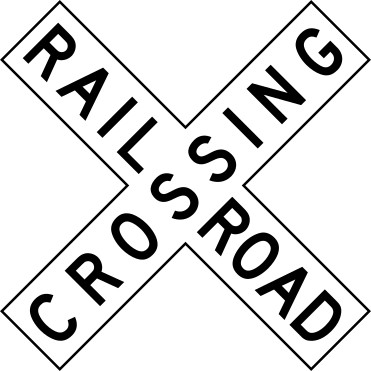
- You must not drive on the left half of the road when approaching within 100 feet of, or passing through, an intersection or railroad crossing. p. 26
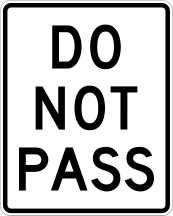
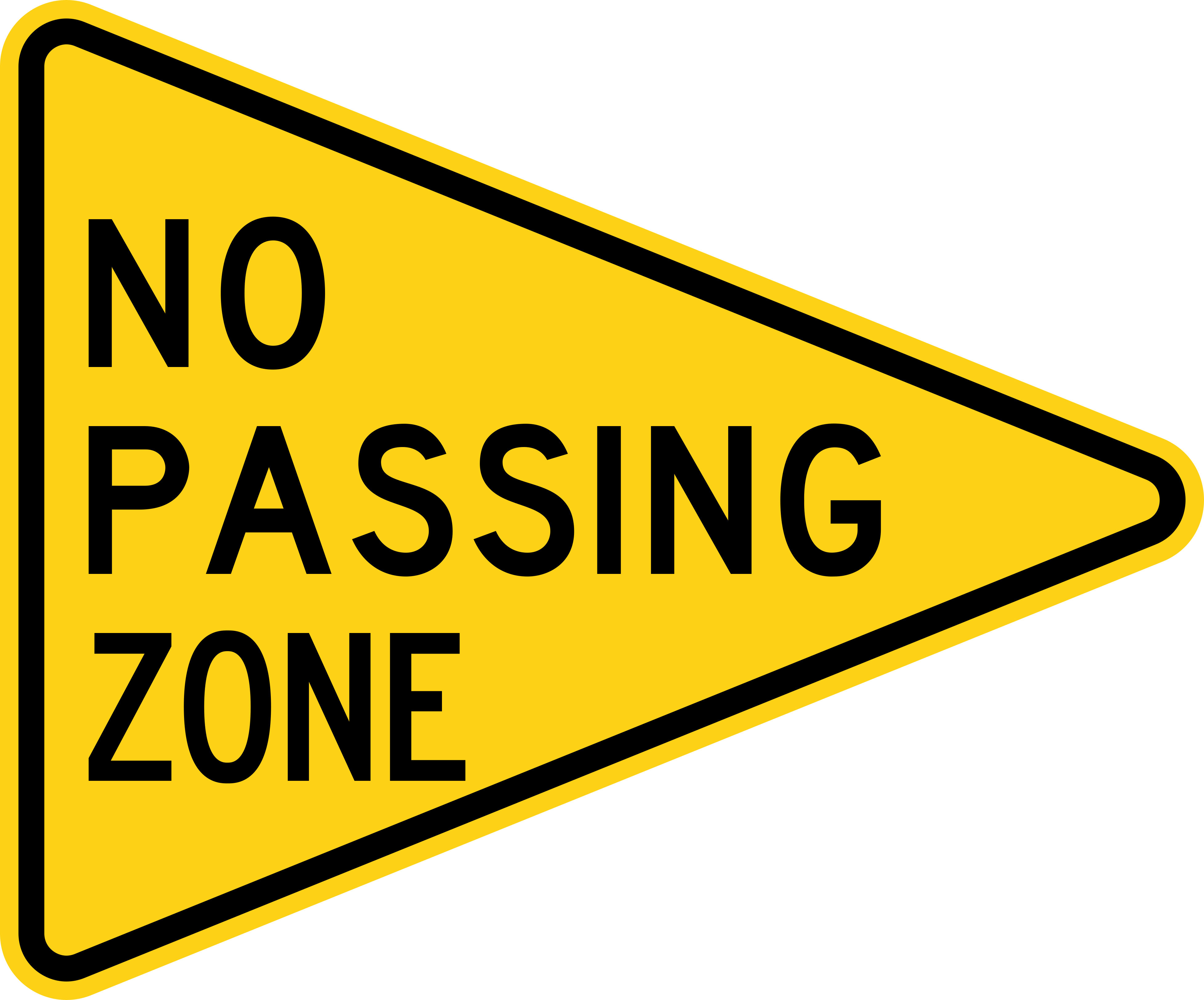
- Do not pass when approaching a hill or curve where there is not 700 to 1,000 feet of clear distance ahead. p. 30
- When you are being passed, it is unlawful to increase your speed. p. 30
Turning & signaling
Speed limits & control
Following distance & space
Railroad crossings
Distracted & drowsy driving
Right of way & intersections
- Funeral processions and convoys have the right-of-way at intersections. p. 29
Emergencies & crashes
- Crashes with any injury, death, or property damage of $3,000 or more must be reported to police immediately by the quickest means. p. 52