Study sheet for before your test. Notes aren’t allowed in the DMV test room. Source: Idaho Driver's Handbook (July 2026), itd.idaho.gov · Checked September 22, 2026 · Printed Oct 11, 2026 · drivingtestpal.com/idaho/cheat-sheet/ |
Idaho · Study sheet Idaho permit test cheat sheetThe 41 Idaho rules, 12 numbers and 12 signs worth knowing cold. Page numbers point to the handbook. Test format40 questions Passing score34 of 40 correct (85%) Permit and test fees$26.50 total Minimum age for a permit14 years, 6 months Supervised driving50 hours (10 at night) Hold your permit6 months minimum Numbers to know
Signs to know
Alcohol & drugs
Permits & licensing
Laws, points & insurance
Speed limits & control
Lanes, passing & merging
Parking & stopping
Sharing the road
School buses & emergency vehicles
Emergencies & crashes
Seat belts & equipment
Traffic signals
Right of way & intersections
Turning & signaling
Night, weather & hazards
Road signs
Pavement markings
Following distance & space
Highways & freeways
Work zones
Distracted & drowsy driving
Railroad crossings
|
Idaho permit test cheat sheet
Idaho-specific rules from our question bank, condensed to one line each with the handbook page. Read it the night before; don’t use it instead of practicing.
Study sheet for before your test. Notes aren’t allowed in the DMV test room. See the study sheets to print.
- Test format
- 40 questions
- Passing score
- 34 of 40 correct (85%)
- Permit and test fees
- $26.50 total
- Minimum age for a permit
- 14 years, 6 months
- Supervised driving
- 50 hours (10 at night)
- Hold your permit
- 6 months minimum
Alcohol & drugs
- Idaho sets a much lower limit for young drivers: 0.02 for anyone under 21, compared with 0.08 for drivers 21 and older. p. 131
- A BAC under 0.08 is not a safe harbor. p. 131
- For a first test failure, ITD suspends your license for 90 days, and for the first 30 days you have absolutely no driving privileges. p. 126
- You may request an administrative hearing on the suspension within seven days of the date on the Notice of Suspension. p. 125
- By driving in Idaho you have already agreed to BAC or drug testing if suspected of DUI. p. 126
- A first refusal brings a one-year absolute suspension; a second refusal within 10 years brings a two-year absolute suspension. p. 127
- A first Idaho DUI conviction can bring up to six months in jail, up to a $1,000 fine and a suspension of 90 to 180 days (one year if under 21). p. 132
- Idaho's open container law bars both drivers and passengers from drinking or possessing an open container of alcohol. p. 130
- Idaho treats a BAC of .08 or more as driving under the influence for drivers 21 and older. p. 131
Permits & licensing
- Idaho issues a Driver Training permit to anyone from 14 1/2 up to 17 so they can attend a public or private driver training program. p. 15
- During the supervised instruction period, an Idaho teen must accumulate at least 50 hours of supervised driving, and 10 of those hours must be at night. p. 19
- The supervisor must be a validly licensed driver who is at least 21 and sits in the front seat beside the teen. p. 19
- The supervised instruction period must be violation-free. p. 19
- Idaho drivers under 16 may drive only in daylight unless a licensed driver at least 21 sits beside them. p. 16
- During the first 6 months of a license, a driver under 17 may carry no more than one passenger under 17 unless the passengers are related by blood, adoption or marriage. p. 16
- Idaho's Class D Instruction Permit is for applicants 17 or older and lasts one year. p. 16
- Idaho driver training has three parts: 30 hours in the classroom, 6 hours in the car watching other student drivers, and 6 hours of behind-the-wheel practice with an approved instructor. p. 19
- The Idaho knowledge test has 40 questions and you may miss up to six, so you need 34 correct (85%). p. 32
Laws, points & insurance
- Idaho requires you to notify ITD within 30 days when your address changes, in person, online or in writing. p. 29
- Idaho's point table is: 8 to 11 points in 12 months, warning letter; 12 to 17 in 12 months, 30-day suspension; 18 to 23 in 24 months, 90 days; 24 or more in 36 months, 6 months. p. 123
- Completing an ITD-approved Defensive Driving Course removes up to three points, and you can do this only once every three years. p. 123
- Drivers under 17 face GDL penalties: a warning letter for the first moving violation, a 30-day suspension for the second and 60 days for the third or later. p. 125
- A first violation of Idaho's no-insurance law requires one year of proof of financial responsibility. p. 128
- After a suspension for a serious offense like reckless driving or DUI, Idaho requires proof of financial responsibility for three years. p. 128
- Never let an unlicensed driver use your vehicle. p. 30
- Idaho's minimum liability coverage is $25,000 for injury or death of one person, $50,000 for injury or death of two or more people in one crash, and $15,000 for damage to other people's property. source
Speed limits & control
- Idaho's default maximum in any residential, business or urban district is 35 mph unless signs say otherwise. p. 68
- The Idaho interstate default is 75 mph unless otherwise posted, and 80 mph may be allowed where posted. p. 68
- Vehicles may not exceed 65 mph on Idaho state highways, though 70 mph may be allowed where posted. p. 68
- Idaho's basic rule requires a speed that is reasonable and prudent at all times. p. 68
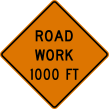
- Idaho treats work zone speeding seriously: violating a posted work zone limit can bring an enhanced, fixed penalty. p. 69
- Idaho's default speed limit is 55 mph on roads other than interstates (75 mph) and state highways (65 mph), and outside residential, business or urban districts (35 mph). source
Turning & signaling
- Idaho requires your signal to start at least 100 feet before a turn or lane change in business or residential areas, and at least five seconds before on freeways or highways. p. 72
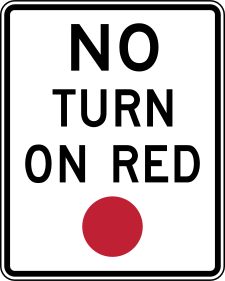
- At a steady red light, Idaho lets you turn right after a complete stop and after yielding to cross traffic and pedestrians, unless a sign says otherwise. p. 73
- At a steady red light, Idaho lets you turn left onto a one-way street after a complete stop and after yielding to cross traffic, unless a sign prohibits it. p. 69
- U-turns are not allowed on curves or near the crest of a hill where approaching drivers cannot see you from within 500 feet in either direction. p. 73
- A thru-turn bans direct left turns. p. 63
Lanes, passing & merging
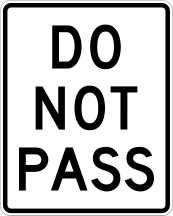
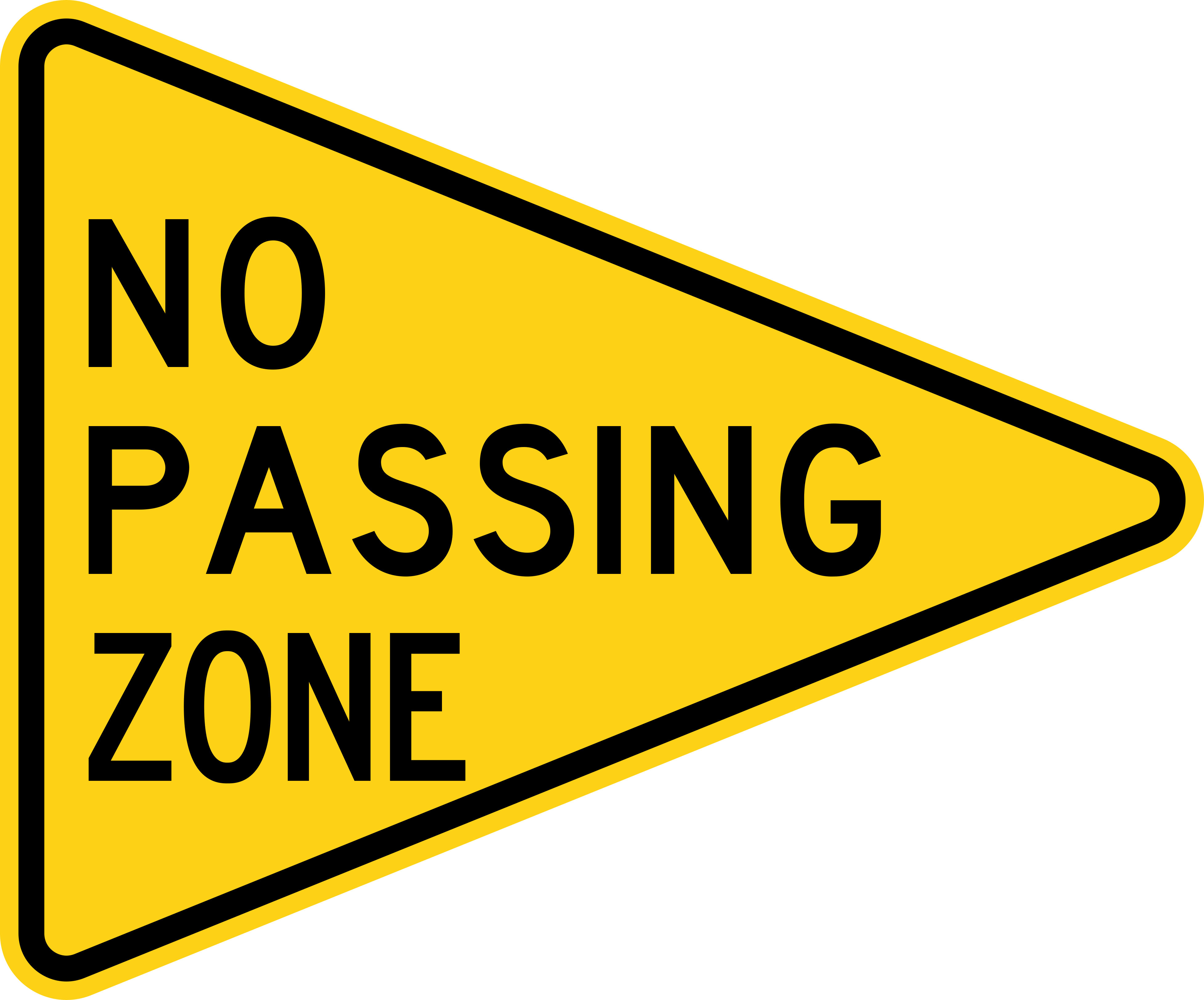
- Idaho requires you to finish a pass before coming within 200 feet of oncoming traffic, and before reaching a marked no-passing zone. p. 78
- Passing is prohibited within 100 feet of an intersection or railroad crossing unless traffic-control devices say otherwise. p. 76
- In a passenger vehicle, motorcycle or pickup not towing, you may exceed the limit by up to 15 mph to pass a slower vehicle on a two-lane road posted 55 mph or higher. p. 77
- In Idaho, any vehicle going slower than normal traffic that is delaying three or more vehicles in a rural area or on a two-lane highway must turn off the road wherever it is safe to let them pass. p. 79
- Idaho law forbids driving in the extreme left-hand lane for a period of time that impedes the flow of other traffic at a lawful speed. p. 69
Parking & stopping
- Idaho requires you to park parallel to and within 18 inches of the curb or road edge, facing the same direction as traffic on your side. p. 80
- Parking is not allowed within 15 feet of a fire hydrant. p. 81
- Idaho bans parking within 20 feet of a crosswalk. p. 81
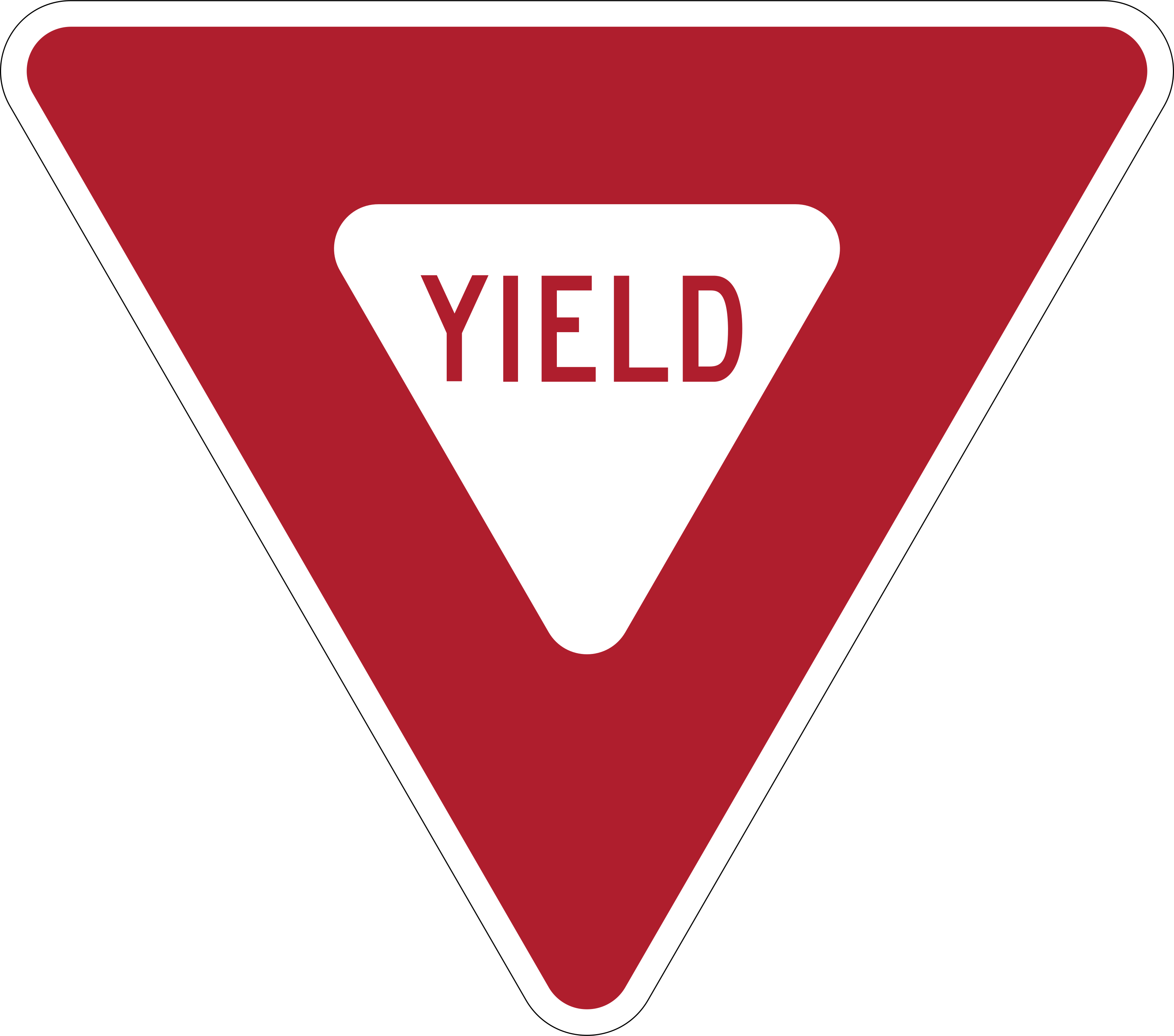
- You may not park within 30 feet of a stop sign, yield sign or traffic signal. p. 81
- Idaho's no-parking distances are 15 feet from a hydrant, 20 feet from a crosswalk or fire station driveway, 30 feet from a stop sign, yield sign or signal, and 50 feet from railroad tracks. p. 81
Seat belts & equipment
- Idaho law requires anyone carrying children 6 years old or younger in a non-commercial vehicle to protect them in approved child safety seats. p. 41
- Idaho law requires all occupants to wear safety belts or shoulder straps when the vehicle was equipped with them by the factory. p. 41
- Idaho requires two brake systems. p. 38
- When a load extends four feet or more beyond the rear, Idaho requires a red flag at least 18 inches square at the end. p. 43
- Idaho has no annual safety inspection, but you are responsible for keeping your vehicle safe. p. 38
Sharing the road
School buses & emergency vehicles
- Traffic must stop and remain stopped as long as the red lights are flashing or the stop arm is out. p. 70
- On highways with four or more lanes, two going each direction, drivers going the opposite way of a stopped school bus do not have to stop. p. 70
- Approaching a stopped emergency or police vehicle with flashing lights, Idaho requires you to reduce speed below the posted limit and proceed with caution. p. 95
- Idaho's move-over rule covers stopped emergency or police vehicles with lights flashing, plus tow trucks and incident response vehicles. p. 95
Emergencies & crashes
- You must report to police any crash with an injury or property damage over $1,500. p. 121
- Idaho's Quick Clearance law requires anyone in a crash on an interstate or major divided highway that causes no death or injury to safely move the vehicle to a shoulder, median or emergency lane. p. 121
- Idaho's Good Samaritan Law protects you from civil liability if you help in good faith. p. 121
- If an uninsured driver injures you or your property and you cannot collect, you may request suspension of that driver's privileges. p. 119
Traffic signals
Right of way & intersections
- At an unmarked or uncontrolled T intersection, the driver on the road that ends must stop and/or yield to drivers coming from the other two directions. p. 75
- Always give funeral processions the right-of-way. p. 78
- In Idaho, horses, cattle, sheep and other livestock under controlled movement over a road have the right-of-way. p. 108
Night, weather & hazards
- Turn on your headlights from sunset to sunrise, and in daytime whenever visibility is reduced to 500 feet or less. p. 109
- Idaho requires headlamps to be dimmed 500 feet before meeting an oncoming vehicle and 200 feet before overtaking one. p. 43
- Studded snow tires may be used in Idaho only from October 1 to April 30. p. 114
Road signs
Pavement markings
Following distance & space
Highways & freeways
Work zones
Distracted & drowsy driving
Railroad crossings
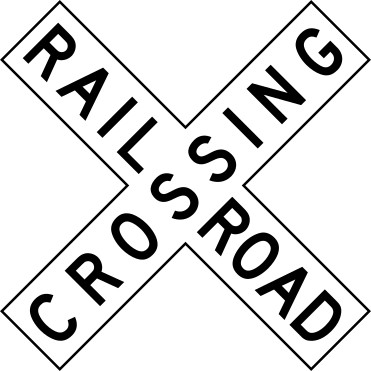
- Stop within 50 feet but not less than 15 feet from the nearest rail. p. 60