Study sheet for before your test. Notes aren’t allowed in the DMV test room. Source: Oregon Driver Manual 2026-2027 (2026-2027 (May 2025)), oregon.gov · Checked September 22, 2026 · Printed Oct 11, 2026 · drivingtestpal.com/oregon/cheat-sheet/ |
Oregon · Study sheet Oregon permit test cheat sheetThe 45 Oregon rules, 12 numbers and 12 signs worth knowing cold. Page numbers point to the handbook. Test format35 questions Passing score28 of 35 correct (80%) Permit and test fees$37 total Minimum age for a permit15 years Supervised driving100 hours Hold your permit6 months minimum Numbers to know
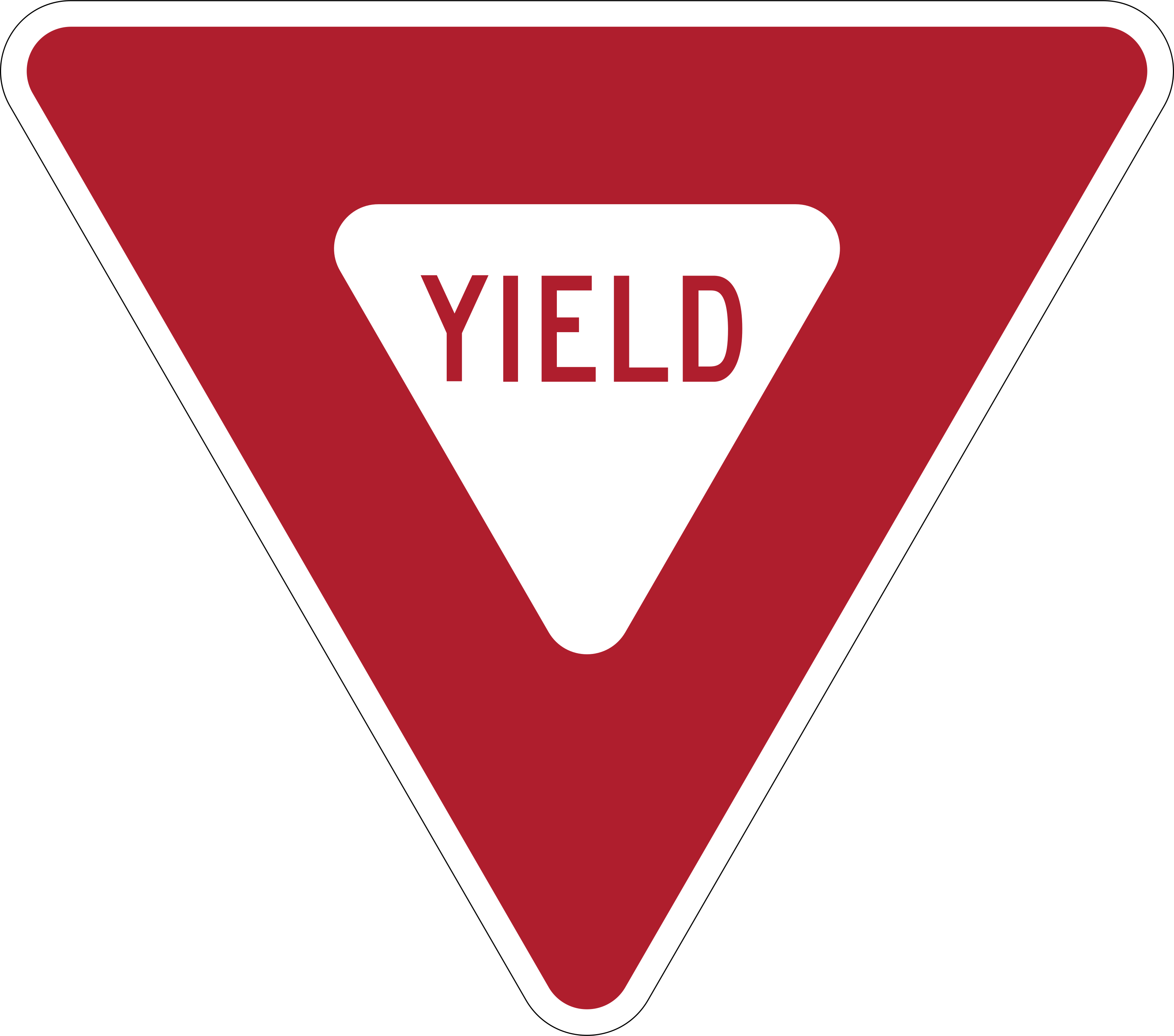
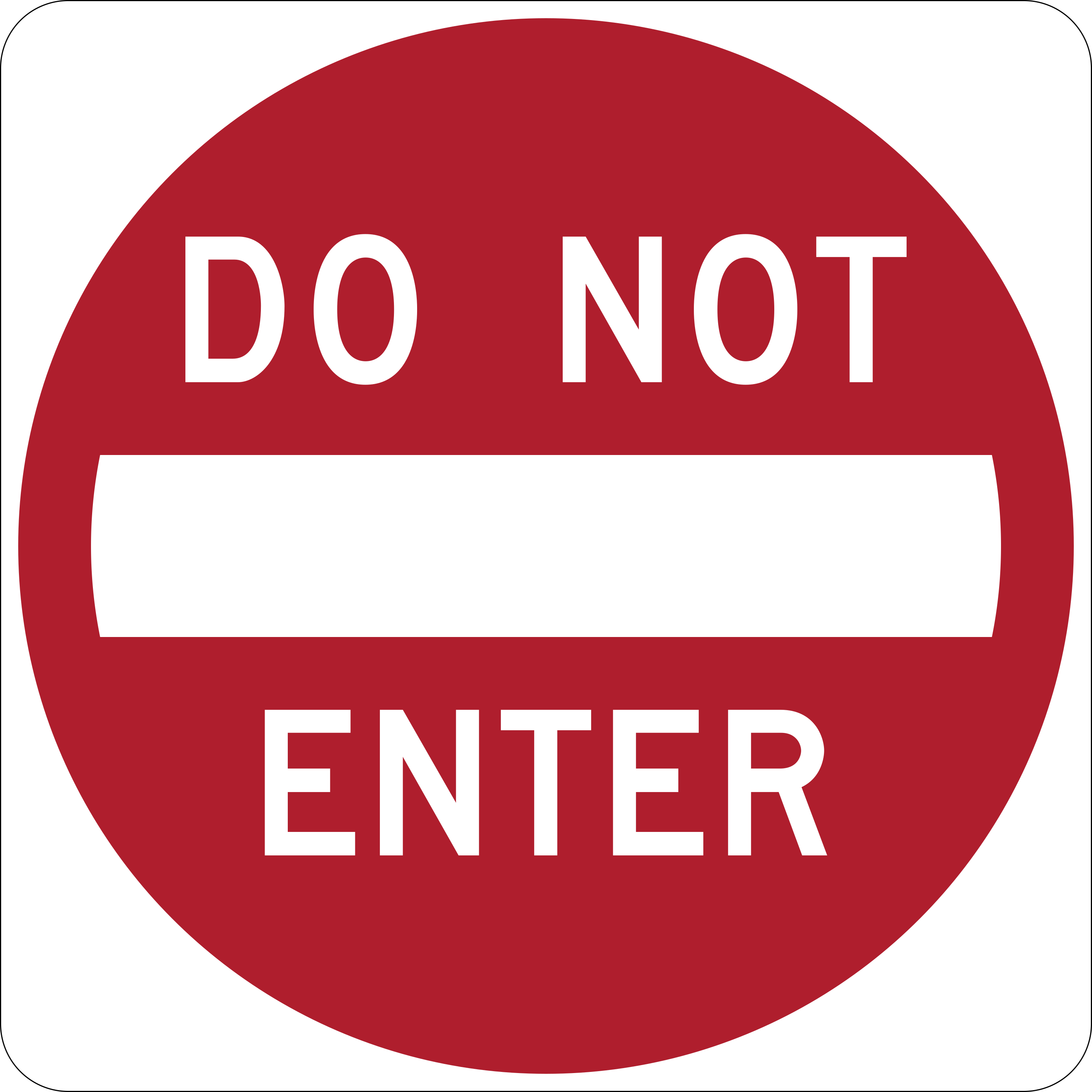
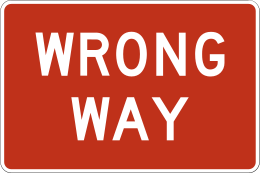
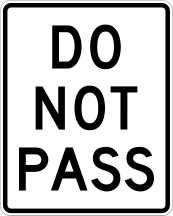
Signs to know
Speed limits & control
Sharing the road
Permits & licensing
School buses & emergency vehicles
Alcohol & drugs
Night, weather & hazards
Seat belts & equipment
Pavement markings
Turning & signaling
Work zones
Emergencies & crashes
Distracted & drowsy driving
Laws, points & insurance
Traffic signals
Parking & stopping
Highways & freeways
Railroad crossings
Road signs
Right of way & intersections
Lanes, passing & merging
Following distance & space
|
Oregon permit test cheat sheet
Oregon-specific rules from our question bank, condensed to one line each with the handbook page. Read it the night before; don’t use it instead of practicing.
Study sheet for before your test. Notes aren’t allowed in the DMV test room. See the study sheets to print.
- Test format
- 35 questions
- Passing score
- 28 of 35 correct (80%)
- Permit and test fees
- $37 total
- Minimum age for a permit
- 15 years
- Supervised driving
- 100 hours
- Hold your permit
- 6 months minimum
Speed limits & control
- Oregon sets 20 mph as the limit in any business district, the same as in a school speed zone. p. 27
- Oregon's statutory limit is 25 mph in residential districts, public parks and on ocean shores where vehicles are allowed. p. 27
- Alleys and narrow residential areas have a 15 mph limit under Oregon law. p. 27
- Oregon's catch-all limit is 55 mph on roads and highways that do not meet any other definition, unless a different speed is posted. p. 27
- Oregon's basic rule says you must drive at a speed that is reasonable and cautious for existing conditions. p. 29
- Oregon has two kinds of digital speed signs. p. 28
Sharing the road
- Oregon requires you to stop and stay stopped for a pedestrian in a crosswalk who is in your lane, in a lane next to yours (including a bike lane) or in the lane you are turning into. p. 54
- At a signalized intersection the pedestrian must be at least six feet from the lane you are turning into before you start the turn. p. 55
- Oregon treats every intersection as having a crosswalk, even if none is painted. p. 55
- At speeds over 35 mph, Oregon allows you to pass a bicyclist in your lane only if you leave enough room that you would not hit them if they fell into your lane. p. 58
- Bike boxes let bicyclists wait in front of cars at a red light. p. 59
- Oregon defines a pedestrian as crossing when any part of them, or an extension such as a cane, wheelchair or bicycle, moves onto the road. p. 54
Permits & licensing
- You must be at least 15 to apply for an Oregon instruction permit and at least 16 to apply for a license. p. 97
- If you are under 18, you must have held an instruction permit for at least 6 months before getting a license. p. 98
- Oregon requires 100 hours of supervised driving, or 50 hours if you also complete an ODOT-approved traffic safety education course. p. 98
- Supervised driving counts only if the supervisor is at least 21 and has had valid driving privileges for at least 3 years. p. 98
- In the first 6 months of a provisional license you may not carry passengers under 20 who are not immediate family. source
- Oregon provisional drivers may not drive between midnight and 5:00 AM unless driving between home and work or a school event without other transportation, for work, or with a licensed driver at least 25. source
Turning & signaling
- Oregon requires a turn signal at least 100 feet before you turn or change lanes when moving in traffic. p. 46
- Hand-and-arm signals are hard to see, so Oregon allows them only in daylight when you can see 1,000 feet. p. 46
- In a city, you may not make a U-turn where traffic from either direction cannot see you within 500 feet. p. 49
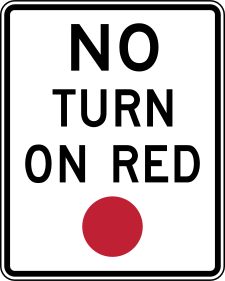
- Oregon allows a left on red only when you turn onto a one-way road. p. 48
- In Oregon you may cross a bike lane to turn, but you must not move into it or travel in it to set up your turn. p. 47
Parking & stopping
- Oregon prohibits parking within 10 feet of a fire hydrant. p. 78
- You may not park within 20 feet of a crosswalk at an intersection, marked or not. p. 79
- Oregon bans parking within 15 feet of a fire station driveway on the same side of the street and within 75 feet on the opposite side. p. 79
- You may not park within 50 feet of the nearest rail of a railroad or light rail crossing. p. 79
- Parking in a disabled person space without a valid permit is illegal in Oregon, even for a few minutes. p. 78
School buses & emergency vehicles
- On a divided highway with two roads separated by an unpaved median or barrier, only drivers on the same side as the bus must stop. p. 63
- Only an unpaved median or barrier creates two separate roads. p. 63
- Oregon allows places of worship and worker transport buses to use flashing amber and red lights. p. 64
- Once an emergency vehicle has passed, you must stay at least 500 feet behind it. p. 66
- When you approach any stopped vehicle with flashing lights on a road with two or more lanes in your direction, change lanes so you do not drive next to it. p. 65
Alcohol & drugs
- Oregon presumes you are impaired at a BAC of 0.08% or more. p. 90
- 0.08% is the level at which impairment is presumed, not a safe limit. p. 90
- Oregon has a zero tolerance law for drivers under 21. p. 91
- Under Implied Consent, driving in Oregon means you have already agreed to a breath, blood or urine test when a police officer asks. p. 91
- Oregon's Open Container law makes it illegal to have an open container of alcohol in a vehicle on any road. p. 91
Night, weather & hazards
- Oregon requires headlights from sunset to sunrise and whenever conditions make it hard to see people or vehicles 1,000 feet ahead. p. 84
- Oregon requires you to dim your high beams when an oncoming vehicle is within 500 feet. p. 84
- Dim your lights when following another vehicle within 350 feet. p. 84
- Oregon generally allows studded tires only from November 1 through March 31. p. 87
Seat belts & equipment
- Oregon requires safety belts for all drivers and passengers in every available seating position. p. 81
- Children must ride in an approved child safety seat until they are 8 or at least 4 feet 9 inches tall and the adult lap and shoulder belt fits them correctly. p. 82
- Oregon requires infants to ride rear-facing until they reach two years of age. p. 82
- Oregon law prohibits anyone under 18 from riding in a pickup bed or on any external part of a vehicle, such as a hood, fender or running board. p. 92
Pavement markings
Work zones
Emergencies & crashes
- Oregon requires a DMV collision report (Form 735-32) within 72 hours if damage to the vehicle you were driving is over $2,500, among other triggers such as injury or death. p. 102
- Injury or death in a crash always makes it reportable in Oregon. p. 102
- If your vehicle cannot be seen from 200 feet in each direction, warn approaching traffic with flags, flares, signs, signals or flaggers placed at least 200 feet away in each direction. p. 79
Distracted & drowsy driving
- It is illegal for Oregon drivers under 18 to use a cell phone or other mobile electronic device while driving, even hands-free. p. 88
- Drivers 18 and older must use a hands-free accessory that needs only minimal use of a finger to turn on or off. p. 88
- It is illegal to play a radio or other sound system loud enough to be heard 50 feet from your vehicle. p. 88
Laws, points & insurance
- Oregon's minimum liability coverage is $25,000 for one person, $50,000 for two or more people and $20,000 for damage to other people's property. p. 101
- Oregon requires Personal Injury Protection of $15,000 per person. p. 101
- Oregon allows a passenger or recreational vehicle to tow a maximum of one boat, utility trailer or other vehicle. p. 44
Traffic signals
Highways & freeways
Railroad crossings
Road signs
- Safety corridors are stretches of Oregon highway with more fatal and serious injury crashes than the statewide average. p. 21
Right of way & intersections
- Trucks may need both lanes to get around a roundabout. p. 52
Lanes, passing & merging
- When being passed, stay to the right and adjust your speed to help the other driver. p. 41
Following distance & space
- Oregon defines a safe following distance as 2-4 seconds. p. 34