Oregon DMV Exam Simulator
A full-length mock exam built to Oregon's real rules: 35 questions, 28 correct to pass (80%). New questions every attempt.
How this simulator works
- Knowledge test: 35 questions, 28 correct to pass.
- No time limit, like the real test. Take your time.
- You won’t see whether you were right until the end, just like at the Oregon test. Then you can review every answer with its explanation.
- Questions are drawn fresh from the full Oregon bank each time.
How the real Oregon knowledge test works
The Oregon Driver & Motor Vehicle Services (Oregon Department of Transportation) test is 35 questions, 28 correct to pass (80%). This simulator follows the same structure, gives no feedback until you finish, and draws a new set of questions from the full Oregon bank every time.
Aim to pass the simulator two or three times in a row, on different days, before you book your test.
Sample questions from this test
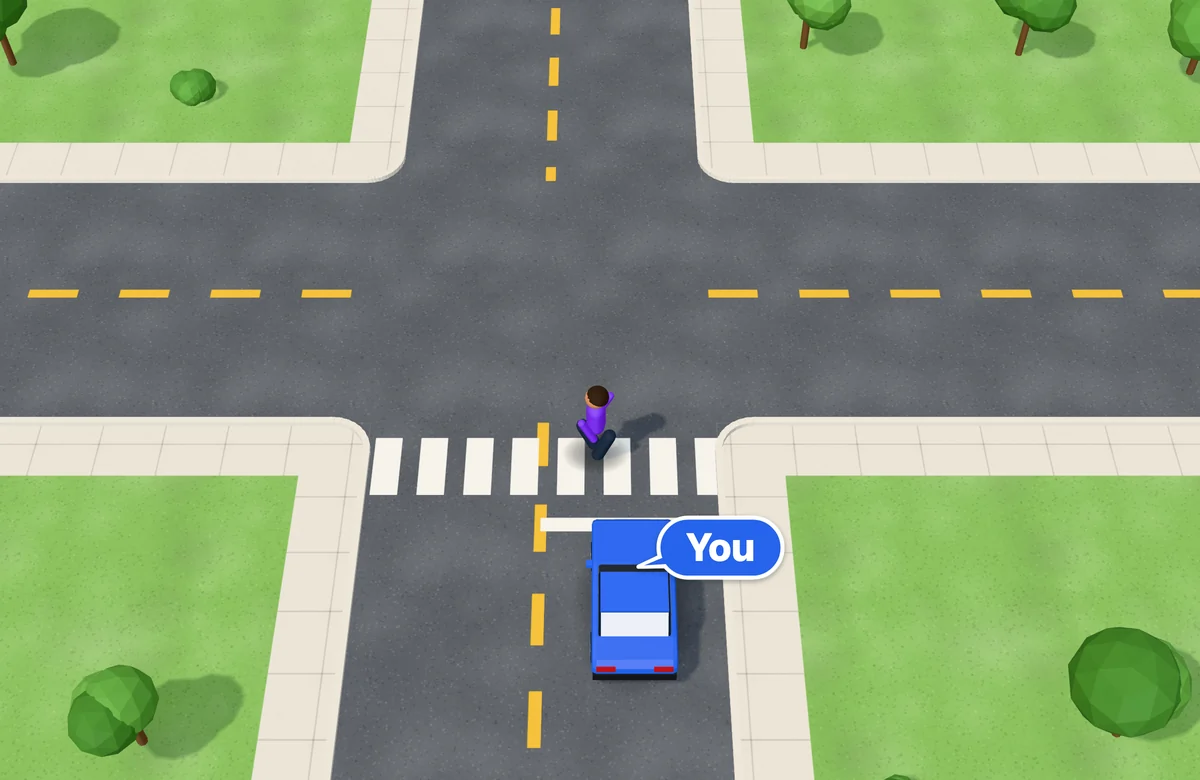
View diagram
A pedestrian is in a crosswalk. Under Oregon law, in which case must you stop and remain stopped?
- A Only when the pedestrian is directly in front of your car's bumper
- B When the pedestrian is in your lane or the lane next to yours
- C Only at crosswalks marked with painted lines
- D Only when a pedestrian signal shows WALK
Show answer
B. When the pedestrian is in your lane or the lane next to yours
Oregon requires you to stop and stay stopped for a pedestrian in a crosswalk who is in your lane, in a lane next to yours (including a bike lane) or in the lane you are turning into.

You come to a red eight-sided sign and a pedestrian is crossing in front of you in an unmarked crosswalk. What must you do?
- A Stop completely and stay stopped while the pedestrian crosses
- B Stop briefly, then go once you have yielded to other cars
- C Stop only if the crosswalk is marked with painted lines
- D Slow down and continue if the pedestrian is not in your lane yet
Show answer
A. Stop completely and stay stopped while the pedestrian crosses
A stop sign means a complete stop. You must also yield to other vehicles and stay stopped for anyone crossing in a marked or unmarked crosswalk, then go only when it is safe.
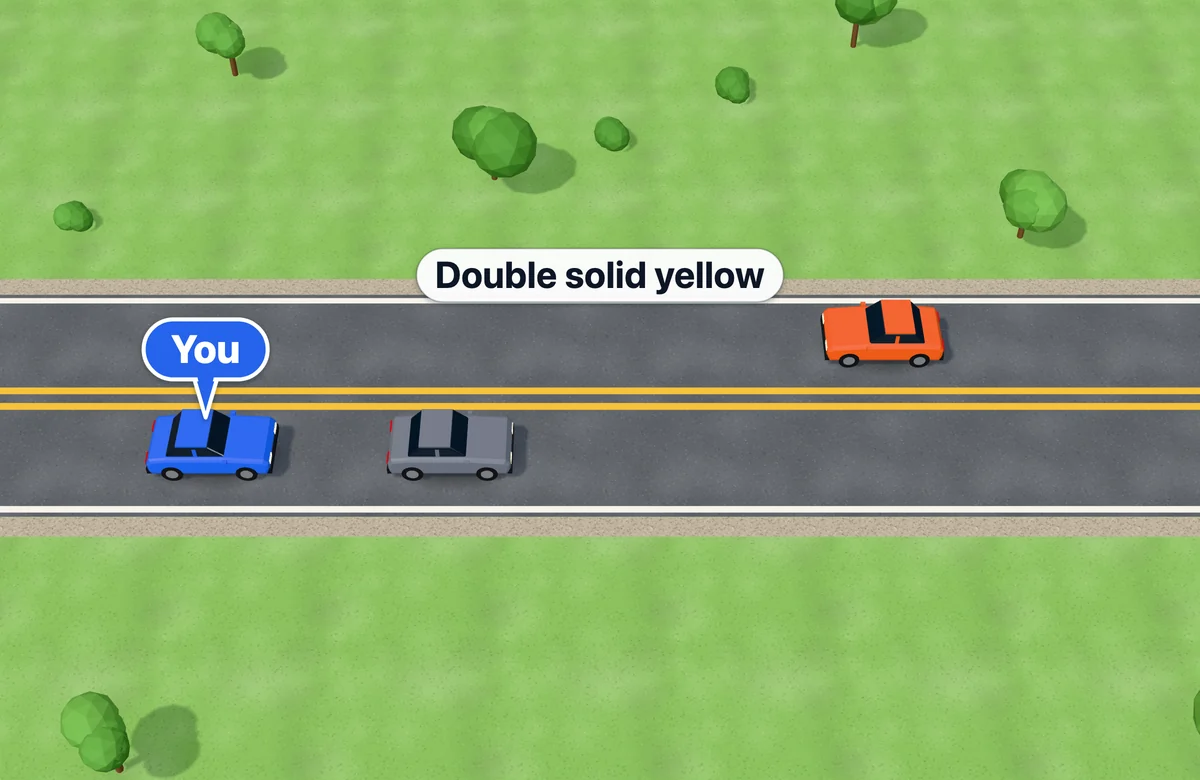
View diagram
The road has a double solid yellow center line. May you cross it to turn left into a driveway?
- A Yes, and oncoming traffic must yield to you
- B Yes, after waiting for oncoming traffic to clear
- C No, double solid yellow lines may never be crossed
- D Only if a sign says left turns are allowed
Show answer
B. Yes, after waiting for oncoming traffic to clear
Double solid yellow lines mean no passing in either direction. You may still cross them to turn left into or out of a road or driveway once oncoming traffic has cleared.
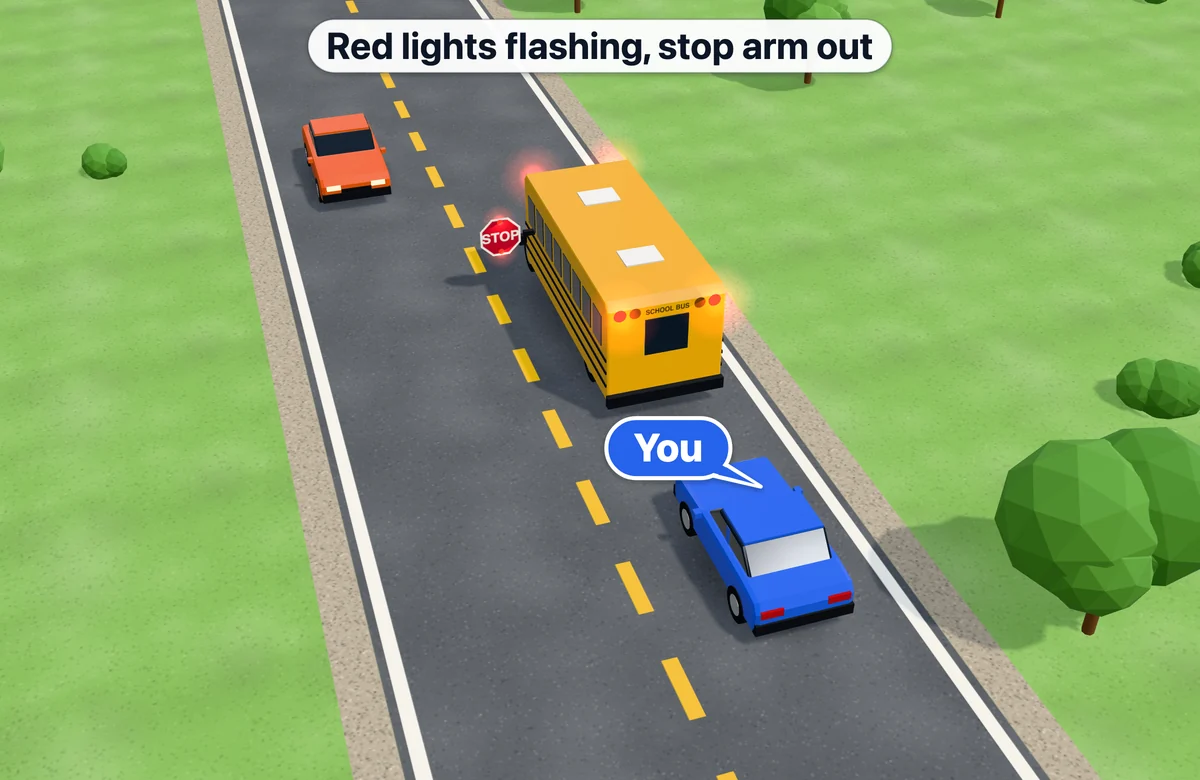
View diagram
A school bus ahead of you on a two-lane road turns on its flashing red lights. What must you do?
- A Slow to 20 mph and pass carefully
- B Stop, then pass on the left if no oncoming traffic is coming
- C Stop, then go on once all the children have walked away and are out of sight
- D Stop before reaching the bus and stay stopped until the red lights go off
Show answer
D. Stop before reaching the bus and stay stopped until the red lights go off
Flashing red lights on a school bus mean stop before you reach the bus. Stay stopped until the driver turns the red lights off, even if you no longer see children.
Besides from sunset to sunrise, when does Oregon require your headlights to be on?
- A Any time you cannot see people or vehicles 500 feet ahead of you
- B Only when it is raining heavily
- C Any time you cannot see people or vehicles 1,000 feet ahead
- D Only on freeways and highways
Show answer
C. Any time you cannot see people or vehicles 1,000 feet ahead
Oregon requires headlights from sunset to sunrise and whenever conditions make it hard to see people or vehicles 1,000 feet ahead. Headlights help others see you at any time of day.