Study sheet for before your test. Notes aren’t allowed in the DMV test room. Source: Minnesota Driver's Manual (June 2026), assets.dps.mn.gov · Checked September 22, 2026 · Printed Oct 11, 2026 · drivingtestpal.com/minnesota/cheat-sheet/ |
Minnesota · Study sheet Minnesota permit test cheat sheetThe 45 Minnesota rules, 12 numbers and 12 signs worth knowing cold. Page numbers point to the handbook. Passing score80% Permit and test fees$29.50 total Minimum age for a permit15 years Supervised driving50 hours (15 at night) Hold your permit6 months minimum Numbers to know
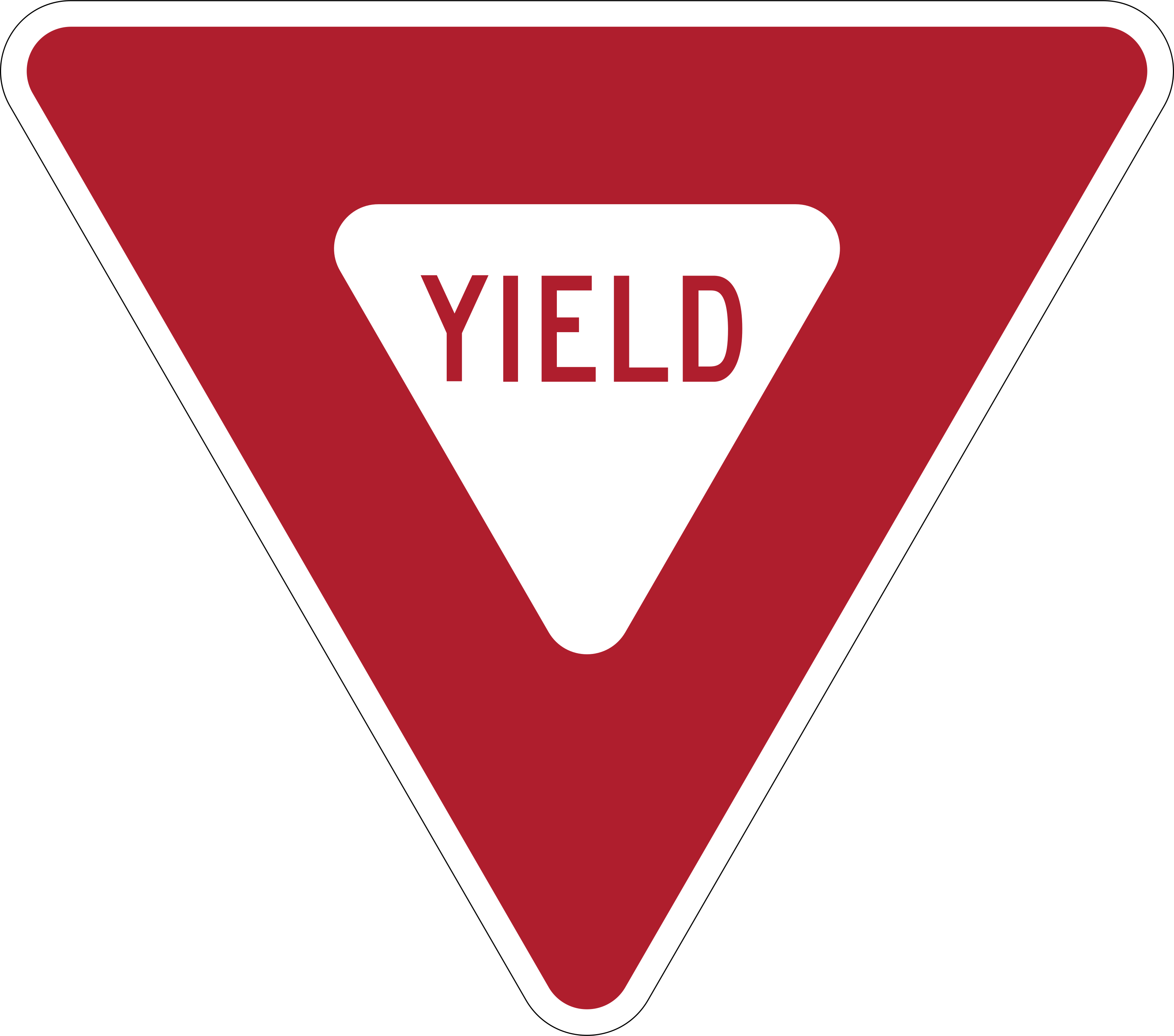
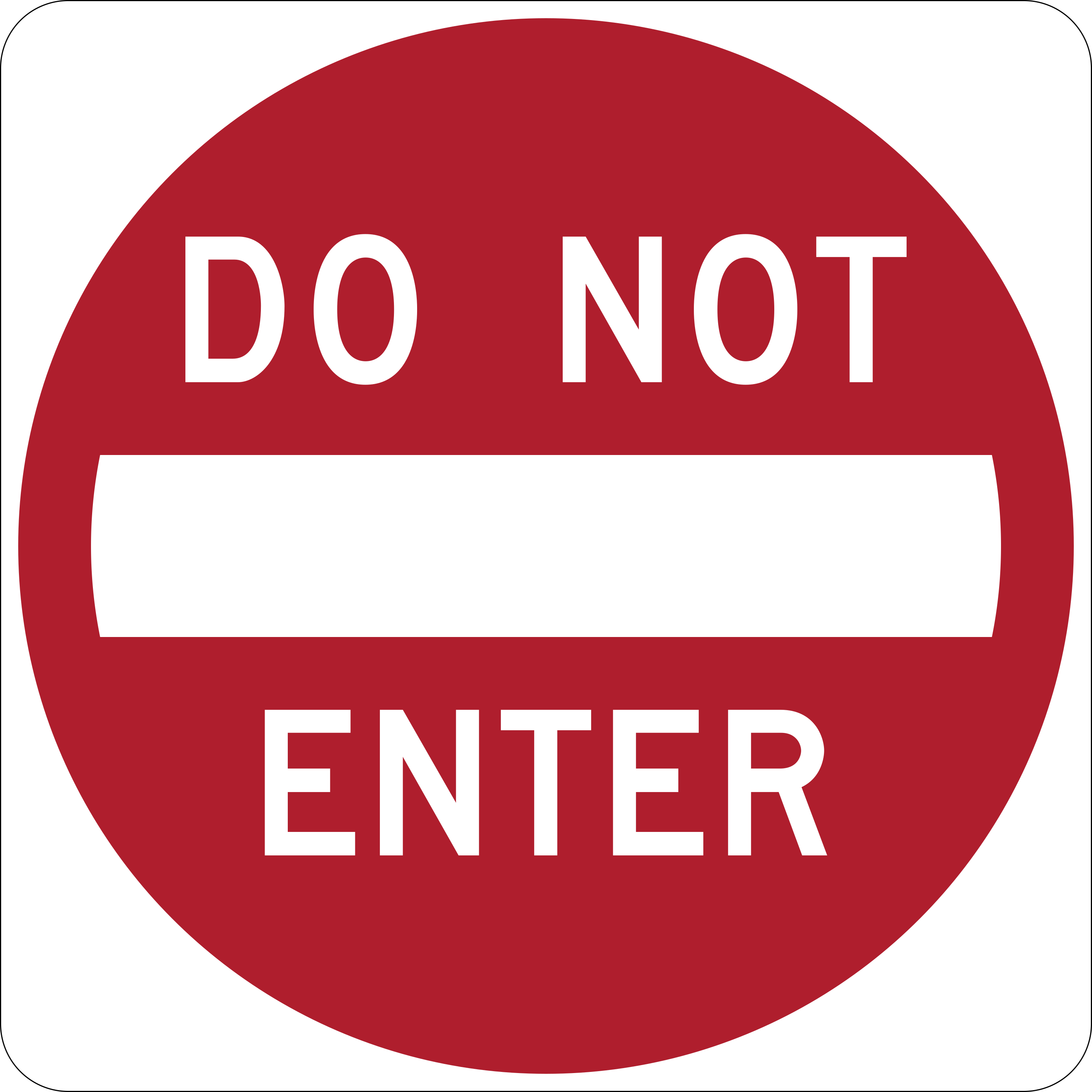
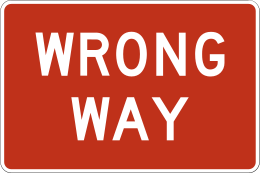
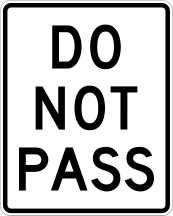
Signs to know
Permits & licensing
Alcohol & drugs
Laws, points & insurance
Seat belts & equipment
Speed limits & control
Sharing the road
School buses & emergency vehicles
Right of way & intersections
Turning & signaling
Lanes, passing & merging
Highways & freeways
Distracted & drowsy driving
Parking & stopping
Night, weather & hazards
Traffic signals
Railroad crossings
Work zones
Road signs
Pavement markings
|
Minnesota permit test cheat sheet
Minnesota-specific rules from our question bank, condensed to one line each with the handbook page. Read it the night before; don’t use it instead of practicing.
Study sheet for before your test. Notes aren’t allowed in the DMV test room. See the study sheets to print.
- Test format
- Not published
- Passing score
- 80%
- Permit and test fees
- $29.50 total
- Minimum age for a permit
- 15 years
- Supervised driving
- 50 hours (15 at night)
- Hold your permit
- 6 months minimum
Permits & licensing
- In Minnesota you can get an instruction permit at 15. p. 16
- A permit holder under 18 must be supervised by a driver who is at least 21. p. 16
- Drivers 18 or younger must hold their permit for at least six months before the road test. p. 16
- Drivers 19 and older must hold an instruction permit for at least three months before the road test. p. 17
- Without the parent class, a Minnesota teen must log at least 50 supervised hours, 15 of them at night. p. 17
- The parent class lowers the supervised-driving log from 50 hours to 40, but 15 nighttime hours are still required either way. p. 17
- In the first six months of a provisional license you may not drive between midnight and 5 a.m., with a few exceptions such as driving to work. p. 17
- The midnight-to-5 a.m. limit has exceptions: a licensed driver 25 or older in the car, trips between home and work, work duties, and trips to school events with no school transportation. p. 17
- New drivers are limited to one passenger under 20 during the first six months because teen passengers raise crash risk. p. 18
- The passenger limit loosens in stages: one passenger under 20 in the first six months, then up to three in the second six months. p. 18
- Minnesota's provisional passenger limits do not count immediate family members under 20. p. 18
- Vanessa's Law says a teen convicted of a crash-related or alcohol/drug violation while driving without a license cannot get a license, permit or provisional license until 18. p. 18
- You can upgrade after holding the provisional license for 12 straight months without alcohol, drug or crash-related convictions, or when you turn 18. p. 19
- You must score at least 80 percent, and you may take only one written test per day. p. 13
- Your normal or corrected vision must be at least 20/40, and you need at least 105 degrees of side vision. p. 13
- A Minnesota instruction permit is valid for two years of practice driving with a licensed supervisor in the front passenger seat. p. 16
Alcohol & drugs
- A driver with an alcohol concentration of 0.08 or more can be arrested for DWI. p. 96
- 0.08 is not a safe level. p. 96
- Minnesota has a zero tolerance ('Not a Drop') rule. p. 98
- Under the no-tolerance rule, a first conviction brings a 30-day suspension and a second conviction brings 180 days. p. 98
- If an officer has probable cause to believe you are impaired, you must take a chemical test. p. 96
- Penalties rise if you have prior DWIs, an alcohol concentration of 0.16 or more, a child under 16 in the car, are under 21, or refuse a pre-arrest breath test. p. 97
- Getting your license back after an alcohol-related revocation costs a $680 reinstatement fee, plus a new license application and possibly the Ignition Interlock program. p. 97
- The interlock device is wired to the starter. p. 98
- Minnesota's open container law bans drinking or having an open alcoholic beverage in a vehicle on a public road, and it is unlawful to let a passenger do so. p. 99
- Opened cannabis packages must be in the trunk, or in an area not normally occupied by people if there is no trunk. p. 99
Laws, points & insurance
- Minnesota is a no-fault state. p. 43
- Driving an uninsured vehicle can bring a fine of up to $1,000 and up to 90 days in jail. p. 43
- At a crash, give your insurer's name and agent to the investigating officer. p. 42
- If a crash causes only property damage, the manual says you do not need to notify law enforcement. p. 42
- Drivers involved in a crash are legally required to give reasonable help to victims. p. 42
- Fleeing a police officer is a felony. p. 49
- A limited license allows only certain trips, such as to and from work, chemical dependency treatment, a college where you are enrolled, or dependents' medical, educational or nutritional needs. p. 93
- Speeds over 100 mph lead to revocation for at least six months. p. 30
- Minnesota liability insurance must cover at least $30,000 for injury to one person and $60,000 for injury to two or more people in one crash, plus at least $10,000 for damage to other people's property. source
Seat belts & equipment
- Everyone in a Minnesota vehicle, front and back, must wear a seat belt, and officers can pull you over just for a seat belt violation. p. 40
- Children under 13 must ride in the back seat if one is available. p. 41
- Children aged 4 to 9 who have outgrown their car seat must use a booster with a safety belt. p. 41
- Minnesota requires children under 2 to ride in a rear-facing car seat until they reach the seat's weight or height limit. p. 41
- A tire with less than 1/16 inch of tread is illegal. p. 27
- Every car and truck must have at least two separate brake systems, such as the foot brake and the parking/emergency brake. p. 25
- Minnesota limits blue lights to snowplows, road maintenance equipment and authorized emergency vehicles. p. 26
Speed limits & control
- Minnesota's limits under ideal conditions are 10 mph in alleys, 30 mph on urban or town roads and 55 mph in other unlisted locations, unless signs show otherwise. p. 29
- Minnesota's default limit on urban or town roads is 30 mph. p. 29
- Minnesota's catch-all limit under ideal conditions is 55 mph in all locations not otherwise specified. p. 29
- On two-lane highways posted at 55 mph or more, you may go up to 10 mph over the limit while lawfully passing a vehicle going the same way. p. 29
- Under Minnesota law, a driver who approaches an intersection at an unlawful speed loses the right-of-way that comes with driving at a lawful speed. p. 29
Sharing the road
- Leave at least 3 feet between the side of your car and a bicyclist. p. 51
- Minnesota lets drivers cross the center of the road to pass a bicyclist, even in a no-passing zone, if it is safe. p. 51
- Minnesota allows motorcyclists to share your lane to pass slow or stopped traffic. p. 52
- Lane splitting is allowed only at 25 mph or less and no more than 15 mph faster than the traffic being passed. p. 53
- NEVs top out between 20 and 25 mph, so Minnesota limits them to streets with limits of 35 mph or less. p. 54
School buses & emergency vehicles
- Stop at least 20 feet from a school bus with flashing red lights, whether you are behind it or facing it. p. 45
- On a divided roadway, traffic on the opposite side of the divider does not need to stop for a school bus. p. 45
- Failing to stop for a school bus with flashing red lights is a misdemeanor with a fine of at least $500 and loss of driving privileges. p. 45
- Flashing yellow lights mean the bus is about to stop. p. 44
- The Move Over Law covers emergency vehicles, including tow trucks. p. 47
Right of way & intersections
- At an uncontrolled T intersection, the driver who is turning must yield to all cross traffic. p. 46
- When driving in the right lane, you must yield to transit and metro mobility buses merging from a bus stop or shoulder. p. 46
- Never stop inside a roundabout. p. 33
- It is illegal to pass a vehicle that has stopped for a pedestrian, because the stopped car may hide someone crossing. p. 50
Turning & signaling
- Signal at least 100 feet before you turn and keep signaling until the turn or lane change is done. p. 30
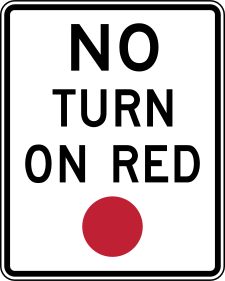
- After a complete stop, and yielding to everyone, you may turn left on red from a one-way road onto a one-way cross street where traffic flows the way you are turning. p. 69
- U-turns are banned on interstate freeways and near hilltops or on curves where other drivers cannot see you from 1,000 feet. p. 36
- J-turns cut down on deadly broadside crashes. p. 35
Lanes, passing & merging
- Minnesota law requires you to be back in the right lane before you come within 100 feet of an oncoming vehicle. p. 37
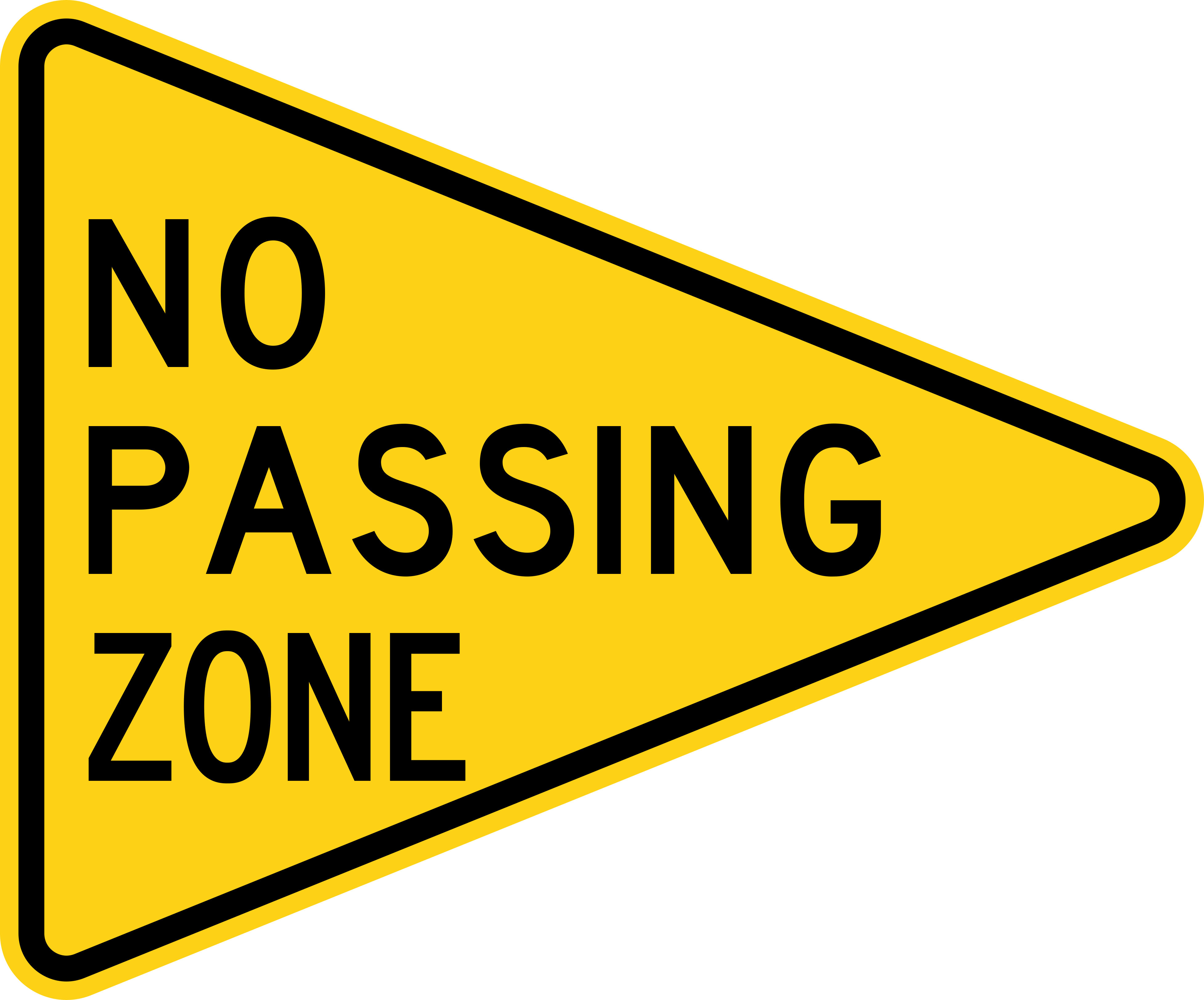
- Do not pass on a curve or hill where you cannot see at least 700 feet ahead. p. 37
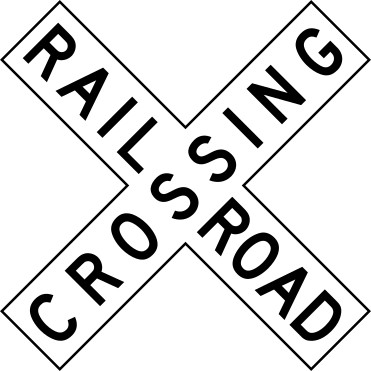
- Do not pass within 100 feet of an intersection, underpass, tunnel or railroad crossing. p. 37
- You may pass on the right when a vehicle is turning left, but only on the roadway. p. 37
Parking & stopping
- Minnesota bans parking within 10 feet of a fire hydrant so fire crews can reach it quickly. p. 38
- Do not park within 20 feet of a crosswalk at an intersection. p. 38
- Park with the wheels nearest the curb no more than 12 inches away. p. 38
- When parked on a highway at night, show at least one white or amber light in front and one red taillight, both visible from at least 500 feet. p. 40
Highways & freeways
- Ramp meters space out cars entering the freeway. p. 77
- Transit and metro mobility buses may use freeway shoulders only when main-line traffic is slower than 35 mph. p. 78
- Stopping or parking on an interstate is illegal except in an emergency, and running out of fuel does not count. p. 80
- Park as far from traffic as possible, use hazard lights, raise the hood, and place flares or reflectors 100 to 500 feet behind your car on the right edge of the road. p. 80
Distracted & drowsy driving
- Minnesota drivers under 18 with an instruction permit or provisional license may not use a cell phone at all, handheld or hands-free, except to call 911 in an emergency. p. 82
- Minnesota bans using a phone to text, email or go online while driving, and that includes sitting stopped in traffic. p. 82
- Minnesota law forbids wearing headphones or earphones in both ears at once to listen to a radio or other sound device. p. 82
- Minn. source
Work zones
- Speeding in a work zone brings a $300 fine on top of the normal speeding ticket. p. 57
- In heavy, slow traffic, use both lanes up to the merge point, then alternate like a zipper. p. 57
- Using both lanes until the merge point shortens backups by up to 40 percent and makes merging fairer and safer. p. 58
Night, weather & hazards
- Dim to low beams within 1,000 feet of an oncoming vehicle and when following within 200 feet. p. 76
- Use headlights from sunset to sunrise, in rain, snow, hail, sleet or fog, and any time you cannot clearly see 500 feet ahead. p. 76
- Stay with your vehicle, keep the exhaust pipe clear, run the engine about 10 minutes each hour for heat, and leave a window partly open for fresh air. p. 85
Traffic signals
Railroad crossings
Road signs
- Vehicles that travel 30 mph or less, like farm equipment and horse-drawn buggies, must display the slow-moving vehicle emblem. p. 64
Pavement markings
- Reversible lanes change direction during rush hour. p. 74