South Dakota permit test: pavement markings
Yellow and white lines, passing zones, crosswalks, stop lines and special lanes. 4 questions.
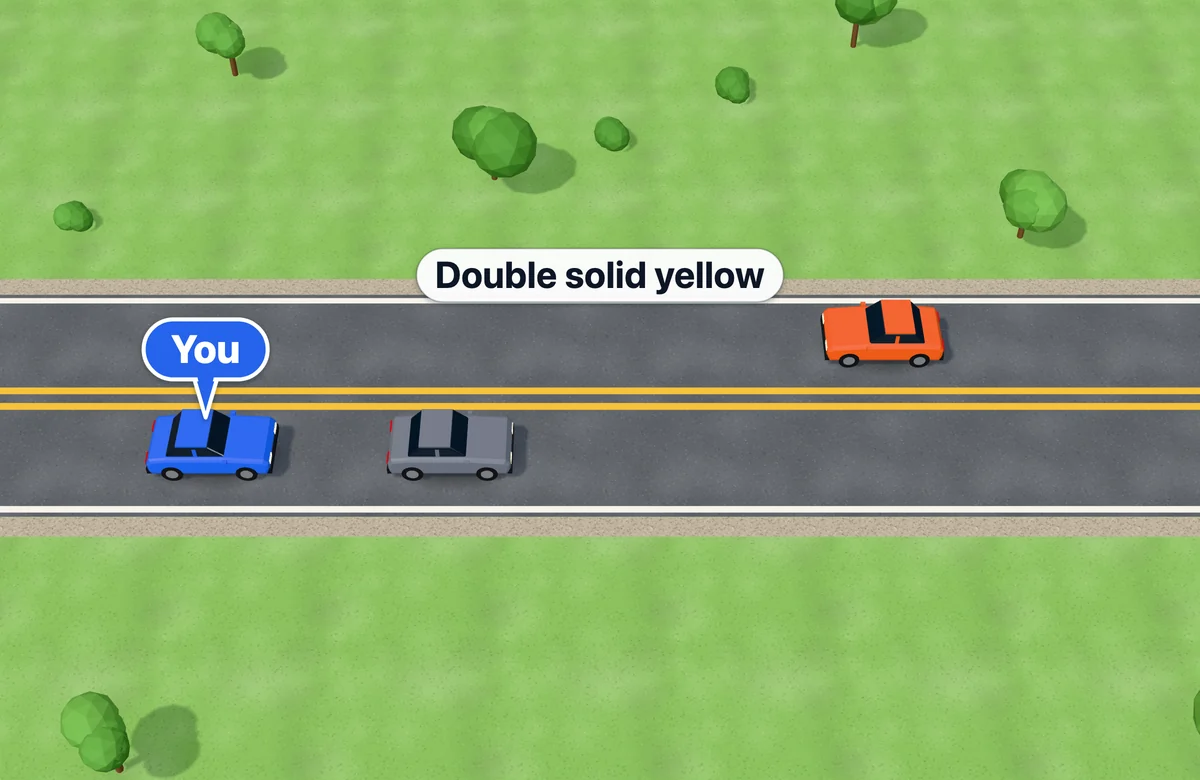
On a two-way road, what does a double solid yellow center line mean?
Keyboard: press 1–4 or A–D to answer, Enter for the next question, S to save, R to read aloud, P to pause reading, L to listen and answer.
Sample pavement markings questions
View diagram
On a two-way road, what does a double solid yellow center line mean?
- A The road is about to become one-way
- B Passing is allowed only on the right
- C Passing is prohibited in both directions
- D Passing is allowed for traffic on either side
Show answer
C. Passing is prohibited in both directions
A double yellow center line marks a two-direction road where passing is prohibited in both directions. Yellow lines always separate traffic going in opposite directions.
View diagram
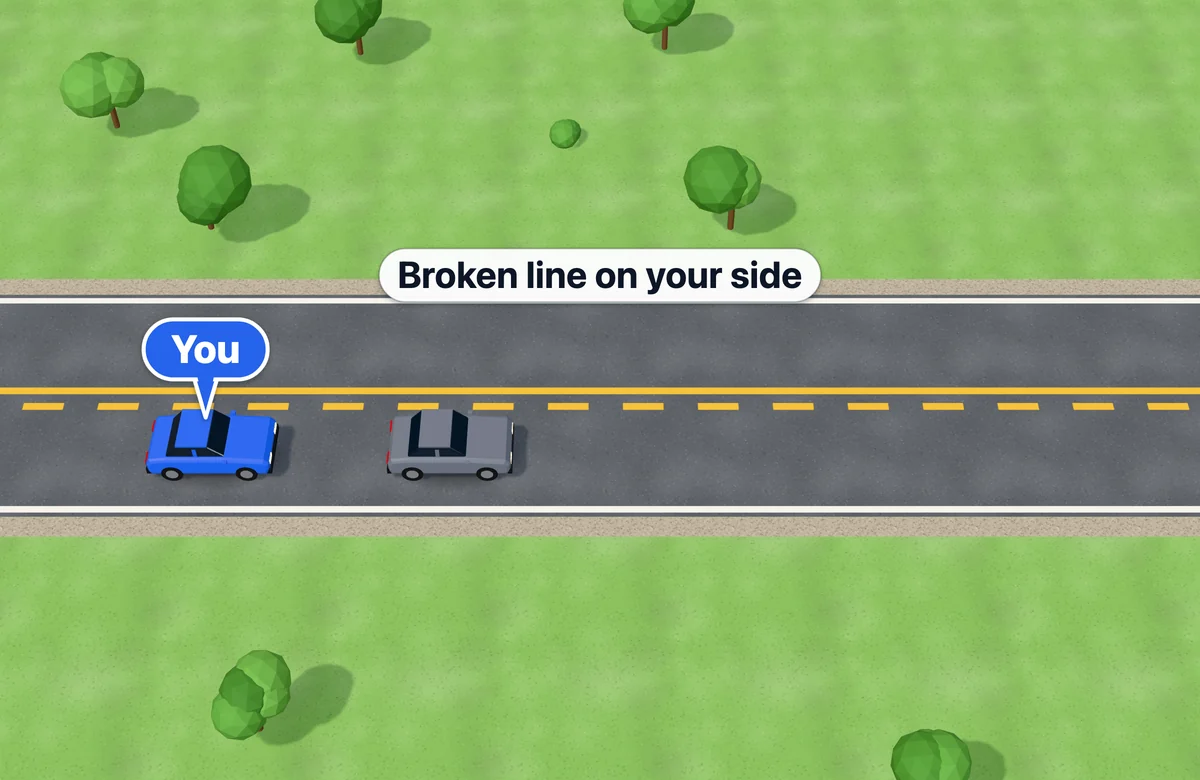
On a two-lane road, the center line is dashed yellow on your side and solid yellow on the other side. What does this mean?
- A You may pass when it is safe, but oncoming traffic may not
- B Both directions may pass freely
- C Oncoming traffic may pass, but you may not
- D Neither direction may pass
Show answer
A. You may pass when it is safe, but oncoming traffic may not
When the dashed yellow line is on your side, passing is permitted for you when it is safe. The solid line on the other side tells oncoming drivers they may not pass.
View diagram
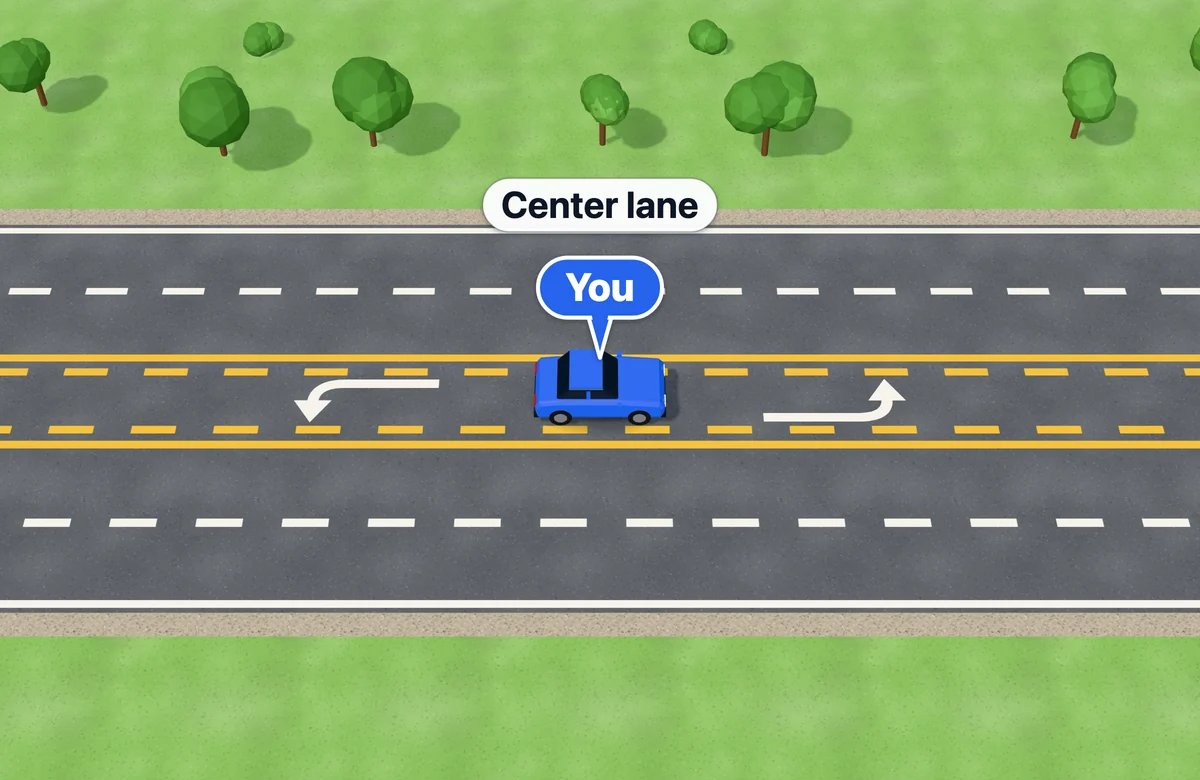
What is a shared center lane, marked with solid and dashed yellow lines on each side, used for?
- A Through travel during rush hour only
- B Left turns, or permitted U-turns, by traffic from either direction
- C Parking for delivery vehicles
- D Passing slower vehicles on a two-lane road
Show answer
B. Left turns, or permitted U-turns, by traffic from either direction
A shared center lane is reserved for left turns, or U-turns where permitted, by vehicles from both directions. Turn arrows for each direction alternate on the pavement, so enter it only when it is safe.
An intersection has a stop line painted before the crosswalk. Where do you stop for a red light?
- A Inside the crosswalk if no one is walking
- B Even with the traffic signal pole
- C Behind the stop line
- D At the far edge of the crosswalk
Show answer
C. Behind the stop line
When you must stop for a sign or signal, stop behind the stop line, crosswalk, stop sign or signal. If there is a stop line before the crosswalk, you must obey the stop line first.