Study sheet for before your test. Notes aren’t allowed in the DMV test room. Source: Utah Driver Handbook (AAMVA Model Non-Commercial) (2026 (per file name), dld.utah.gov · Checked September 22, 2026 · Printed Oct 11, 2026 · drivingtestpal.com/utah/cheat-sheet/ |
Utah · Study sheet Utah permit test cheat sheetThe 42 Utah rules, 12 numbers and 12 signs worth knowing cold. Page numbers point to the handbook. Test format50 questions Passing score40 of 50 correct (80%) Permit and test fees$19 total Minimum age for a permit15 years Supervised driving40 hours (10 at night) Hold your permit6 months minimum Numbers to know
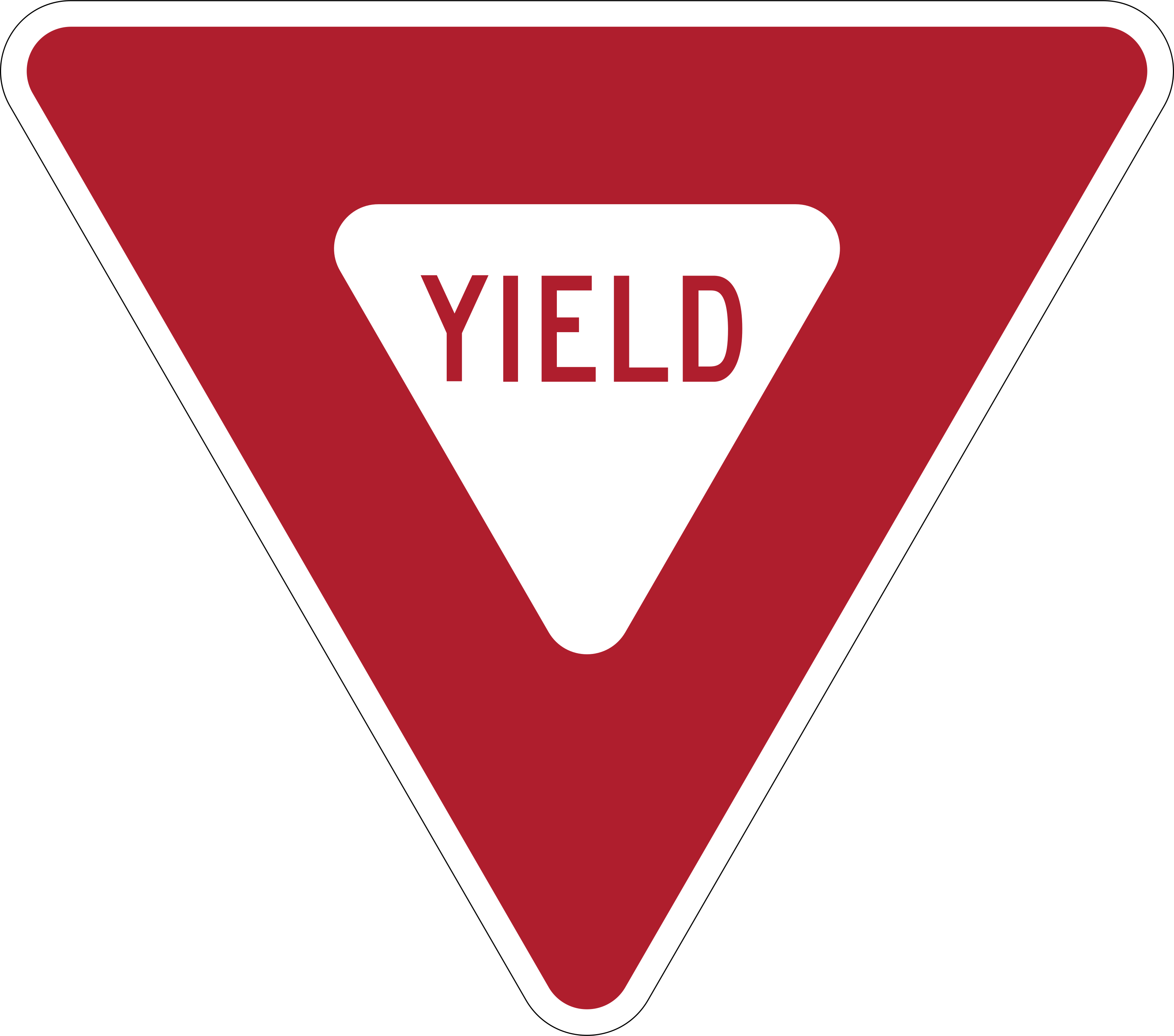
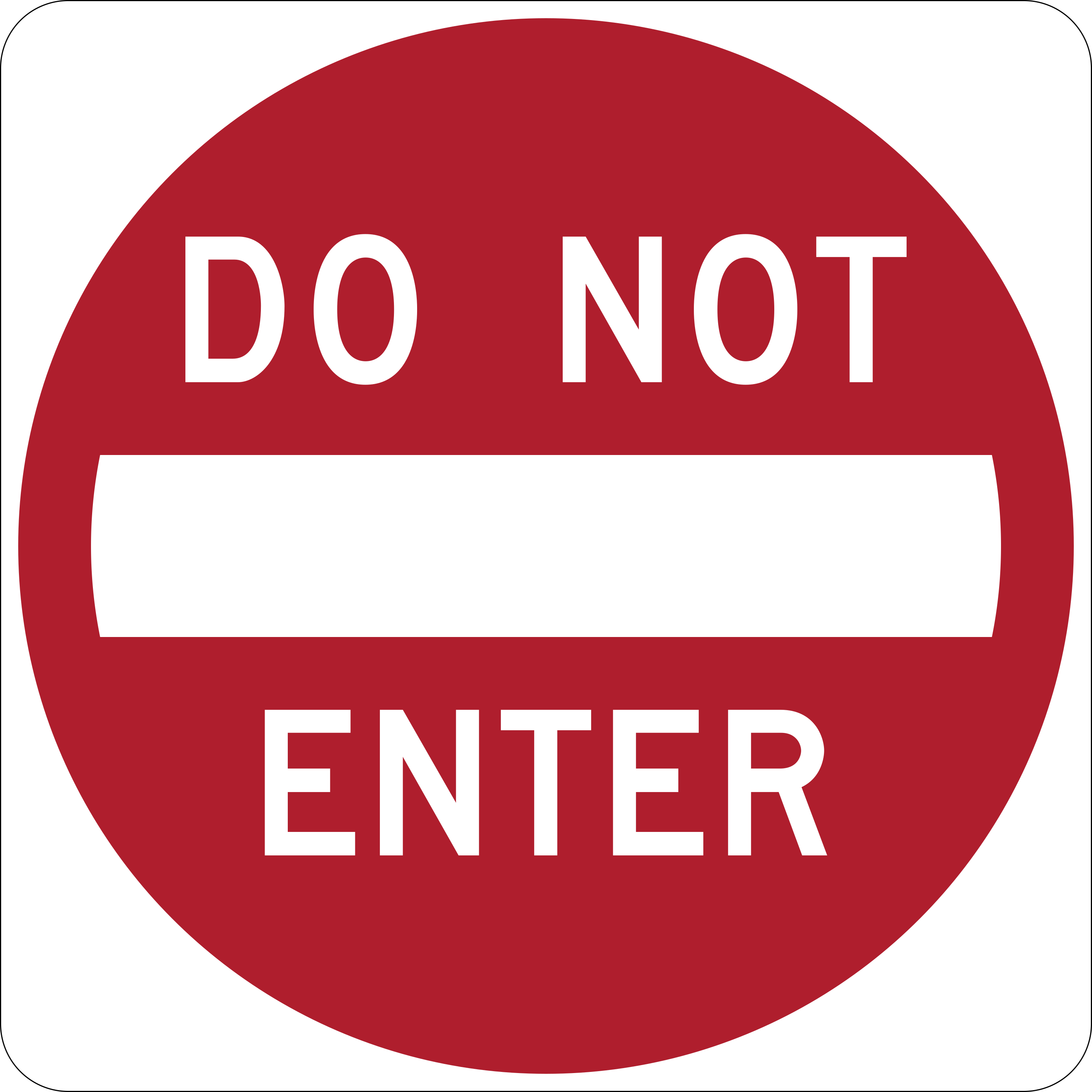
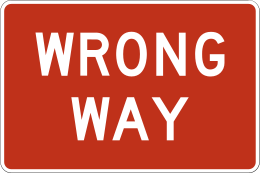
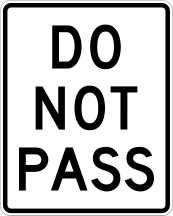
Signs to know
Permits & licensing
Laws, points & insurance
Alcohol & drugs
School buses & emergency vehicles
Seat belts & equipment
Speed limits & control
Following distance & space
Parking & stopping
Highways & freeways
Sharing the road
Night, weather & hazards
Distracted & drowsy driving
Pavement markings
Lanes, passing & merging
Railroad crossings
Traffic signals
Turning & signaling
Emergencies & crashes
Right of way & intersections
Work zones
|
Utah permit test cheat sheet
Utah-specific rules from our question bank, condensed to one line each with the handbook page. Read it the night before; don’t use it instead of practicing.
Study sheet for before your test. Notes aren’t allowed in the DMV test room. See the study sheets to print.
- Test format
- 50 questions
- Passing score
- 40 of 50 correct (80%)
- Permit and test fees
- $19 total
- Minimum age for a permit
- 15 years
- Supervised driving
- 40 hours (10 at night)
- Hold your permit
- 6 months minimum
Permits & licensing
- Utah's entry-level learner permit requires a minimum age of 15. p. 17
- The entry-level learner permit is valid for 18 months, and the written test score for it also lasts 18 months. p. 17
- Drivers aged 16 and 17 must hold a learner permit for 6 months before getting a first Class D license. p. 17
- New drivers 19 or older may skip driver education if they hold a learner permit for 90 days and log at least 40 hours of driving, 10 of them after sunset. p. 16
- Along with driver education, teens must complete 40 hours of driving with a parent or legal guardian, including 10 hours after sunset. p. 16
- With an entry-level permit, the person next to you must be a licensed parent, stepparent, foster parent, legal guardian, approved driving instructor, or responsible adult 21 or older. p. 17
- All first-time Class D applicants must score 100% on the Traffic Safety and Trends exam. p. 33
- A 16-year-old with a driver license (not a permit) may not drive from 12 a.m. to 5 a.m. p. 18
- A new 16-year-old driver may carry only immediate family members until six months after the license is issued. p. 18
- The Utah written knowledge test is not timed, but you must score 80% or better to pass. p. 33
- Class D drivers must tell the Driver License Division about a new address within 10 days, and this can be done online. p. 29
Laws, points & insurance
- Drivers under 21 who reach 70 or more points within three years must appear for a hearing. p. 82
- Drivers over 21 face a hearing at 200 or more points within three years. p. 82
- Utah removes half of your points after one full year with no moving-violation convictions, and all points after two successive clean years. p. 83
- A defensive driving course recommended by the division can remove 50 points, but only once during any three-year period. p. 83
- If you drive while denied, suspended or revoked, the original period is increased by the same amount, so a three-month suspension becomes six months. p. 80
- Driving or letting someone drive without owner's security is a class B misdemeanor. p. 78
- Utah requires personal injury protection, also called no-fault or PIP, along with liability coverage. p. 79
- If a vehicle owner is convicted or suspended for driving without insurance, or is shown as uninsured in computer records, the DMV must revoke the registration unless insurance is bought within 30 days. p. 79
- Utah defines road rage as a crime by a driver, in response to a roadway incident, meant to endanger or intimidate someone in another vehicle. p. 66
- For policies issued or renewed on or after January 1, 2025, Utah liability coverage must be at least $30,000 for injury or death of one person and $65,000 for two or more people in one crash, plus $25,000 for property damage (often written 30/65/25). source
Alcohol & drugs
- Under Utah Code 41-6a-502, a driver 21 or older commits DUI with a blood or breath alcohol concentration of .05 or greater, so exactly 0.05 already counts. source
- The Not-a-Drop Act means a driver under 21 with any measurable alcohol loses driving privileges for six months on a first offense. p. 62
- A second or later Not-a-Drop offense within 10 years costs two years of driving privileges or until age 21, whichever is longer. p. 62
- Under Utah's implied consent law, driving means you agree to a breath, blood, urine or oral-fluid test when an officer asks. p. 63
- A first DUI conviction for a driver 21 or older brings a 120-day suspension, and a second or later offense brings two years. p. 62
- A first DUI conviction automatically restricts the driver to vehicles with an ignition interlock device for 18 months. p. 64
- Utah's definition of extreme DUI includes a blood or breath alcohol level of 0.16 or higher on its own, or 0.05 or higher combined with any measurable controlled substance. p. 11
Parking & stopping
- You may not park within 15 feet of a fire hydrant. p. 42
- Do not park on a crosswalk or within 20 feet of one. p. 42
- You may not park within 30 feet of a flashing beacon, stop sign, yield sign or traffic signal. p. 42
- Do not park on a railroad track or within 50 feet of the nearest rail of a crossing. p. 42
- You may not park within 20 feet of a fire station driveway. p. 42
- When parked next to a curb, your vehicle should be no more than 12 inches from it. p. 43
School buses & emergency vehicles
- On a two-lane road, drivers in both directions must stop for a school bus with flashing red lights. p. 46
- On a divided highway with four or more lanes and a median, only traffic behind the school bus must stop. p. 46
- On a four-lane road without a median, traffic in both directions must stop for a school bus with flashing red lights. p. 46
- When a vehicle is stopped beside the highway with its hazard lights on, slow down, give it as much space as you can, and move to a lane that is not next to it if safe. p. 87
- A move over conviction requires a four-hour live classroom defensive driving course within 90 days. p. 87
- Do not follow within 500 feet of a fire vehicle responding to an alarm, and do not drive or park on the block where it has stopped. p. 87
Seat belts & equipment
- Utah law requires a child restraint device for every child younger than eight, used as the manufacturer directs. source
- Children must ride rear-facing in the back seat until they are at least two years old and 30 pounds, or longer if the seat allows. p. 38
- Seat belt and child restraint violations are infractions with a fine of up to $45. source
- Utah makes it an infraction to be stopped for smoking in a vehicle while transporting children 15 or younger. p. 39
- Every vehicle except motorcycles needs at least two white headlights that shine 350 feet on high beam and 100 feet on low beam, plus a high-beam indicator light. p. 101
Turning & signaling
- Utah requires a turn signal for two seconds before turning and before any lane change. p. 44
- Never make a U-turn on a curve or near a hilltop where you cannot see or be seen for 500 feet in both directions. p. 48
- You may not enter a shared center left-turn lane more than 500 feet before turning, unless the last car waiting is more than 500 feet from the intersection. p. 54
- HB 128, effective May 6, 2026, removed the requirement to signal your turn while going through a roundabout. p. 4
Speed limits & control
- Utah's school-zone limit is 20 mph when passing a school during recess, while children are going to or leaving school, or when the flashing lights are on. p. 54
- When no sign is posted, Utah's speed limit in business and residential areas is 25 mph. p. 54
- Utah's basic speed law says you may never drive faster than is reasonable and prudent for the conditions. p. 55
- Utah rural interstates may be posted at 65, 70, 75 or 80 mph, and transition zones are marked with signs and pavement markings. p. 54
Following distance & space
- Use the two-second rule: stay at least two seconds behind the vehicle ahead. p. 36
- At night, add at least two seconds to your following distance. p. 71
- Following too closely causes 21% of all crashes on Utah highways, more than any other factor, and it is also the top cause for teen drivers. p. 7
- When stopping behind another vehicle, stop where you can see its rear tires on the road. p. 41
Highways & freeways
- A vehicle in the left lane must move safely to the right when approached from behind. p. 49
- Vehicles with two or more people may use the I-15 express lanes free, as can motorcycles, buses and clean-fuel vehicles with a C decal. p. 50
- Ramp meters use alternating red and green lights and let one vehicle go on each green unless a sign says otherwise. p. 50
- At a single-point urban interchange, you may U-turn from the off-ramp and re-enter the freeway if you face a green arrow when you begin. p. 51
Sharing the road
- Utah requires at least three feet between your vehicle and any bicyclist or other vulnerable road user you pass. p. 85
- Dim your headlights within 500 feet when approaching or overtaking a bicyclist at night. p. 85
- Drivers must stay stopped until a pedestrian has crossed at least the driver's half of the road, even outside a crosswalk. p. 92
- Utah allows lane filtering only when the vehicles being passed are stopped, the road has a speed limit of 45 mph or less (or it is an off-ramp), the motorcycle goes 15 mph or less, and it is safe. p. 92
Night, weather & hazards
- Turn on your headlights from sunset to sunrise and any time conditions keep you from seeing 1,000 feet ahead. p. 71
- Dim your high beams before you come within 500 feet of an oncoming vehicle. p. 70
- When following another vehicle, dim your high beams within 300 feet. p. 70
- Snow tires with metal studs may be used from October 15 through March 31 each year. p. 73
Distracted & drowsy driving
- Drivers under 18 may use a handheld wireless device only during a medical emergency, to report a safety hazard or criminal activity, or to talk with a parent or legal guardian. p. 69
- A first texting conviction is a class C misdemeanor with a fine of up to $100. p. 69
- Drivers over 18 may talk on a wireless device while driving if they use voice commands to connect the call. p. 69
- Utah defines careless driving as two or more moving violations in one continuous drive, or a moving violation committed while distracted by something unrelated to driving, such as searching for an item or grooming. p. 11
Pavement markings
- The gore area lies between the solid white lines that separate a traffic lane from an entrance or exit lane, or where two highways merge or split. p. 41
- It is illegal to cross a double white line. p. 50
- Flex lanes can carry traffic in one direction at some times and the other direction at other times. p. 49
Lanes, passing & merging
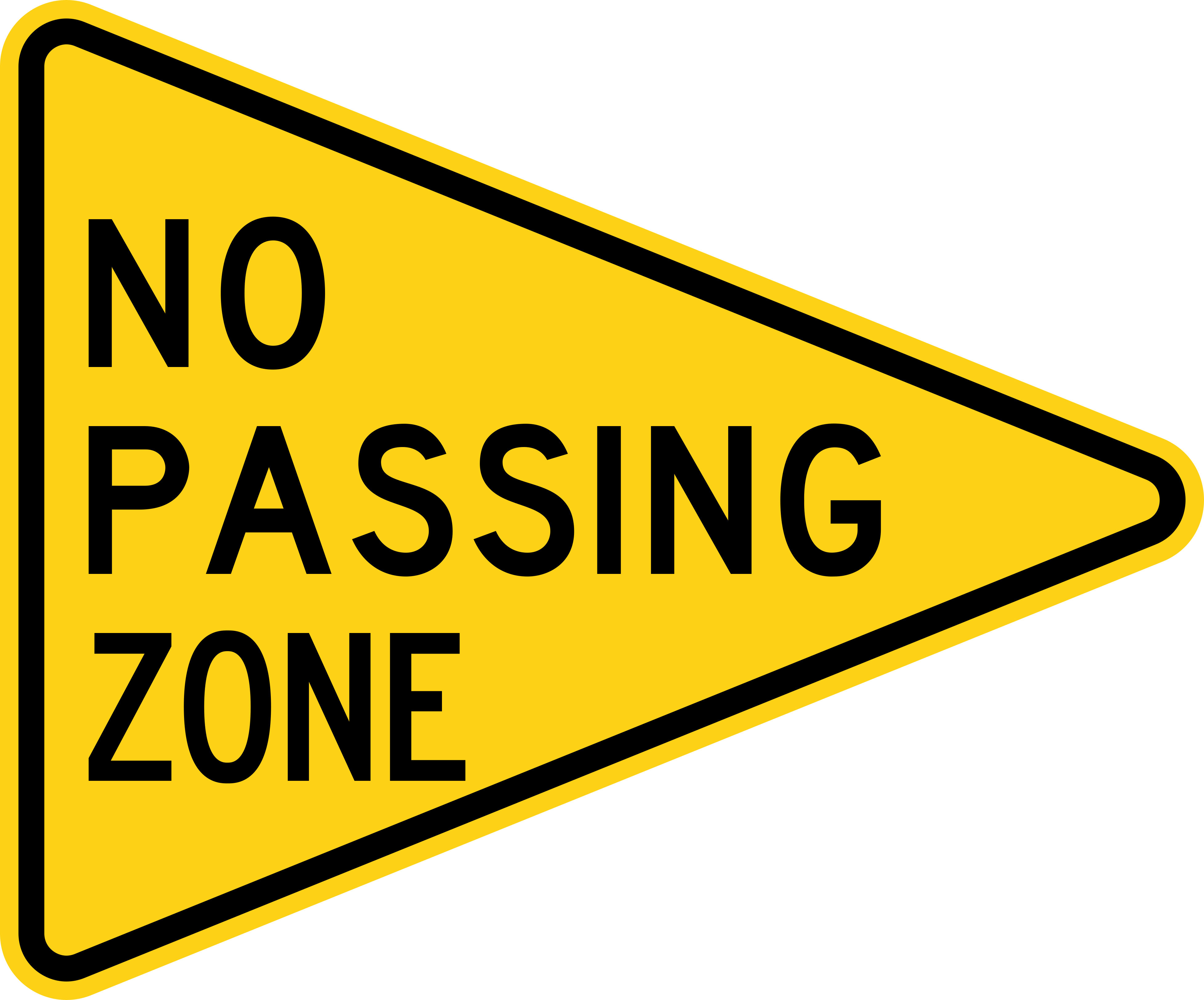
- When passing, return to the right-hand lane no less than 200 feet from oncoming vehicles. p. 44
- You may not pass a single plow with flashing yellow lights on the side where its blade is down. p. 44
- Utah calls this the zipper method: at a congested merge, use both lanes until the merge point, then alternate into the single lane. p. 41
Railroad crossings
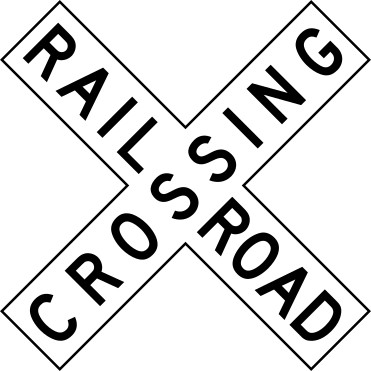
- When you stop at a railroad crossing, stop between 15 and 50 feet from the nearest rail. p. 96
- If flashing crossing lights seem to be malfunctioning, you may cross after a complete stop only if you can see at least one mile down the tracks in both directions, no train is coming, and you can cross safely. p. 96
- A flashing train logo on an overhead sign means a light rail train is approaching. p. 99
Traffic signals
Emergencies & crashes
Right of way & intersections
- When traffic lights are not working, stop completely before entering the intersection and yield to any vehicle on your right, unless a peace officer directs otherwise. p. 56
Work zones
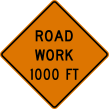
- Courts must fine a driver who speeds in a highway construction zone at least twice the regular speeding fine. p. 69