Utah Permit Practice Test 1
26 questions written from the Utah Driver Handbook (AAMVA Model Non-Commercial), with an explanation and page citation for every answer.
What is the minimum age to get an entry-level learner permit in Utah?
Keyboard: press 1–4 or A–D to answer, Enter for the next question, S to save, R to read aloud, P to pause reading, L to listen and answer.
About this test
These questions were written from the Utah Driver Handbook (AAMVA Model Non-Commercial) (2026). 12 of the 21 Utah questions in this test cover rules that are specific to Utah or differ between states. Every answer comes with an explanation and a link to the exact page it comes from, so you can check it yourself.
Your answers are saved in this browser. Questions you miss go to My mistakes so you can practice them again.
Sample questions from this test
What is the minimum age to get an entry-level learner permit in Utah?
- A 15 years old
- B 15 and a half years old
- C 14 years old
- D 16 years old
Show answer
A. 15 years old
Utah's entry-level learner permit requires a minimum age of 15. You must also pass the written knowledge test and an eye test, and keep the permit with you whenever you drive.
Source: Utah Driver Handbook (AAMVA Model Non-Commercial), page 17
View diagram
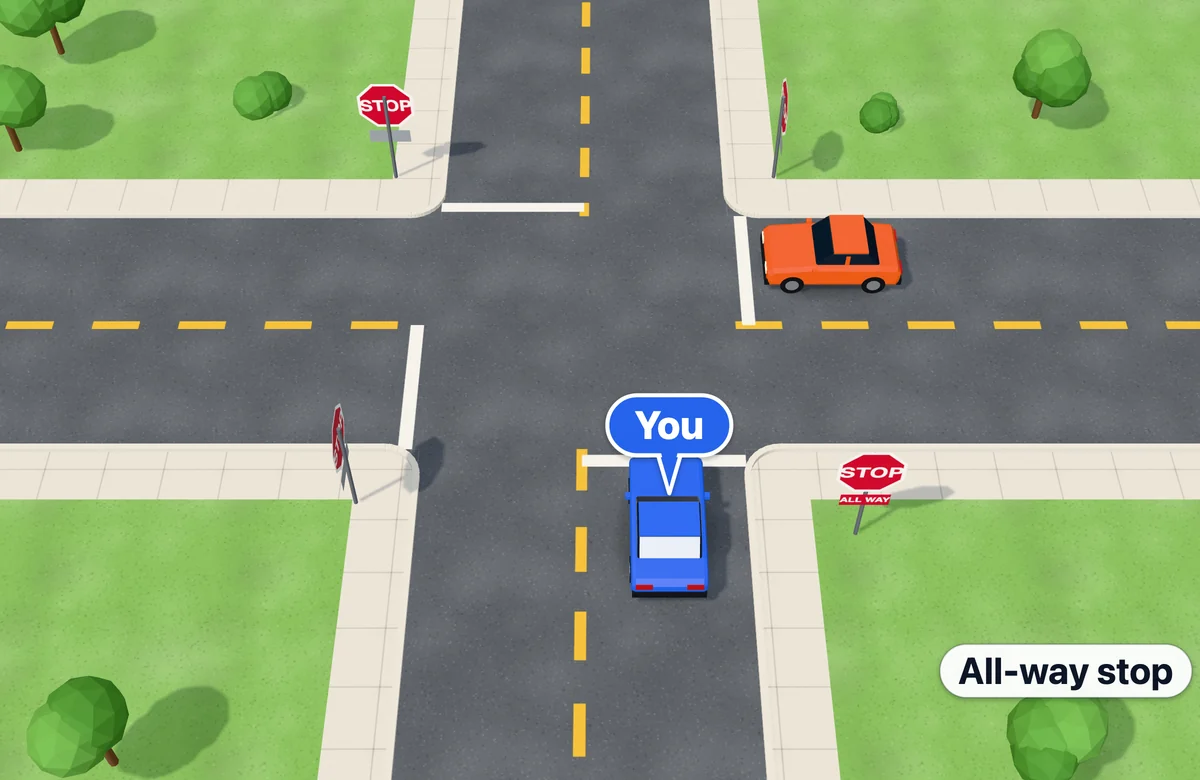
At a four-way stop, you and another driver arrive at the same time. The other car is on your right. Who goes first?
- A Whichever vehicle is larger
- B You, because you are on the left
- C Whichever driver is going straight
- D The driver on your right
Show answer
D. The driver on your right
When two drivers reach a four-way stop at the same time, the driver on the left yields to the driver on the right. If someone arrived first, that driver goes first.
Source: Utah Driver Handbook (AAMVA Model Non-Commercial), page 60
View diagram
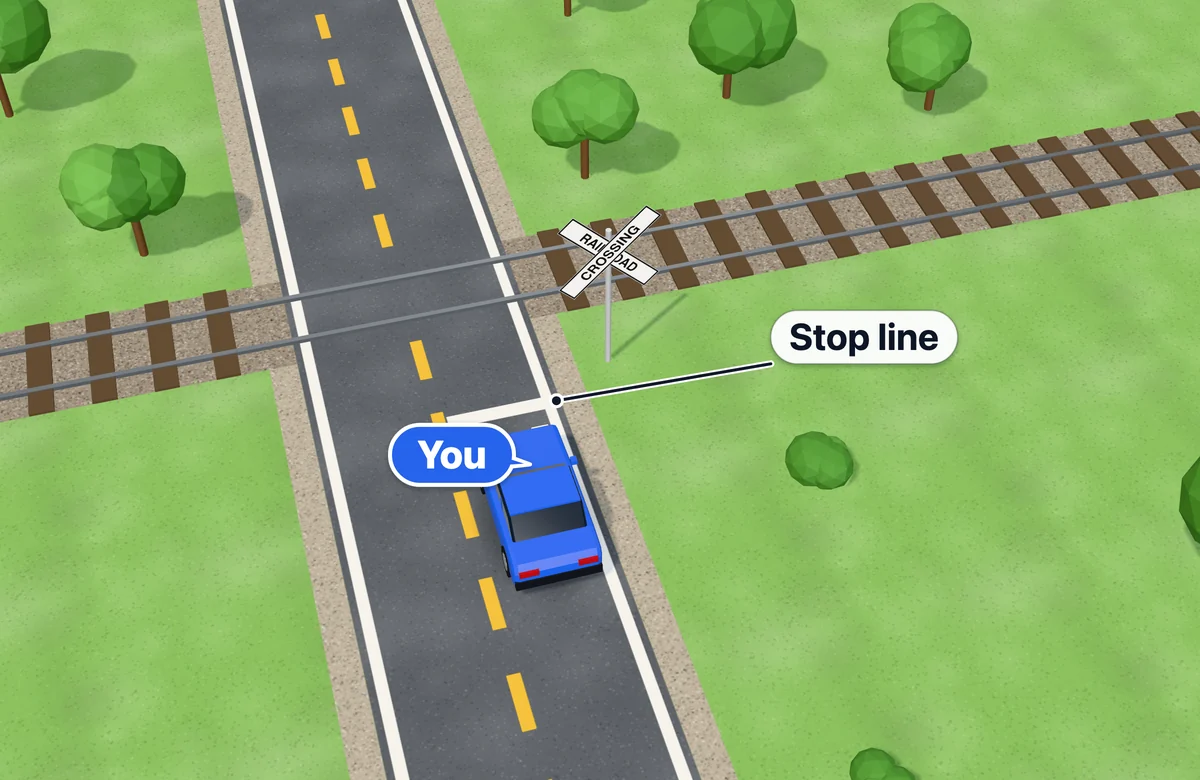
When you must stop at a railroad crossing, how far from the nearest rail must you stop?
- A Between 50 and 100 feet
- B At least 100 feet
- C Between 15 and 50 feet
- D Between 5 and 10 feet
Show answer
C. Between 15 and 50 feet
When you stop at a railroad crossing, stop between 15 and 50 feet from the nearest rail. This keeps you clear of the train, which can extend three feet or more beyond the rails.
Source: Utah Driver Handbook (AAMVA Model Non-Commercial), page 96
View diagram
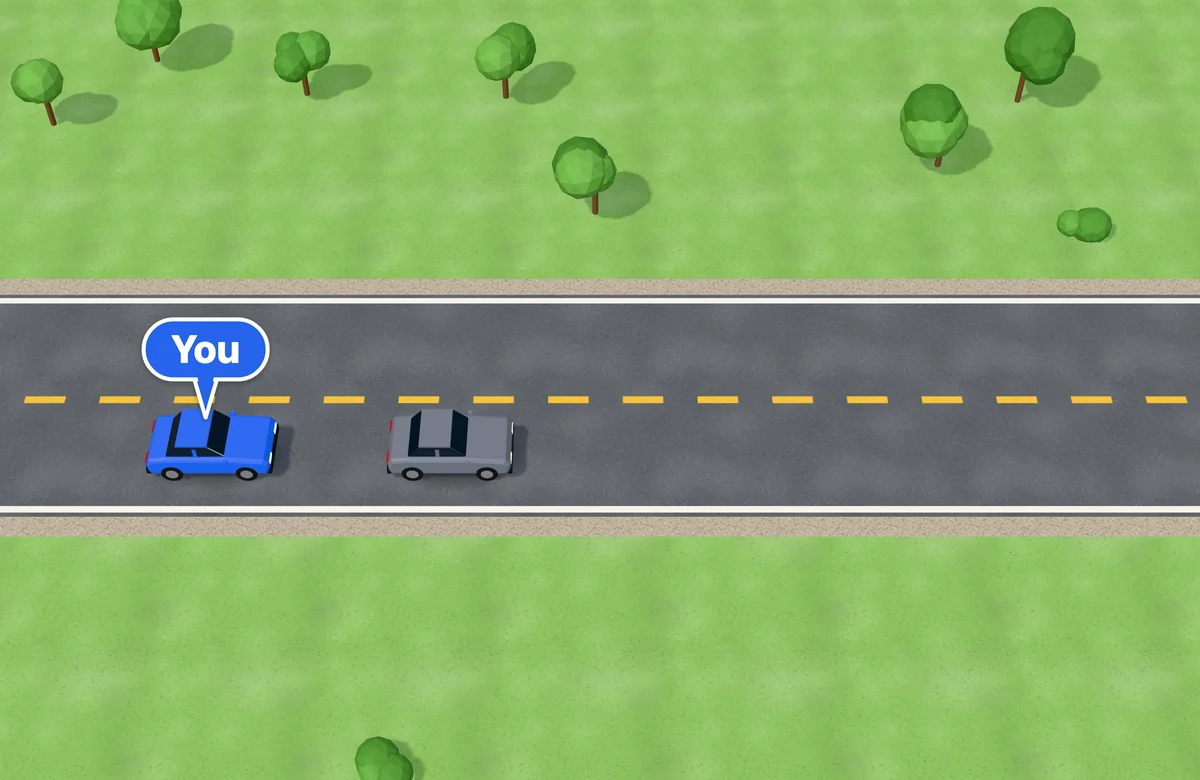
After passing on a two-lane road, how far from an oncoming vehicle must you be when you return to the right lane?
- A No less than 500 feet
- B No less than 50 feet
- C No less than 100 feet
- D No less than 200 feet
Show answer
D. No less than 200 feet
When passing, return to the right-hand lane no less than 200 feet from oncoming vehicles. Then wait until you can see the passed car in your rear-view mirror, head check, signal and move back.
Source: Utah Driver Handbook (AAMVA Model Non-Commercial), page 44
How close to a crosswalk may you park in Utah?
- A No closer than 20 feet
- B No closer than 10 feet
- C No closer than 50 feet
- D No closer than 15 feet
Show answer
A. No closer than 20 feet
Do not park on a crosswalk or within 20 feet of one. Parked cars close to a crosswalk hide pedestrians from approaching drivers.
Source: Utah Driver Handbook (AAMVA Model Non-Commercial), page 42