New Jersey road signs practice test
Regulatory, warning and guide signs: shapes, colors and what each requires you to do. 111 questions.
What does a yellow, pennant-shaped (sideways triangle) sign mean?
Keyboard: press 1–4 or A–D to answer, Enter for the next question, S to save, R to read aloud, P to pause reading, L to listen and answer.
Sample road signs questions
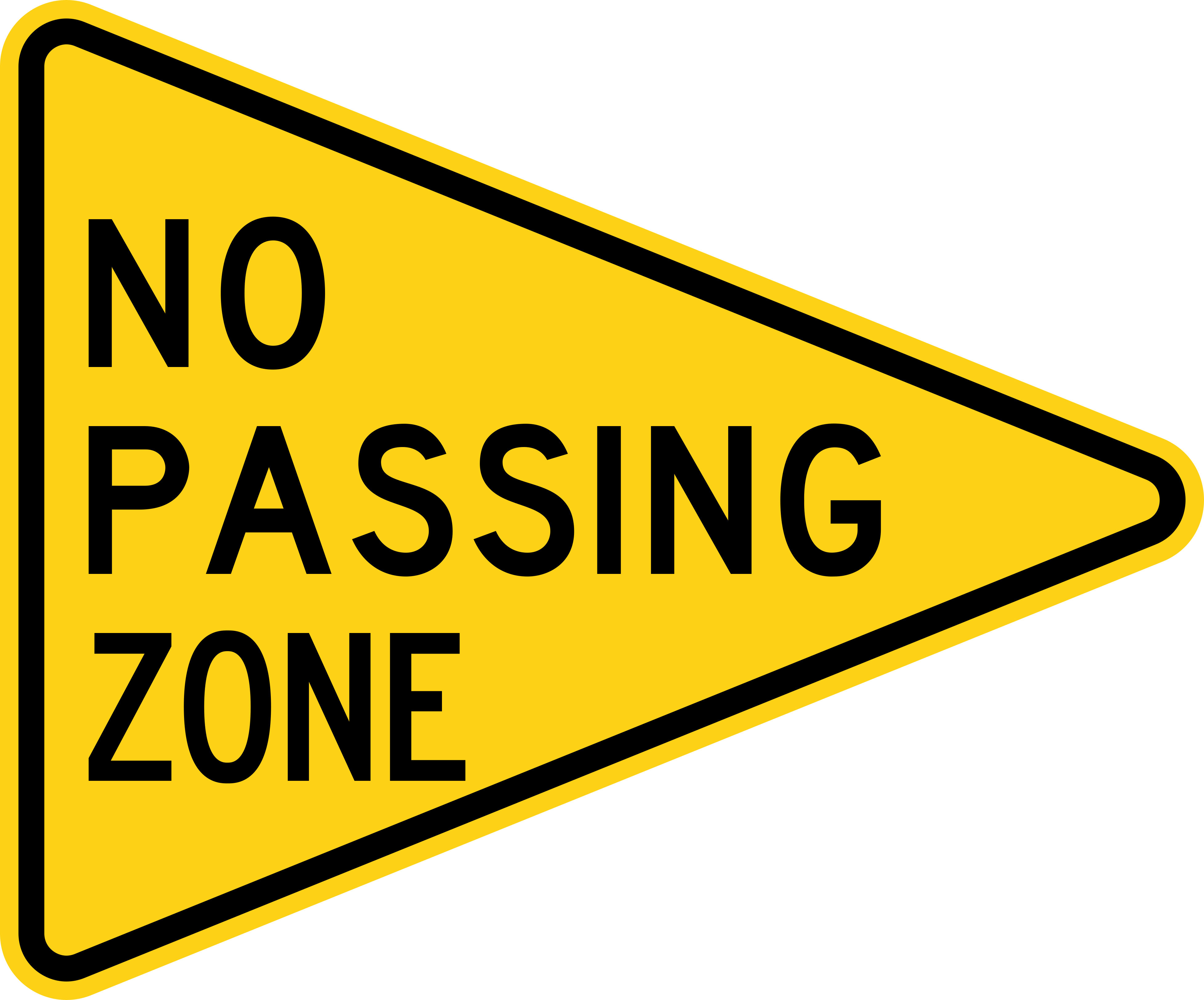
What does a yellow, pennant-shaped (sideways triangle) sign mean?
- A School zone
- B Yield
- C No-passing zone
- D Road construction
Show answer
C. No-passing zone
The yellow pennant, a three-sided sign on the left side of the road, warns of a no-passing zone. Shape is a quick clue to a sign's meaning.
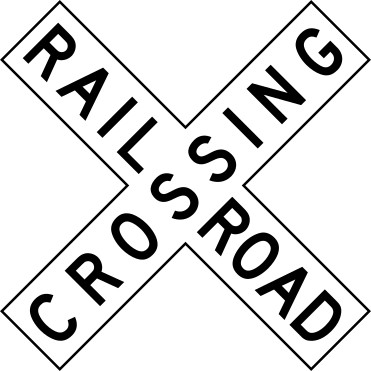
A white X-shaped crossbuck sign at a railroad crossing has the same meaning as which sign?
- A A stop sign
- B A do not enter sign
- C A yield sign
- D A speed limit sign
Show answer
C. A yield sign
The crossbuck means the same as a yield sign: slow down, look and listen, and yield to any train. Trains cannot swerve to avoid you.
What does an orange, diamond-shaped sign usually warn of?
- A Construction or maintenance work ahead
- B A school crossing
- C A railroad crossing ahead
- D A recreation area
Show answer
A. Construction or maintenance work ahead
Orange diamond signs warn of construction and maintenance, such as lane closings, shifts, flaggers and detours. In New Jersey, traffic fines are doubled in work zones.

You approach an intersection and this sign faces you. What must you do?
- A Slow down and stop only if cross traffic is close
- B Stop only when a pedestrian is waiting at the corner
- C Get ready, because you will need to stop farther ahead
- D Come to a full stop, then go only when the way is clear
Show answer
D. Come to a full stop, then go only when the way is clear
The red octagon is used for one sign only, and it means a full stop is always required. After stopping, yield to cross traffic and pedestrians and go only when it is safe. Because no other sign shares this shape, you can recognize it even when you cannot read the word.
Source: MUTCD 11th ed., page 114