Study sheet for before your test. Notes aren’t allowed in the DMV test room. Source: Oklahoma Driver Manual, oklahoma.gov · Checked September 22, 2026 · Printed Oct 11, 2026 · drivingtestpal.com/oklahoma/cheat-sheet/ |
Oklahoma · Study sheet Oklahoma permit test cheat sheetThe 39 Oklahoma rules, 12 numbers and 12 signs worth knowing cold. Page numbers point to the handbook. Test format20 questions Passing score15 of 20 correct (75%) Permit and test fees$42.50 total Minimum age for a permit15 years Supervised driving50 hours (10 at night) Hold your permit6 months minimum Numbers to know
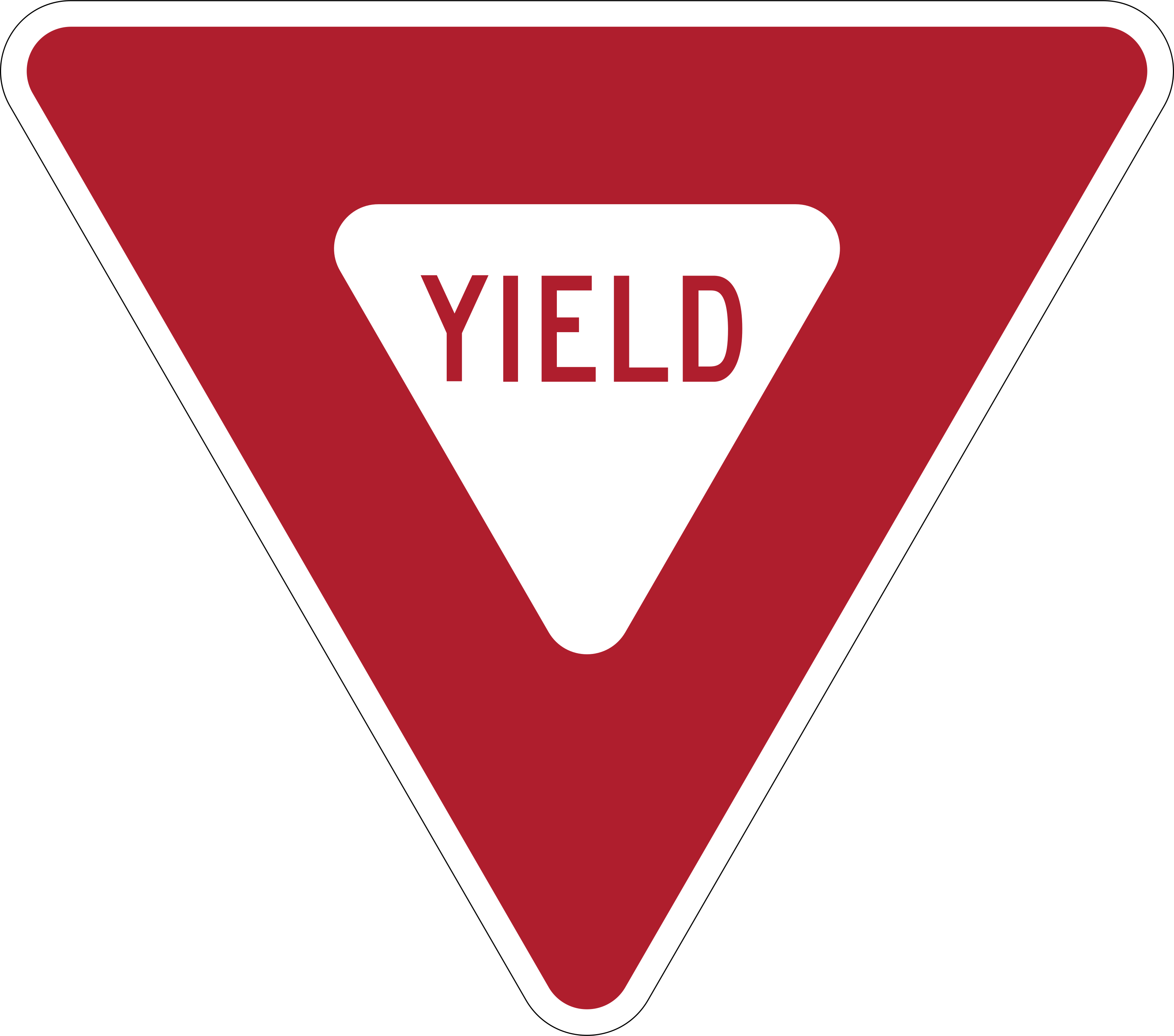
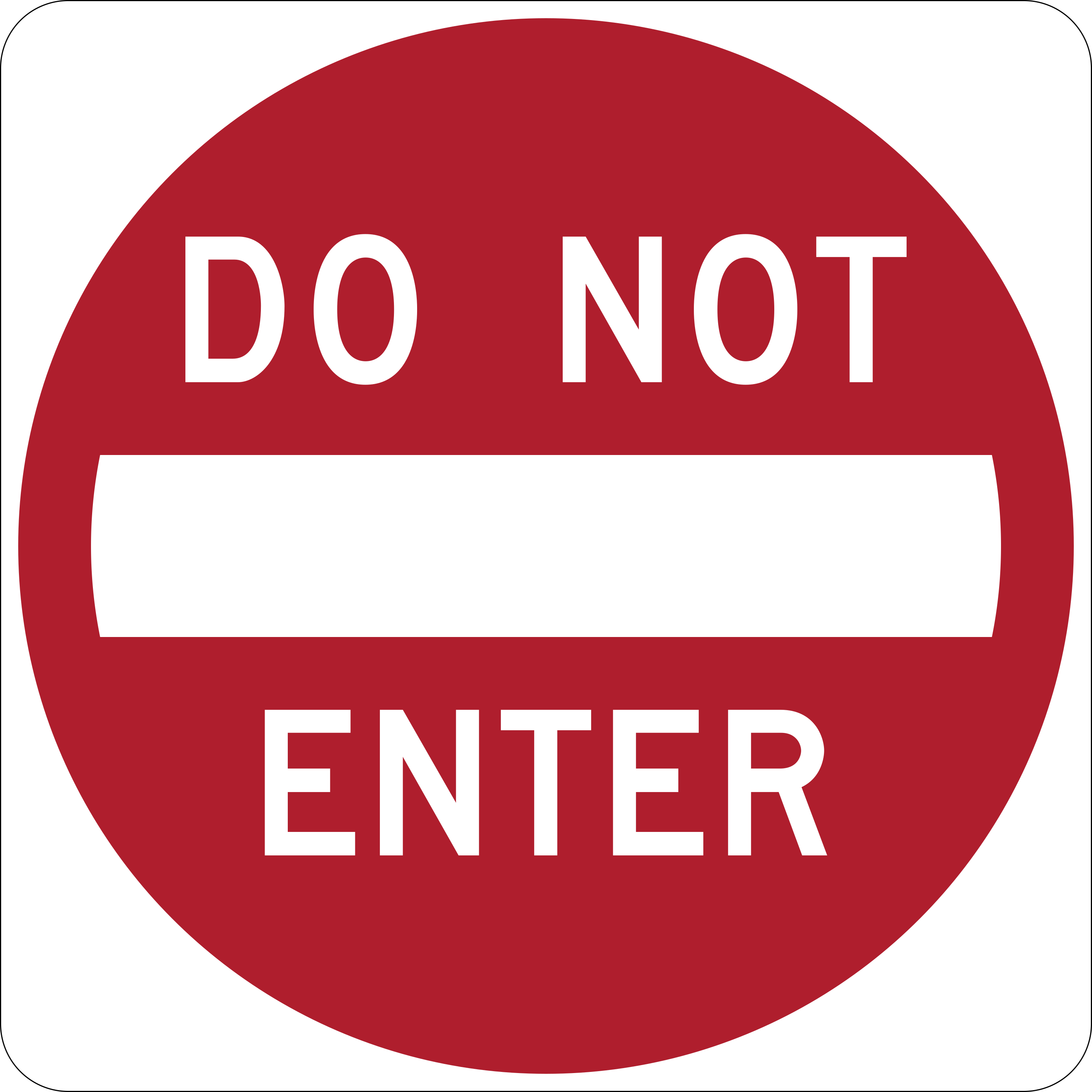
Signs to know
Permits & licensing
Alcohol & drugs
Laws, points & insurance
Speed limits & control
Following distance & space
Night, weather & hazards
Lanes, passing & merging
Sharing the road
School buses & emergency vehicles
Seat belts & equipment
Road signs
Traffic signals
Right of way & intersections
Parking & stopping
Highways & freeways
Railroad crossings
Work zones
Distracted & drowsy driving
Turning & signaling
Emergencies & crashes
|
Oklahoma permit test cheat sheet
Oklahoma-specific rules from our question bank, condensed to one line each with the handbook page. Read it the night before; don’t use it instead of practicing.
Study sheet for before your test. Notes aren’t allowed in the DMV test room. See the study sheets to print.
- Test format
- 20 questions
- Passing score
- 15 of 20 correct (75%)
- Permit and test fees
- $42.50 total
- Minimum age for a permit
- 15 years
- Supervised driving
- 50 hours (10 at night)
- Hold your permit
- 6 months minimum
Permits & licensing
- In Oklahoma you can get a car learner permit at 15 if you are enrolled and receiving instruction in an approved driver education course, including parent-taught. source
- A learner permit is valid only while a licensed driver who is at least 21 sits beside you. p. 6
- Service Oklahoma limits learner-permit driving to 5:00 a.m. through 10:00 p.m., and only with a licensed driver at least 21 years old. source
- With driver education, a teen permit holder must be at least 16 and have held the permit for at least 6 months (180 days) before the driving test. p. 10
- Oklahoma requires at least 50 hours of supervised driving, with at least 10 of them at night, from a licensed driver who is at least 21 and has been licensed at least 2 years. source
- Oklahoma teens must present a Work Zone Safe completion certificate along with having held the permit at least 180 days. p. 6
- The "T" (graduated) restriction allows driving from 5 a.m. to 10 p.m. p. 14
- Oklahoma's graduated license limits teens to one passenger unless all passengers live in the same household, or a licensed driver over 21 sits next to the teen. p. 8
- With driver education, the intermediate restriction can be removed after 6 months; without driver education, it takes 1 year. p. 6
- Under Oklahoma's GDL rules, a moving-violation conviction keeps you at your current level (learner or intermediate) until 6 months have passed since the conviction. p. 8
- Oklahoma law requires a wait of at least one day before you retake a failed written test. p. 9
- Parent-taught driver education requires 30 hours of classroom training and 55 hours of behind-the-wheel training. p. 8
- For applicants 18 and older who choose a learner permit, the driving test can be taken 30 days after the permit is issued. p. 6
- Oklahoma law requires you to report a new address within 10 days. p. 13
- Any license issued to a driver under 18 is probationary. p. 71
- In Oklahoma, driving without a license or learner permit is illegal even with a licensed driver beside you. p. 13
- An Oklahoma license expires on the last day of the month and can be renewed up to 1 year before its expiration date. p. 13
Laws, points & insurance
- Oklahoma's minimum liability limits are $25,000 for injury or death of one person, $50,000 for two or more persons, and $25,000 for property damage, all per accident. p. 72
- Oklahoma requires at least $25,000 of property damage coverage, and all the minimum limits apply per accident. p. 72
- Service Oklahoma will suspend the license of an uninsured driver or owner involved in a collision with any injury or with property damage of $500 or more. p. 16
- Failing to comply with the Compulsory Insurance Law or to produce proof of insurance can mean a fine of up to $250, 30 days in jail or both, plus suspension of your license and registration. p. 72
- Every driver starts with zero points. p. 71
- Reckless driving is one of the most serious pointable offenses at 4 points, the same as failing to stop for a school bus. p. 71
- Ordinary speeding costs 2 points, but going more than 25 mph above the posted limit costs 3. p. 71
- Oklahoma deducts 2 points for each 12-month period with no pointable convictions, and points drop to zero after three straight years without a traffic conviction. p. 72
- Completing a Service Oklahoma-approved Driver Compliance or Defensive Driving Course removes 2 points, and this credit can be given once every 24 months. p. 72
- Passing a school bus that is loading or unloading children brings a mandatory one-year license revocation in Oklahoma. p. 30
- Oklahoma treats using, carrying, borrowing or buying a fake ID as a felony, with up to 7 years in prison and a fine up to $10,000. p. 69
- Failing to stop and render aid after a collision with death or injury is on Oklahoma's mandatory revocation list, with revocation from 6 months to 3 years. p. 71
Alcohol & drugs
- By driving in Oklahoma you have agreed to take BAC tests. source
- If a test shows a BAC of 0.08 or more, your Oklahoma license will be revoked even if you are not convicted in court. p. 65
- Oklahoma's zero tolerance law makes it unlawful for anyone under 21 to drive with any measurable alcohol in their blood or breath. p. 67
- A first zero-tolerance offense (DUI, APC, refusal, or any measurable BAC) brings a six-month revocation for a driver under 21. p. 67
- If you are under 16 or would still be under 16 when a zero-tolerance cancellation ends, Service Oklahoma extends it until you turn 16. p. 67
- Oklahoma prohibits driving while impaired, and an alcohol concentration above 0.05 is relevant evidence of impairment. p. 65
- A first DUI is a misdemeanor with jail of not less than ten days nor more than 1 year, plus a fine up to $1,000. p. 65
- A second DUI within 10 years is a felony in Oklahoma, punishable by 1 to 5 years in prison and up to a $2,500 fine. p. 65
- Even though Oklahoma allows medical cannabis, it is illegal for anyone to drive with any detectable level of cannabis in their system. p. 66
- A first revocation for refusing a test (or failing one) within 10 years lasts at least 180 days and until you complete the Impaired Driver Accountability Program. source
Speed limits & control
- Oklahoma law lets the Turnpike Authority set limits of up to 80 mph on turnpikes, and the Transportation Commission up to 75 mph on rural interstates. source
- The Transportation Commission may set up to 75 mph on rural interstate segments after a traffic or engineering study. source
- County roads in Oklahoma have a default limit of 55 mph. p. 41
- Highways within state parks or wildlife refuges default to 35 mph, protecting visitors and wildlife. p. 41
Following distance & space
- Stay 3 seconds behind the vehicle ahead, and allow 4 seconds in bad weather. p. 34
- In bad weather or poor road conditions, increase your count from three seconds to four. p. 44
- Allow at least one car length for every 10 mph of speed, or use the three-second rule. p. 44
- In a caravan or motorcade such as a funeral procession outside business or residential areas, leave at least 200 feet between vehicles. p. 44
Parking & stopping
- It is illegal to park within 15 feet of a fire hydrant in Oklahoma. p. 49
- Oklahoma prohibits parking within 20 feet of a crosswalk at an intersection. p. 49
- You may not park within 30 feet of a flashing beacon, stop sign or traffic signal at the side of the road. p. 49
- Unless signs or a yellow curb prohibit it, you may parallel park within 18 inches of the curb. p. 47
Night, weather & hazards
- Dim your high beams within 1,000 feet of an oncoming vehicle and within 600 feet of a vehicle you are following. p. 59
- Oklahoma's manual says to dim to low beams within 600 feet of a vehicle you are following and within 1,000 feet of an oncoming vehicle. p. 59
- Use your headlights beginning 30 minutes after sunset and until 30 minutes before sunrise, and whenever a sign requires them. p. 59
- Most vehicles, even SUVs, will float in about 2 feet of water, and as little as 6 inches can make you lose control. p. 62
Right of way & intersections
- Oklahoma law requires drivers to stop 15 feet from a blind person in the roadway or at an intersection, and to stop outside the crosswalk. p. 28
- Motorists must yield to a funeral procession. p. 28
- If an officer signals you to stop while you're in the left lane, you must still pull over to the right shoulder, even if you have to cross several lanes. p. 29
Lanes, passing & merging
Sharing the road
- Oklahoma law requires at least 3 feet between your vehicle and a bicycle you are passing, until you are safely past. p. 51
- Oklahoma's bicycle rules require cyclists to slow at stop signs and stop only if there is a risk of danger. p. 52
- Animal-drawn vehicles have the same rights to use the road as motor vehicles and must follow the same rules. p. 58
School buses & emergency vehicles
- In Oklahoma you must stay stopped until the bus starts moving, the driver motions you to proceed, or the red lights go off or the stop sign is pulled back. p. 30
- In Oklahoma, oncoming traffic on a divided highway is not required to stop for a school bus. p. 30
- Oklahoma's Move Over law (47 O.S. § 11-314) requires drivers to move over a lane if safe, or slow down and use caution, when passing stationary vehicles with flashing lights. p. 30
Seat belts & equipment
- Every driver and front-seat passenger must wear a properly adjusted and fastened seat belt in Oklahoma. p. 17
- In Oklahoma, a child restraint must be rear-facing until the child reaches 2 years of age or the manufacturer's height or weight limit. p. 17
- Oklahoma law requires a child at least 4 but under 8 who is not taller than 4 feet 9 inches to ride in a child passenger restraint system or a booster seat. source
Road signs
Traffic signals
Turning & signaling
Highways & freeways
Railroad crossings
Work zones
Distracted & drowsy driving
Emergencies & crashes
- When a crash injures or kills anyone, Oklahoma law requires the driver to notify police immediately by the quickest means, such as calling 911. source