Illinois permit test: pavement markings
Yellow and white lines, passing zones, crosswalks, stop lines and special lanes. 4 questions.
A solid yellow line and a broken yellow line separate the two directions of traffic. When may you pass?
Keyboard: press 1–4 or A–D to answer, Enter for the next question, S to save, R to read aloud, P to pause reading, L to listen and answer.
Sample pavement markings questions

View diagram
A solid yellow line and a broken yellow line separate the two directions of traffic. When may you pass?
- A Never, on any road with yellow lines
- B Only when the solid line is on your side of the road
- C Only when the broken line is on your side
- D Whenever the road ahead looks clear
Show answer
C. Only when the broken line is on your side
When a solid and a broken yellow line separate opposing lanes, you may pass only if the broken line is nearest your lane. A solid yellow line on your side marks a no-passing zone.
View diagram
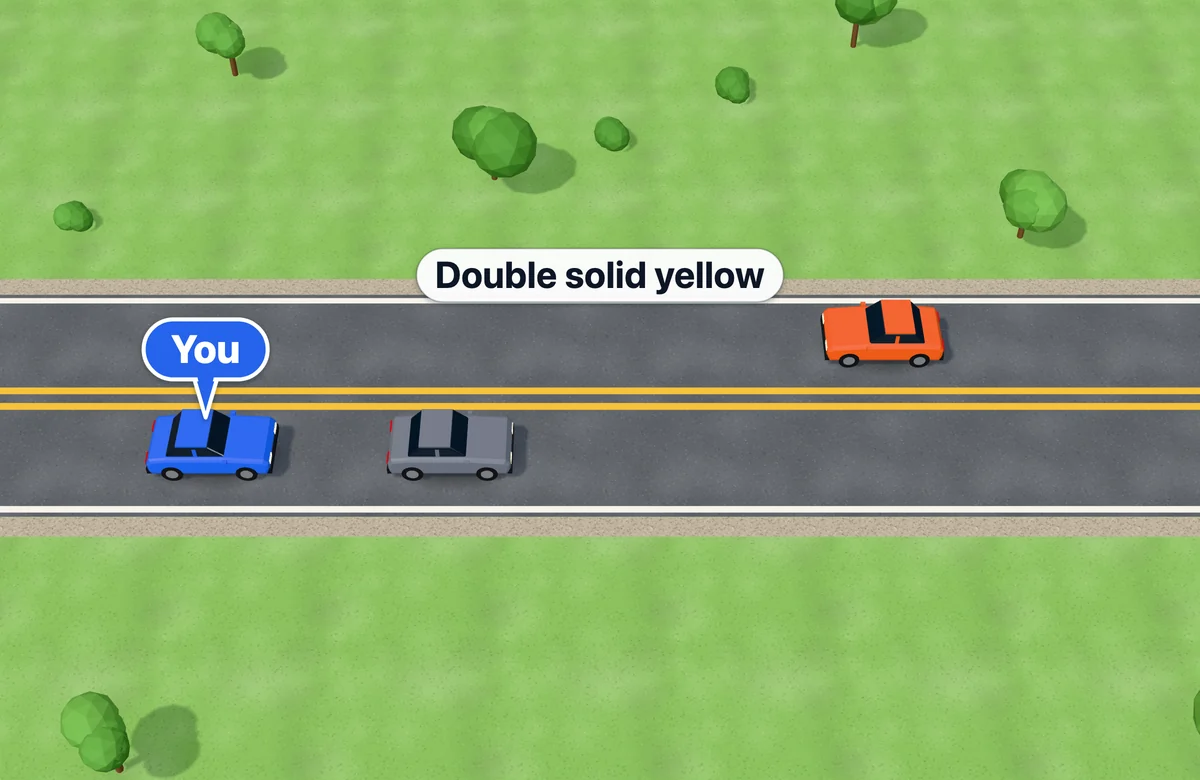
When may you cross double solid yellow center lines?
- A Never, under any circumstances
- B To pass a slow vehicle when the road is clear
- C To make a left turn into or out of an alley, driveway, private road or street
- D To pass a bicyclist in your lane
Show answer
C. To make a left turn into or out of an alley, driveway, private road or street
Double solid yellow lines mark the center of a road with traffic in both directions. You may not cross them to pass, but you may cross them to turn left to or from an alley, private road, driveway or street.
In an urban area, a white stop line is usually painted how far before the crosswalk?
- A About 1 foot
- B About 10 feet
- C About 4 feet
- D About 20 feet
Show answer
C. About 4 feet
A white stop line is usually painted about 4 feet before the crosswalk in urban areas. Stop before any part of your vehicle crosses it, so pedestrians have a clear crosswalk.
View diagram
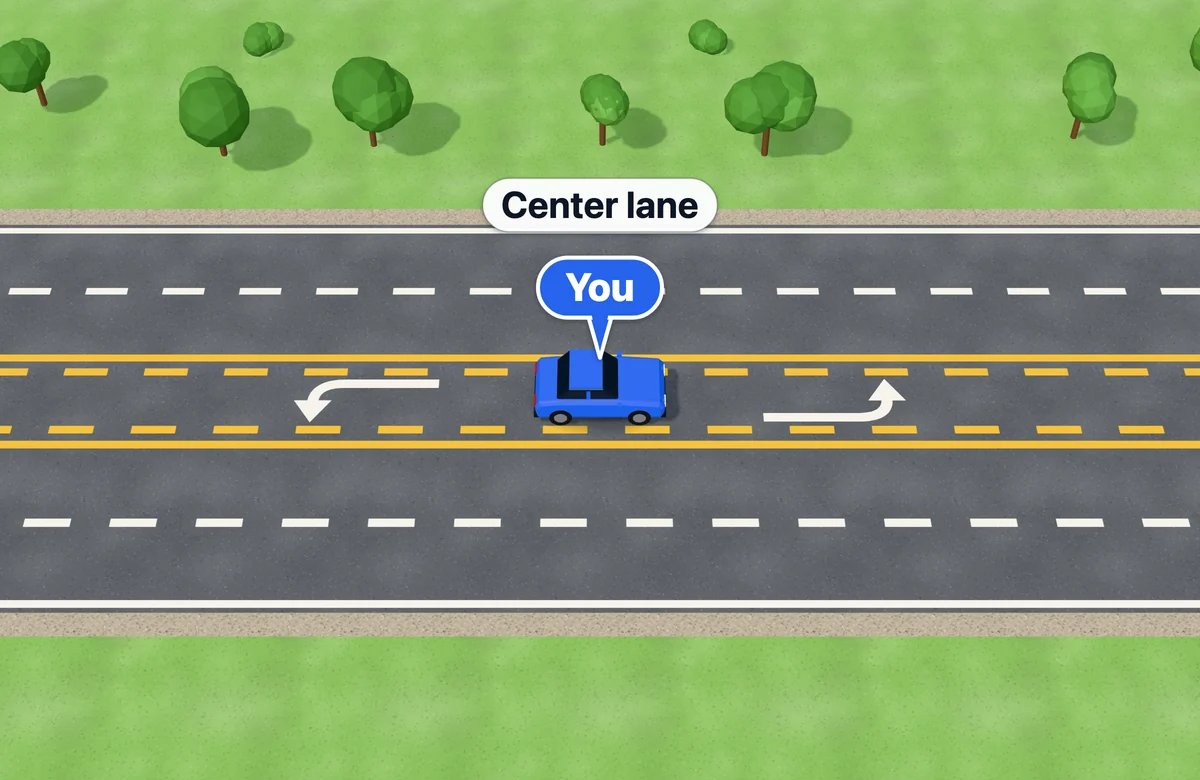
When may you drive in a center two-way left turn lane?
- A Only when preparing for or making a left turn, or a legal U-turn
- B As a merge lane when pulling out of a driveway and turning right
- C Whenever you need to pass slower traffic
- D For travel up to one block before a turn
Show answer
A. Only when preparing for or making a left turn, or a legal U-turn
Two-way left turn lanes are marked with yellow lines and white arrows. You may drive in them only when preparing for or making a left turn, or a U-turn where allowed. When one is provided, you may not turn left from any other lane.