Nebraska permit test: pavement markings
Yellow and white lines, passing zones, crosswalks, stop lines and special lanes. 5 questions.
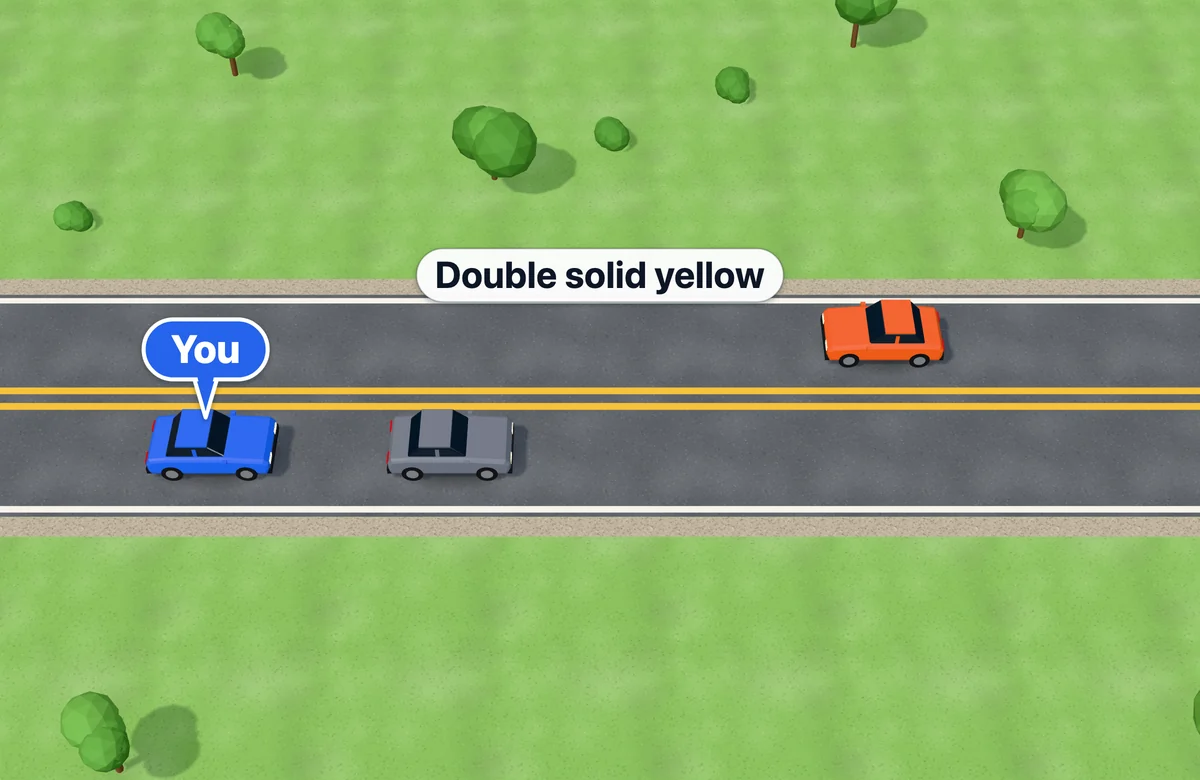
On a two-lane road with double solid yellow center lines, when may you cross the lines?
Keyboard: press 1–4 or A–D to answer, Enter for the next question, S to save, R to read aloud, P to pause reading, L to listen and answer.
Sample pavement markings questions
View diagram
On a two-lane road with double solid yellow center lines, when may you cross the lines?
- A To pass a slow vehicle when the way is clear
- B Never, under any circumstances
- C To turn left or to avoid an obstruction
- D Only at night when there is no traffic
Show answer
C. To turn left or to avoid an obstruction
Double solid yellow lines separate opposing traffic and ban passing in both directions. You may cross them only to turn left, such as into a driveway or alley, or to avoid an obstruction.
View diagram
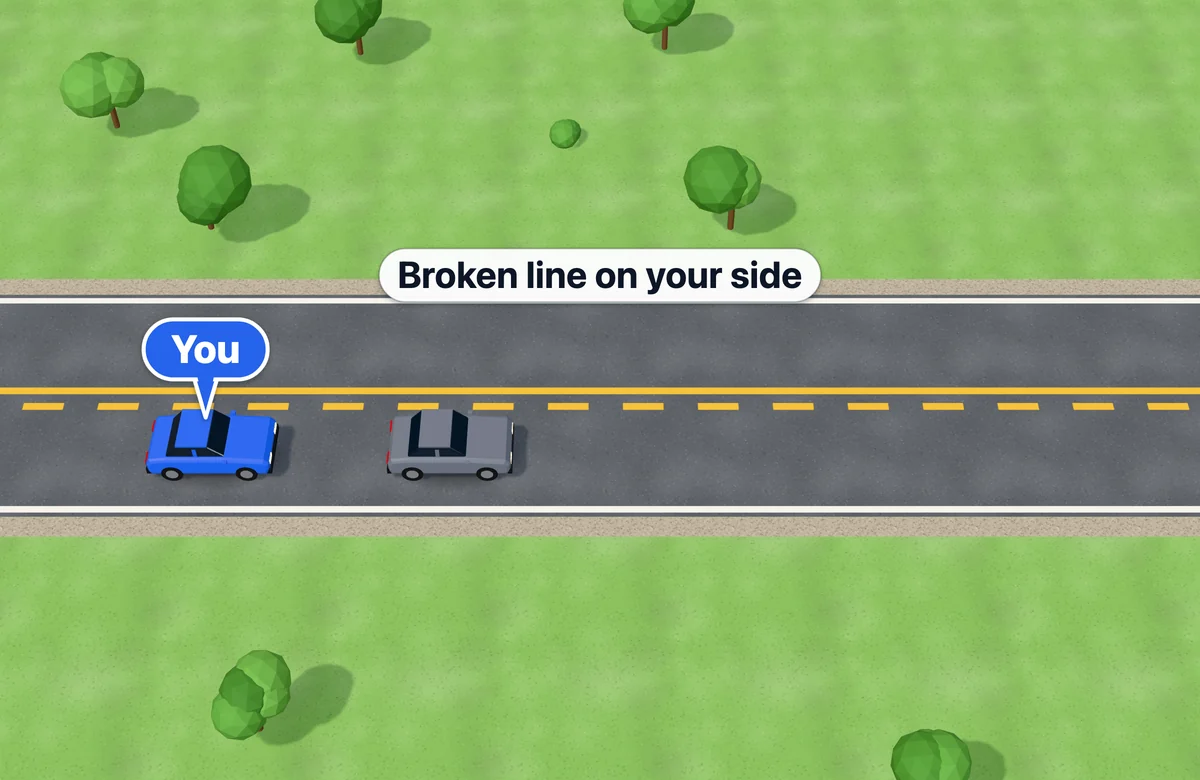
The center line on your side is a broken yellow line, with a solid yellow line beside it on the other side. What does this mean for you?
- A Neither direction may pass
- B You may pass when the way ahead is clear
- C Only the oncoming traffic is allowed to pass
- D You may pass only on the right
Show answer
B. You may pass when the way ahead is clear
When a broken yellow line runs beside a solid one, drivers on the broken-line side may pass, and those on the solid side may not. Still make sure the way ahead is clear of oncoming traffic.
View diagram
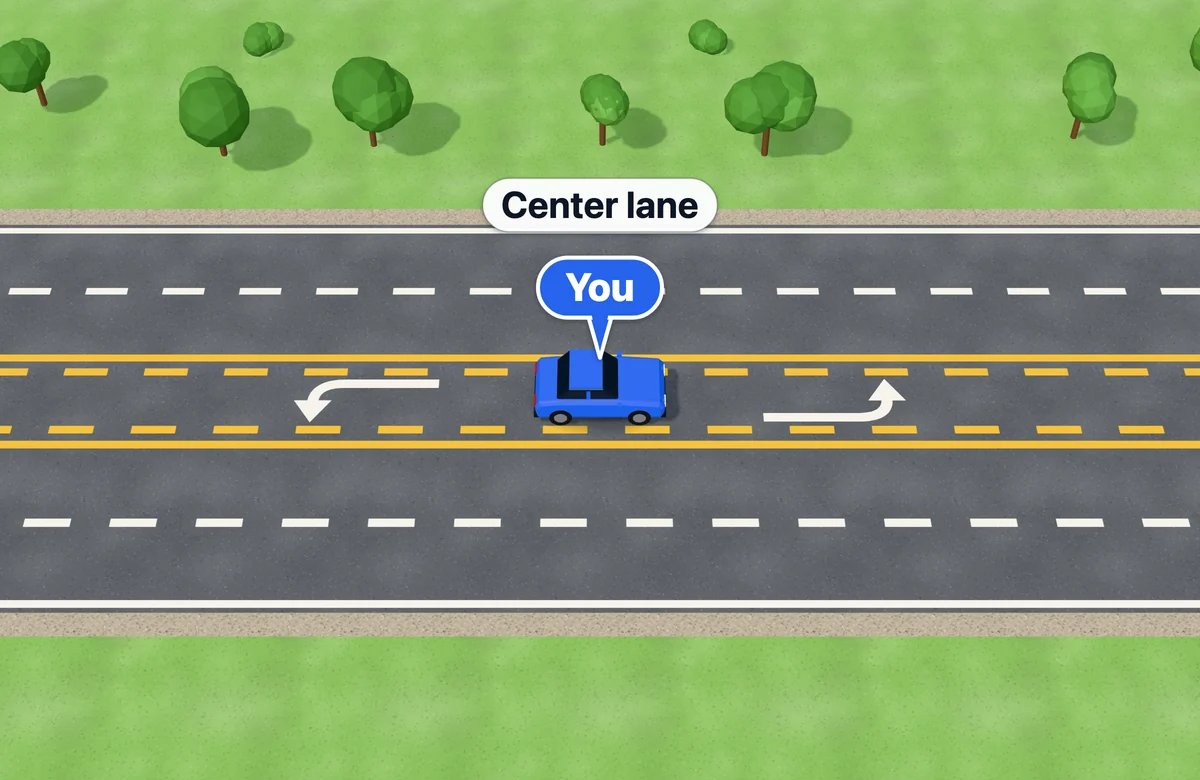
A center lane is marked with solid and broken yellow lines on both sides. How may you use it?
- A Only to make a left turn
- B To pass slower traffic
- C As a travel lane during rush hour
- D To merge into traffic from the right
Show answer
A. Only to make a left turn
A shared center left-turn lane is reserved for left turns by traffic from both directions. Enter it with care, because oncoming drivers may be using it too, and never use it to pass.
In urban areas, where is a white stop line usually painted in relation to a crosswalk?
- A Directly on the crosswalk's edge
- B About 15 feet before the crosswalk
- C About four feet before the crosswalk
- D Just past the crosswalk at the corner
Show answer
C. About four feet before the crosswalk
In urban areas, the stop line is usually about four feet before a crosswalk. When there is a stop line, stop at the line, not at the sign or signal.