North Carolina permit test: pavement markings
Yellow and white lines, passing zones, crosswalks, stop lines and special lanes. 4 questions.
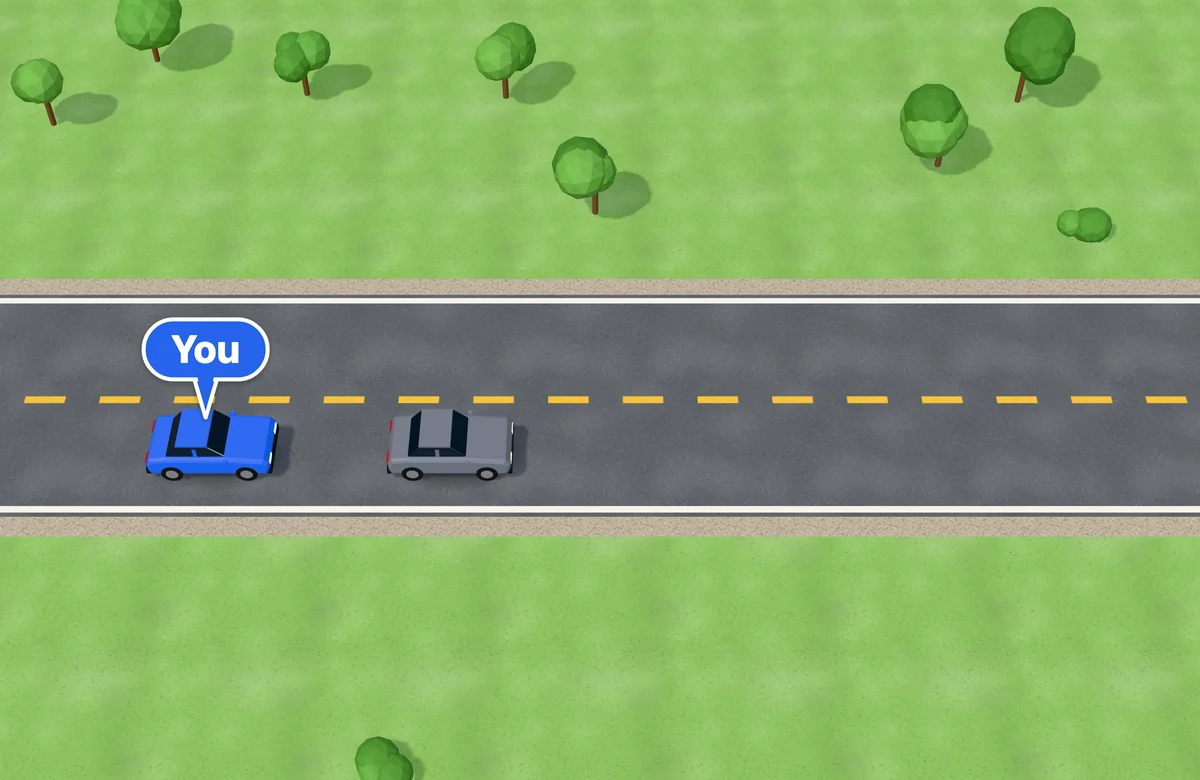
On a two-lane road, the center line on your side is a broken yellow line. What does that mean?
Keyboard: press 1–4 or A–D to answer, Enter for the next question, S to save, R to read aloud, P to pause reading, L to listen and answer.
Sample pavement markings questions
View diagram
On a two-lane road, the center line on your side is a broken yellow line. What does that mean?
- A You may not pass in either direction
- B You may pass with care when the way is clear
- C The lane is reserved for left turns
- D Only traffic going the other way may pass
Show answer
B. You may pass with care when the way is clear
On a two-lane road, passing with care is allowed if the broken (skipped) yellow line is in your lane. A solid yellow line on your side means you may not pass.
On a divided highway, you notice a solid yellow line on your right and a solid white line on your left. What does this tell you?
- A You are in a lane that is reserved only for passing
- B You are traveling in the wrong direction
- C You are in a two-way left-turn lane
- D You are in a lane that is ending soon
Show answer
B. You are traveling in the wrong direction
On divided highways, the left edge line is solid yellow and the right edge line is solid white. If you see the reverse, you are driving the wrong way and must get off the road safely right away.
View diagram
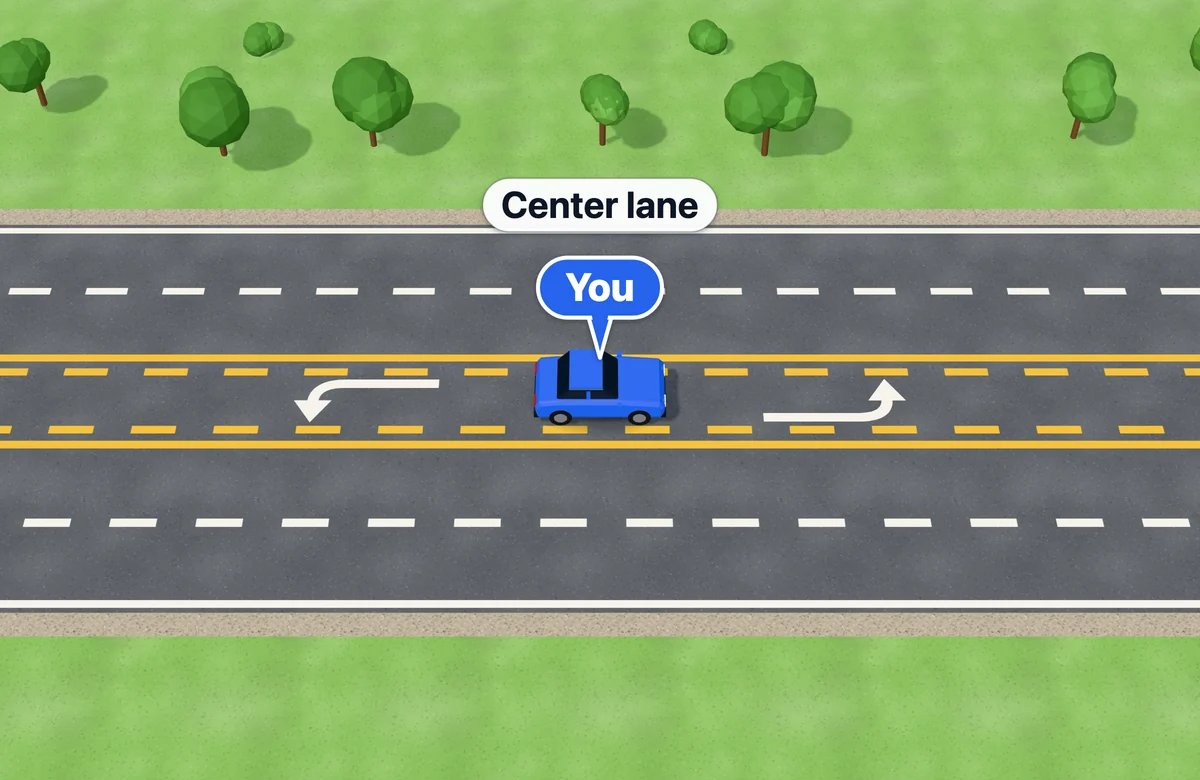
How may a two-way center left-turn lane be used?
- A For merging into traffic after a right turn
- B As a travel lane during rush hour
- C For passing slower vehicles when it is clear
- D Only for left turns by traffic from either direction
Show answer
D. Only for left turns by traffic from either direction
A two-way left-turn lane is reserved for left turns in both directions. It must not be used for passing or for merging into traffic, since drivers from both directions may be in it.
In some North Carolina areas, what do blue reflective markers in the pavement show?
- A Lanes that are reserved for emergency vehicles
- B Wrong-way travel on a ramp
- C Nearby fire hydrants or water supplies
- D Spaces reserved for disabled parking
Show answer
C. Nearby fire hydrants or water supplies
Blue reflective pavement markers in some areas tell fire crews where nearby hydrants or water supplies are. Red markers warn drivers that they are going the wrong way.