Virginia permit test: pavement markings
Yellow and white lines, passing zones, crosswalks, stop lines and special lanes. 6 questions.
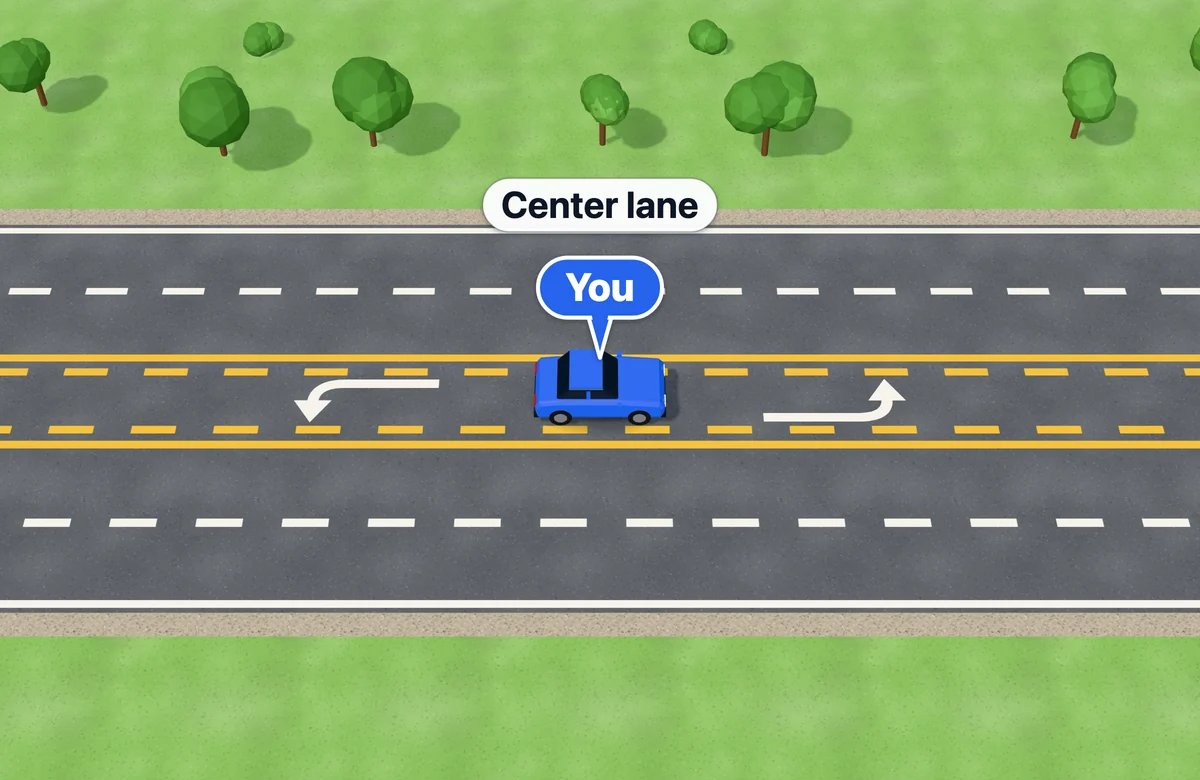
A center lane is marked on both sides by a solid yellow line with a broken yellow line. How far may you travel in it?
Keyboard: press 1–4 or A–D to answer, Enter for the next question, S to save, R to read aloud, P to pause reading, L to listen and answer.
Sample pavement markings questions
View diagram
A center lane is marked on both sides by a solid yellow line with a broken yellow line. How far may you travel in it?
- A No more than 150 feet
- B No more than 300 feet
- C No more than 500 feet
- D As far as you need to reach your turn
Show answer
A. No more than 150 feet
This center lane is for left turns by drivers in either direction, and Virginia limits travel in it to 150 feet. It is a place to wait for your turn, not a travel or passing lane.
View diagram
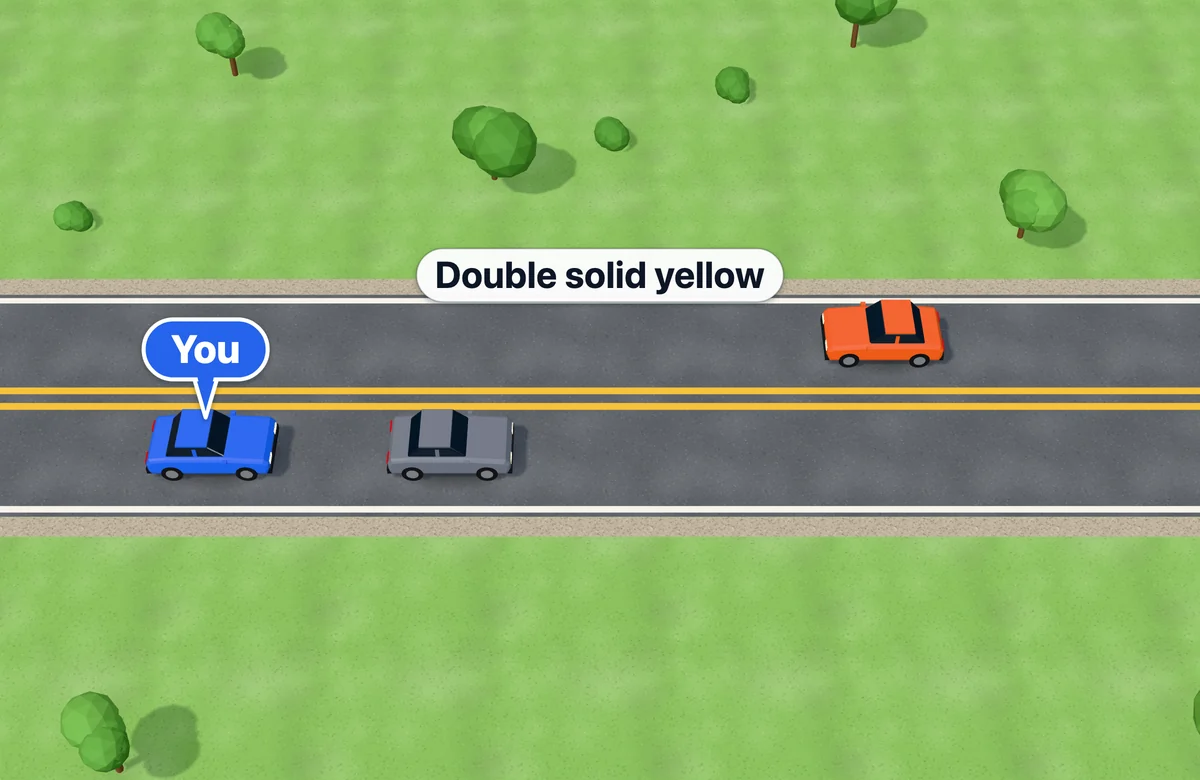
On a road with double solid yellow center lines, when may you cross them?
- A To turn left, or to pass a bicyclist or pedestrian when the other lane is clear
- B To pass a slow car, if you can see far enough ahead
- C Never, for any reason
- D Only to pass a vehicle going under 25 MPH
Show answer
A. To turn left, or to pass a bicyclist or pedestrian when the other lane is clear
Double solid yellow lines mean no passing in either direction. You may cross them only to make a left turn or to pass pedestrians, bicyclists, or riders of scooters or skateboards, and only when the opposite lane is clear.
View diagram
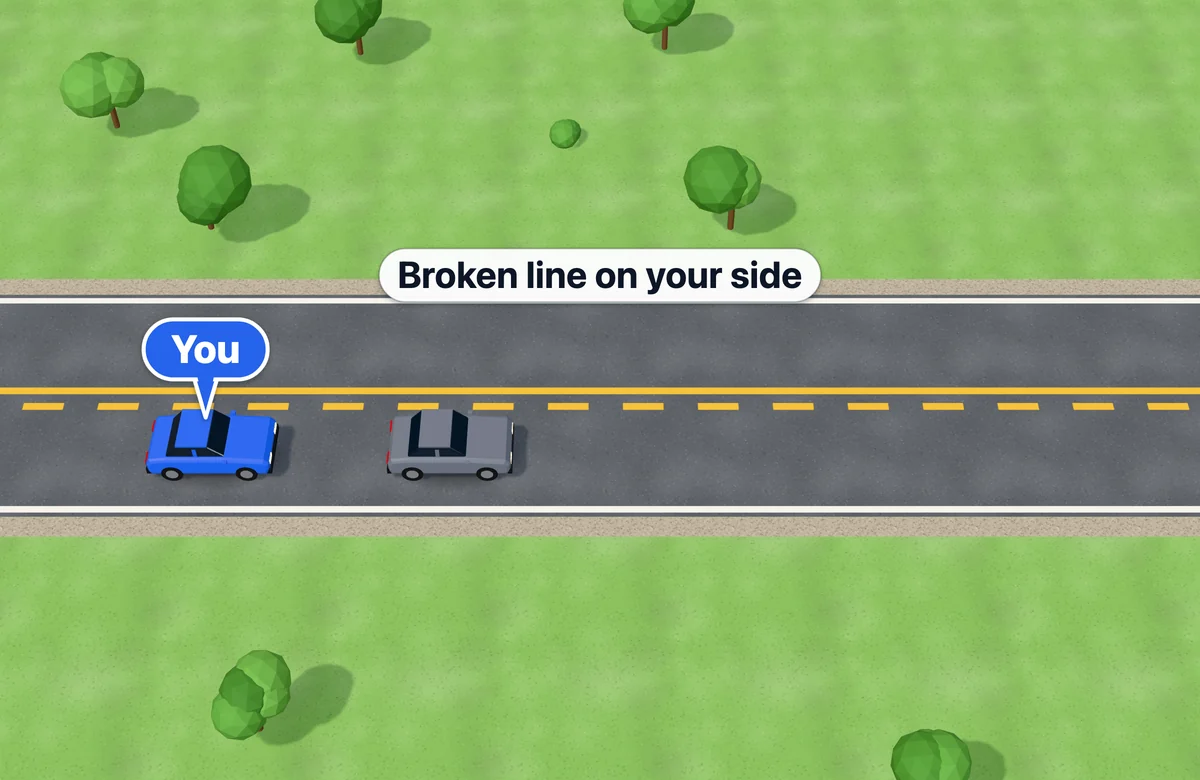
The center line has a broken yellow line on your side and a solid yellow line on the other side. What does this mean?
- A Both directions may pass at any time
- B Only drivers on the solid-line side may pass
- C You may pass when it is safe; drivers on the other side may not
- D Neither direction may pass
Show answer
C. You may pass when it is safe; drivers on the other side may not
With a broken line next to a solid line, the broken line tells you passing is allowed from your side when the way is clear. The solid line means drivers on that side may not pass.
You are on a two-lane Virginia road with no lane markings, behind a slow farm vehicle. When may you pass it on the left?
- A Only if it pulls onto the shoulder for you
- B When no signs prohibit passing and the way is clear
- C Never, because unmarked roads are no-passing zones
- D Only when you can pass safely using the right shoulder
Show answer
B. When no signs prohibit passing and the way is clear
Many two-lane Virginia roads have no lane markings. On these roads you may pass a slow vehicle on the left if no signs prohibit passing and the way ahead is clear.