Illinois Road Signs Test 1
22 road-sign questions based on the federal MUTCD, the standard every state's signs follow.
You approach an intersection and this sign faces you. What must you do?
Keyboard: press 1–4 or A–D to answer, Enter for the next question, S to save, R to read aloud, P to pause reading, L to listen and answer.
About this test
Every state's road signs follow the federal Manual on Uniform Traffic Control Devices (MUTCD), so these sign questions apply in Illinois and everywhere else in the U.S. Learn the shapes and colors and you can read signs you have never seen before. Every answer comes with an explanation and a link to the exact page it comes from, so you can check it yourself.
Your answers are saved in this browser. Questions you miss go to My mistakes so you can practice them again.
Sample questions from this test

You approach an intersection and this sign faces you. What must you do?
- A Slow down and stop only if cross traffic is close
- B Stop only when a pedestrian is waiting at the corner
- C Get ready, because you will need to stop farther ahead
- D Come to a full stop, then go only when the way is clear
Show answer
D. Come to a full stop, then go only when the way is clear
The red octagon is used for one sign only, and it means a full stop is always required. After stopping, yield to cross traffic and pedestrians and go only when it is safe. Because no other sign shares this shape, you can recognize it even when you cannot read the word.
Source: MUTCD 11th ed., page 114
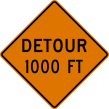
What should you expect after this orange sign?
- A Workers will be on the shoulder only
- B Traffic will be sent off this road onto another route
- C One lane will be shared by traffic from both directions
- D A flagger will stop traffic ahead
Show answer
B. Traffic will be sent off this road onto another route
A detour moves traffic onto another road or route around the work. Follow the orange detour arrows and markers until they lead you back. Watch for the change, which may involve turns onto streets you do not know.
Source: MUTCD 11th ed., page 842

What does this round sign tell you?
- A A railroad crossing is ahead; slow down and look
- B You are at the tracks and must yield now
- C A rest area with restrooms is ahead
- D Two roads cross at an angle ahead
Show answer
A. A railroad crossing is ahead; slow down and look
The circle is used only for this sign, which warns of a railroad crossing ahead. It is yellow because it is a warning, and it stays yellow even in work zones. Slow down, turn down noise, and look and listen for trains.
Source: MUTCD 11th ed., page 1041
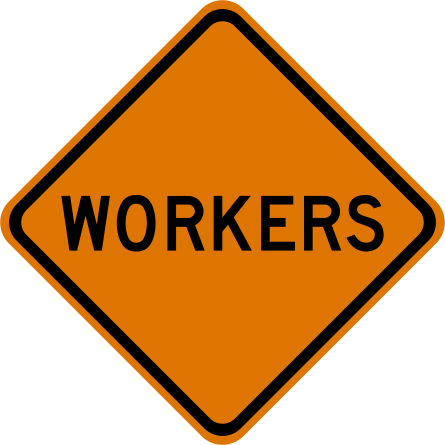
What does this orange word sign warn about?
- A A flagger is directing traffic ahead
- B The road ahead is closed
- C Road machinery is crossing the road just ahead
- D People are working in or near the roadway
Show answer
D. People are working in or near the roadway
This orange sign warns that workers are close to traffic, sometimes with no barrier between you and them. Slow down, give them space and move over if you can. Crashes in work zones hurt drivers and passengers as well as workers.
Source: MUTCD 11th ed., page 846
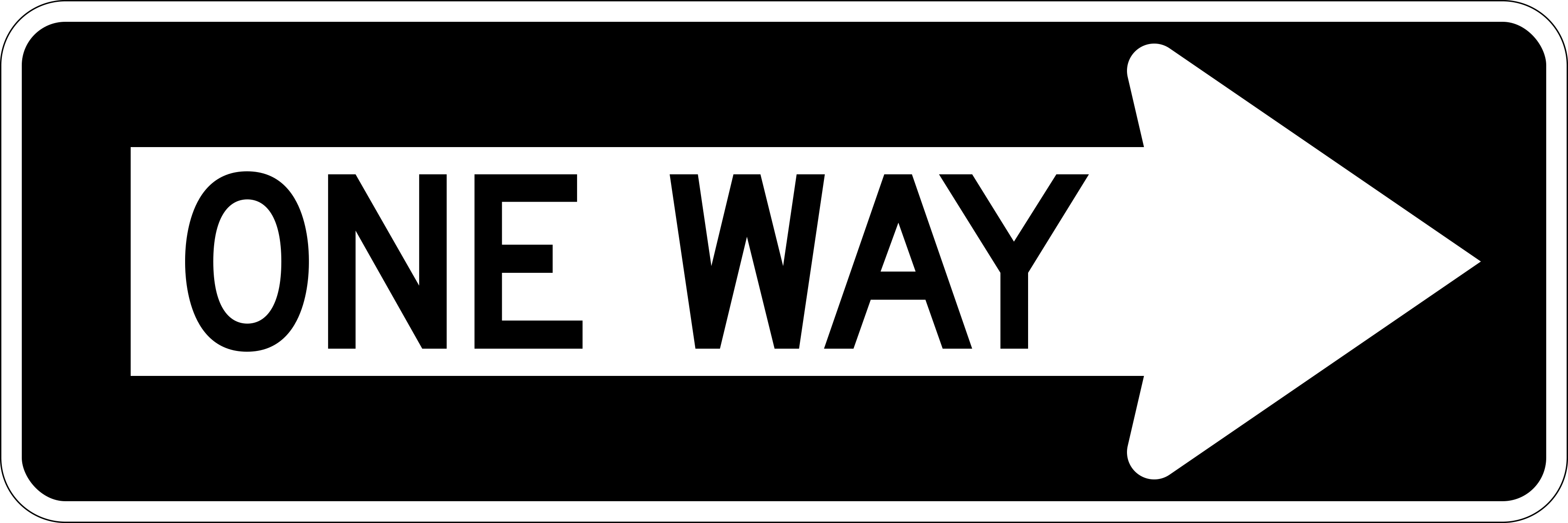
You see this sign at a street corner. What does it mean?
- A You must turn right at the next intersection
- B Keep to the right of the island or obstacle in the road ahead
- C Traffic on this street may only go the way the arrow points
- D The road bends sharply to the right just ahead
Show answer
C. Traffic on this street may only go the way the arrow points
This black-and-white rectangle is a regulatory sign showing that traffic on the street may move in one direction only. It is posted at the corners of intersections so drivers entering or crossing the street know which way to turn. Turning against the arrow would put you head-on with traffic.
Source: MUTCD 11th ed., page 154