Illinois Road Signs Test 4
21 road-sign questions based on the federal MUTCD, the standard every state's signs follow.
Yellow lines on the pavement separate what?
Keyboard: press 1–4 or A–D to answer, Enter for the next question, S to save, R to read aloud, P to pause reading, L to listen and answer.
About this test
Every state's road signs follow the federal Manual on Uniform Traffic Control Devices (MUTCD), so these sign questions apply in Illinois and everywhere else in the U.S. Learn the shapes and colors and you can read signs you have never seen before. Every answer comes with an explanation and a link to the exact page it comes from, so you can check it yourself.
Your answers are saved in this browser. Questions you miss go to My mistakes so you can practice them again.
Sample questions from this test
Yellow lines on the pavement separate what?
- A Lanes of traffic moving the same way
- B The right edge of the road from the shoulder
- C Traffic moving in opposite directions
- D Parking spaces for drivers with disabilities
Show answer
C. Traffic moving in opposite directions
Yellow pavement lines separate traffic moving in opposite directions, and they also edge two-way left-turn lanes and reversible lanes. They mark the left edge of divided highways and one-way roads too. On a two-way road, the yellow center line belongs on your left.
Source: MUTCD 11th ed., page 577
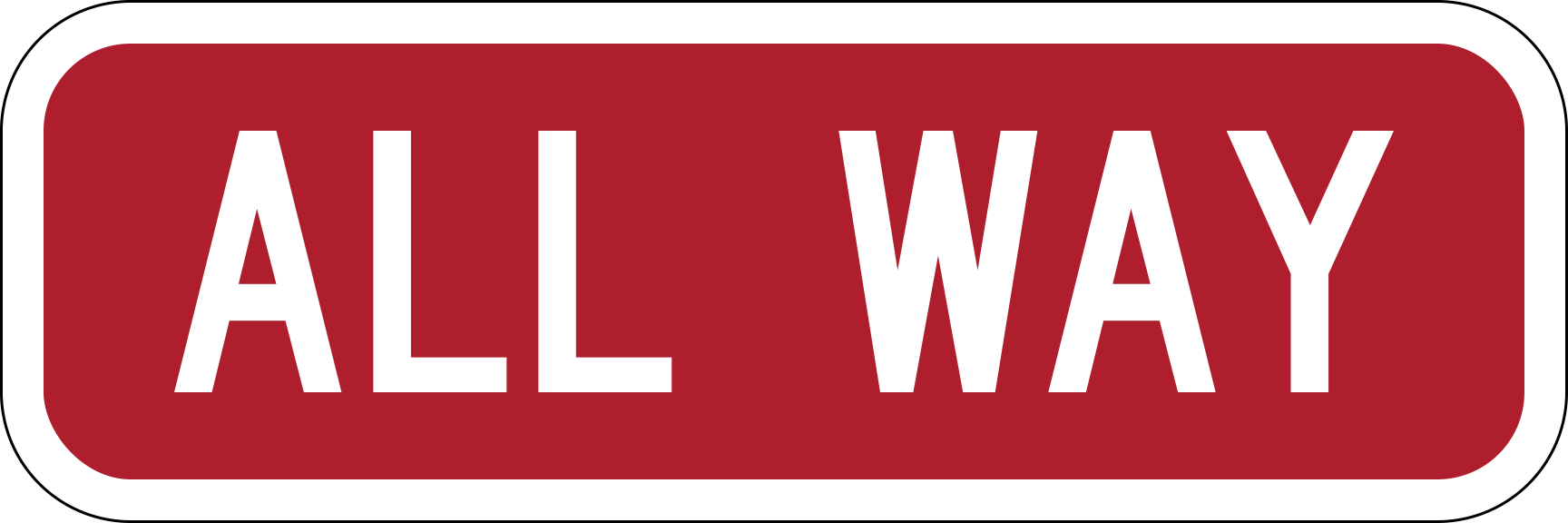
This red plaque is mounted directly below a red octagonal sign. What does it tell you?
- A Only traffic going straight through has to stop
- B Traffic on every approach to the intersection must stop
- C Cross traffic does not stop, so wait for a long gap
- D Drivers turning right may go without stopping
Show answer
B. Traffic on every approach to the intersection must stop
This plaque is added under the stop sign when all approaches to an intersection are stop-controlled. Knowing everyone must stop helps you take turns: generally the first vehicle to stop goes first. It does not change your duty to stop fully and look before you go.
Source: MUTCD 11th ed., page 114

You are driving on a road that runs right beside railroad tracks and see this sign. What does it warn?
- A If you turn onto the cross road, tracks come right away
- B A train is approaching the crossing now
- C The tracks ahead are no longer in use
- D Trucks must use the next crossing, because this one is too steep
Show answer
A. If you turn onto the cross road, tracks come right away
These signs combine an intersection symbol with tracks to show a crossing just off your road. They are used when the tracks are less than 100 feet from the road you are on. After turning, you may have little room to stop, so look for trains before you turn.
Source: MUTCD 11th ed., page 1041

What does this rectangular orange sign tell you?
- A Road work starts that many miles farther down the road
- B The work zone continues for the number of miles shown
- C A detour of that length is ahead
- D The road ahead is closed for that distance
Show answer
B. The work zone continues for the number of miles shown
This rectangular orange sign is placed before long work zones to say how far the work extends. Expect work zone conditions for that whole distance. The end of the zone may be marked with an END ROAD WORK sign.
Source: MUTCD 11th ed., page 850
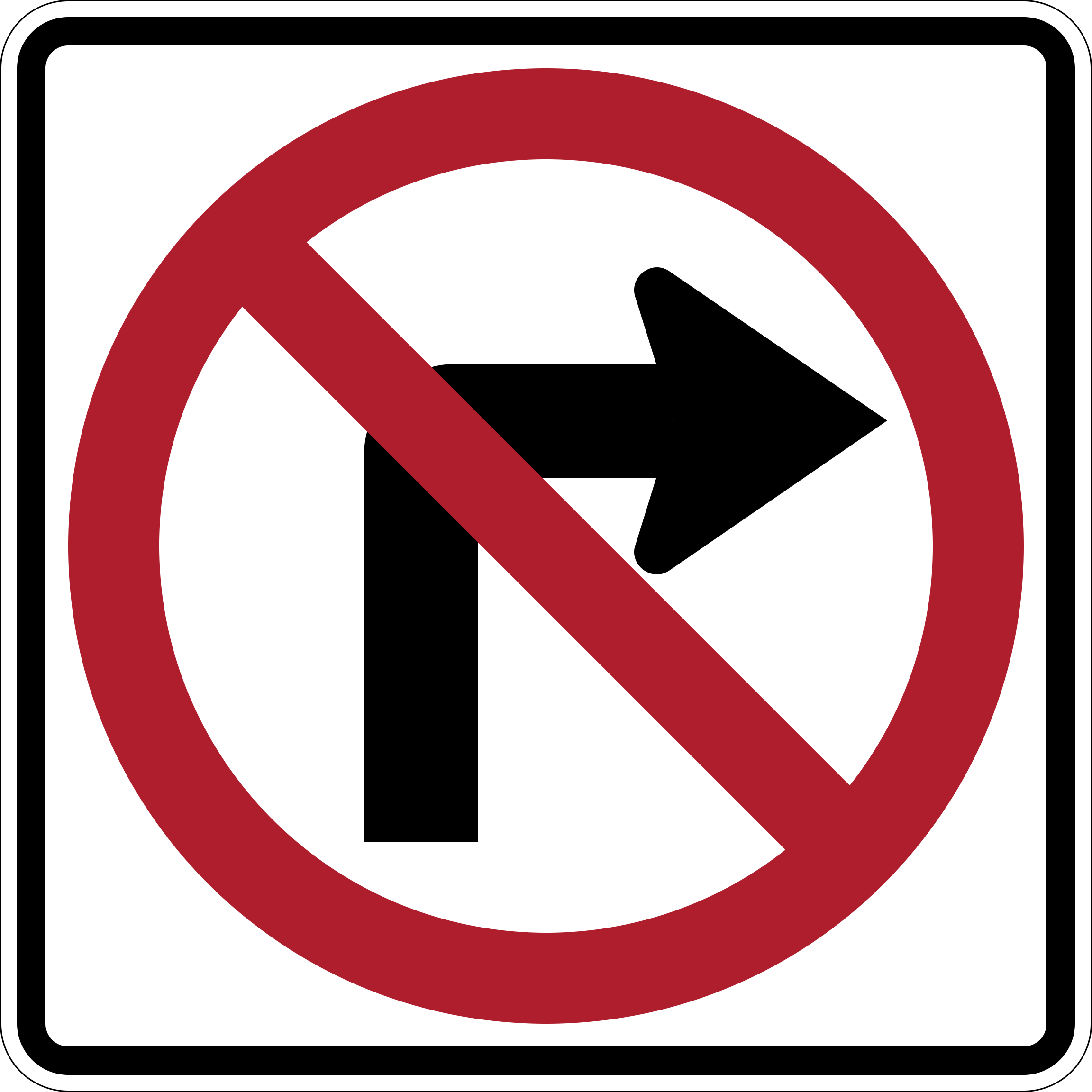
What movement does this sign forbid?
- A Turning left at this intersection
- B Making a U-turn at this intersection
- C Turning right only while the light is red
- D Turning right at this intersection
Show answer
D. Turning right at this intersection
A red circle with a slash means the action inside it is not allowed. Here the arrow turns right, so right turns are banned from this approach at all times. Read the arrow carefully, because similar signs ban left turns or U-turns.
Source: MUTCD 11th ed., page 129