Vermont road signs practice test
Regulatory, warning and guide signs: shapes, colors and what each requires you to do. 113 questions.
How many sides does a stop sign have?
Keyboard: press 1–4 or A–D to answer, Enter for the next question, S to save, R to read aloud, P to pause reading, L to listen and answer.
Sample road signs questions

How many sides does a stop sign have?
- A 6
- B 4
- C 8
- D 3
Show answer
C. 8
A stop sign has 8 sides. Its unique shape lets you recognize it even when it is covered with snow or dirt.
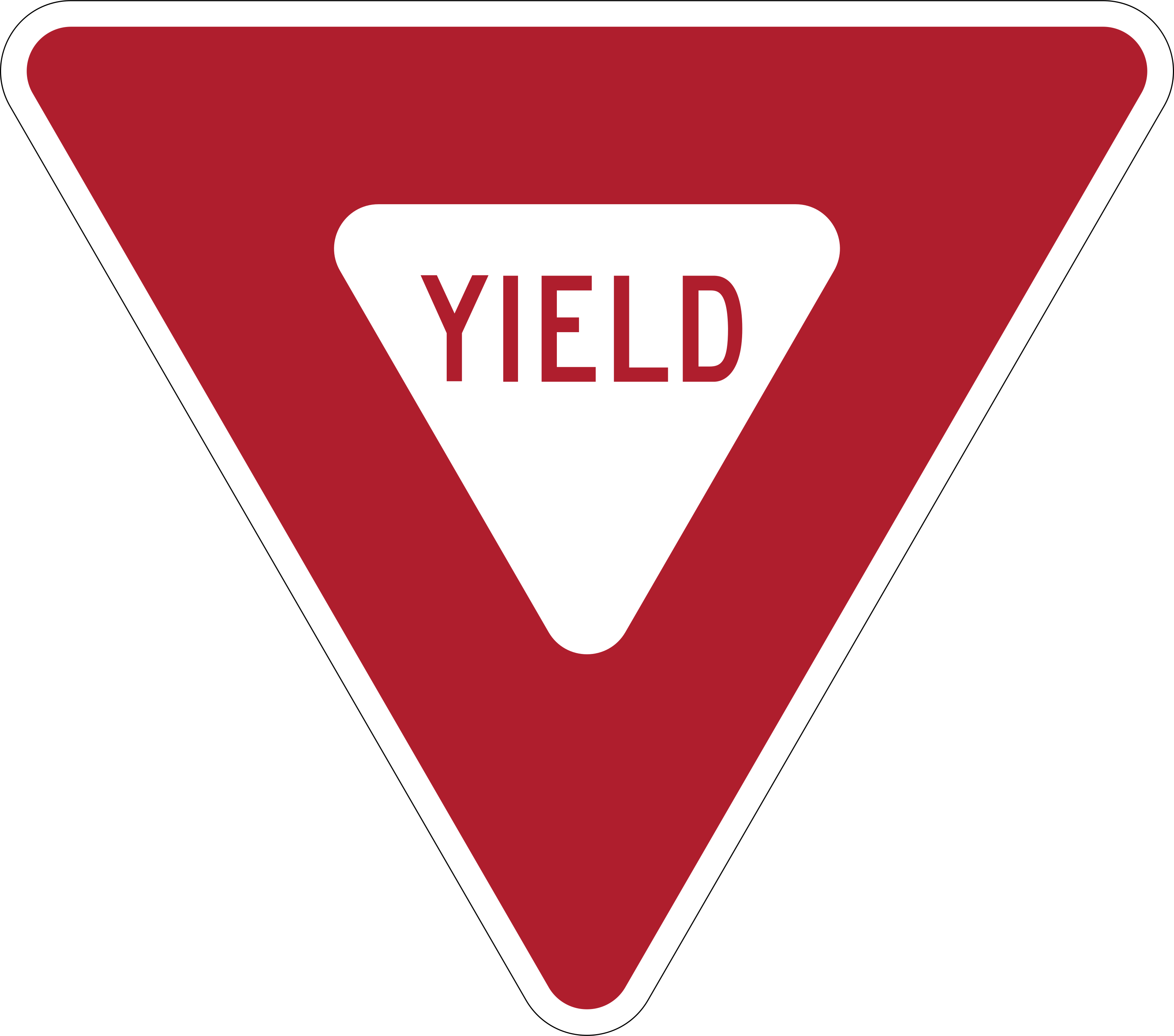
What does an upside-down triangle sign mean?
- A Slow down and enter only when the way is clear
- B Come to a complete stop every time, even if the way is clear
- C Railroad crossing ahead
- D Slow-moving vehicle ahead
Show answer
A. Slow down and enter only when the way is clear
A yield sign is an upside-down triangle. Slow down, search for traffic, and enter only if the way is clear of pedestrians, bicyclists and vehicles.

What does a round sign with a large X and the letters RR mean?
- A A road closure is ahead
- B Two roads cross ahead
- C Rest area on the right
- D A railroad crossing is ahead
Show answer
D. A railroad crossing is ahead
A circular sign with an X and RR warns that a railroad crossing is ahead. Slow down, look and listen for trains.
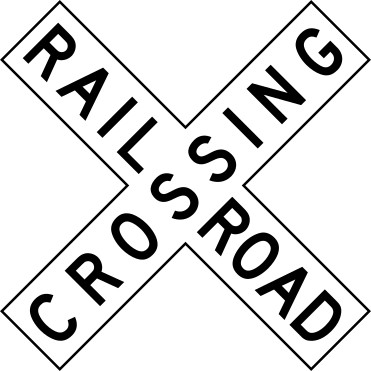
What does the smaller sign under a railroad crossbuck tell you?
- A How far away the next train is
- B The speed limit at the crossing
- C How many tracks there are at the crossing
- D The emergency phone number
Show answer
C. How many tracks there are at the crossing
A small sign below the crossbuck shows how many tracks there are. With two or more tracks, one train can hide another coming the other way.